

Parashat Pinchas
The Hidden Cost of Every Action: A Powerful Lesson from Pinchas
Why even necessary actions leave a lasting imprint on the soul, and what the Torah teaches about healing, character, and inner peace
- Yisrael Malka
- | Updated
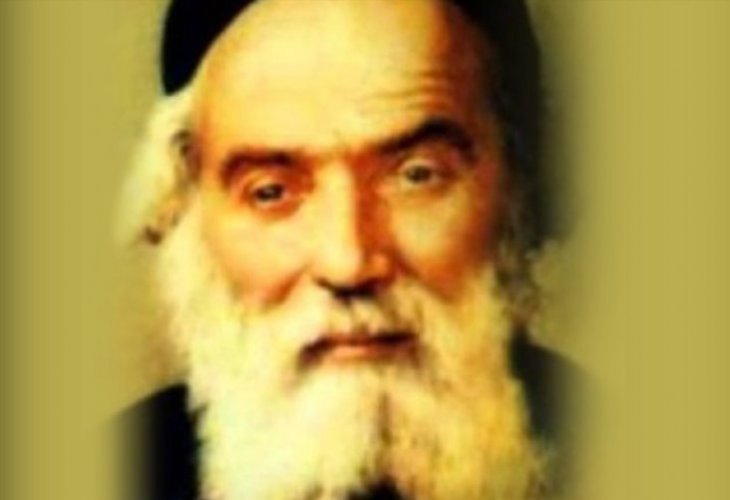 The *Chafetz Chaim*
"How much do I owe you?"
"Thirty dollars," the employee replied.
A Jewish businessman who frequently traveled to China had sent his tallit to the dry cleaners through a courier. When he arrived to collect it, he was stunned by the bill.
"Thirty dollars? Why is it so expensive?"
The Chinese cleaner smiled politely.
"Ten dollars to clean the garment," he explained. "Twenty dollars to untie all the knots."
Sometimes, repairing the damage costs far more than performing the task itself.
Pinchas and the Covenant of Peace
Silence.
The madness came to an abrupt halt.
With a single act of zealous devotion to God, Pinchas brought an end to the horrific scene that had left Moses, Aaron, and the entire nation weeping, as described at the end of Parashat Balak and explained by Rashi. His action was extraordinary. It was forceful, intended to shock the people into awakening, and, under those unique circumstances, absolutely necessary.
In this week's parashah, God announces Pinchas' reward: "Behold, I give him My covenant of peace."
At first glance, this seems surprising.
Had Pinchas been granted the title of "zealot for the sake of Heaven" or "warrior of God's battles," the reward would seem more directly connected to what he had done. Yet his action appeared, at least superficially, to be the very opposite of peace.
Why, then, is his reward specifically a covenant of peace?
The Chafetz Chaim's Surprising Advice
One of the disciples of Rabbi Yisrael Meir Kagan, the renowned Chafetz Chaim, once approached his teacher with what seemed to be an ordinary career question.
His family had grown, and as he had promised when he married, he now needed to provide for them. He had been offered a position at a bank, with a choice between two departments. He could either work at the teller window where customers withdrew cash from their accounts or at the desk where checks were deposited.
On the surface, the decision hardly seemed significant.
It was the same bank, the same employees, the same working conditions.
Yet the student sought his rabbi's guidance.
The Chafetz Chaim answered immediately. "Work at the withdrawal counter."
Then he explained why.
"A Jew should train himself to become a giver."
Each day, as customers approached the counter, the young man would physically hand money to them. Although it was not his own money, the repeated act of giving would gradually shape his character. He would develop the habit of being someone who gives.
Had he chosen the check deposit desk, however, he would spend his days receiving rather than giving. The actions themselves would quietly mold the person performing them.
Every Action Leaves a Mark
A similar principle appears in the commentary of Rabbi Chaim ben Attar, the Ohr HaChaim, on the Torah's command regarding an Ir Hanidachat, a city whose inhabitants had embraced idolatry.
After commanding the Jewish people to destroy the city completely, including its inhabitants, livestock, and possessions, the Torah promises: "He will grant you compassion and show you mercy."
Why is this promise necessary?
The Ohr HaChaim explains that carrying out such severe acts, even when commanded by God and completely justified, naturally leaves an imprint on the human heart. Participating in destruction can awaken a tendency toward cruelty.
Therefore, God promises to restore the compassion that might otherwise be diminished.
As the Ohr HaChaim writes, Heaven grants special mercy "to remove the trait of cruelty that could be born through such actions."
A Lesson From World War II
History offers painful examples of this same truth.
During World War II, Japan joined Germany in its war against the United States and the Allied powers. After the devastating surprise attack on Pearl Harbor, the United States decided to bring the conflict to an end by dropping atomic bombs on the cities of Hiroshima and Nagasaki.
Those two bombs effectively ended the war. Japan surrendered, and Germany's defeat soon followed.
From a military perspective, many argued that the bombings ultimately prevented even greater bloodshed. Yet the two pilots who carried out those missions reportedly struggled profoundly afterward, eventually losing their mental stability.
Although reason could justify their actions as necessary to end a catastrophic war, living with the knowledge that their own hands had unleashed such unimaginable destruction proved unbearable.
The human soul is affected by what it does, even when those actions are necessary.
Why Pinchas Needed Peace
This, the Torah teaches, is the deeper meaning of Pinchas' reward.
There is no question that his dramatic intervention was necessary. It stopped a national catastrophe, halted the plague, and restored God's favor toward His people.
But performing such an act, even with the purest intentions, carries an emotional and spiritual cost. Violence leaves an imprint upon the soul.
Therefore, God reassures Pinchas that because he acted solely for the sake of Heaven, with absolute purity of heart, he would suffer no spiritual damage.
Instead, God granted him Brit Shalom—a Covenant of Peace.
This heavenly gift restored complete inner harmony, healing any hidden effects his difficult mission might otherwise have left upon his soul. That was his greatest reward.
Repairing What Our Actions Change
The story of Pinchas teaches an enduring lesson.
His actions were holy and entirely justified, yet he still required a covenant of peace to preserve the wholeness of his soul.
Likewise, the Chafetz Chaim understood that even ordinary daily actions shape a person's character. His student never gave away a single coin of his own money, yet the repeated act of giving transformed him into a giver.
Every action changes us. Sometimes the change is uplifting, while sometimes it carries a hidden cost.
When life requires us to do difficult things, we should remember that there is often a price beyond the visible one. Like the Chinese dry cleaner's bill, we pay not only for cleaning the garment but also for undoing the knots that had to be untied along the way.
If difficult circumstances leave their mark on us, we should make every effort to "retie the knots" — to repair whatever has unraveled within ourselves and heal any subtle damage we have absorbed.
The encouraging truth is that the opposite is equally true. Just as difficult actions influence us, so do acts of kindness, generosity, compassion, and goodness.
Even when we are unaware of it, every good deed quietly shapes us into better people.

