

World News
Iran and Oman Push New Fees for Ships in the Strait of Hormuz, Despite U.S. Objections
Iran and Oman are advancing a new framework that would require ships to pay for passage through the Strait of Hormuz, despite opposition from the United States. A source familiar with Washington’s position confirmed that a formal proposal was received and said there are “reservations” about it.
- Hidabroot
- | Updated
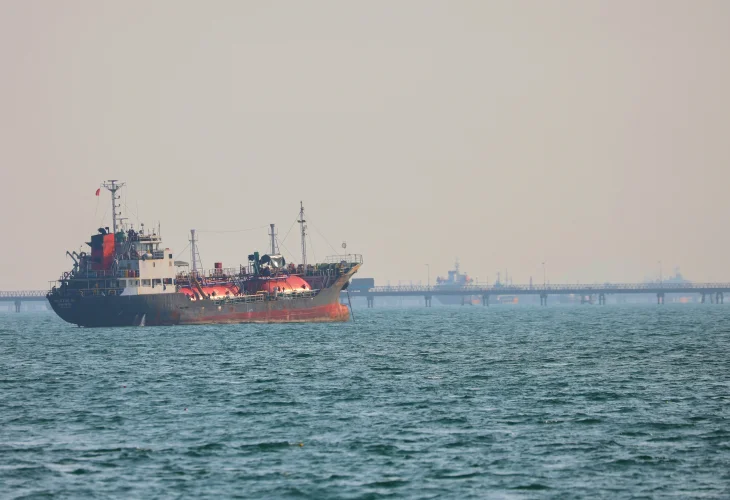 Strait of Hormuz (Credit: shutterstock)
Iran and Oman are moving ahead with a plan to charge ships that cross the Strait of Hormuz, despite opposition from the U.S. administration, The New York Times reported today (Tuesday). According to an Iranian source and four diplomats familiar with the details, Oman recently delivered a formal proposal to the United States and its Western allies laying out a mechanism under which shipping companies would pay service fees for using the strait.
A source familiar with Washington’s position confirmed that the American negotiating team received the proposal, and that there are reservations about it that it intends to raise in talks with senior Omani officials.
Until the outbreak of the war, the Strait of Hormuz served as an international shipping route between Iran and Oman, and vessels passed through it without payment while carrying oil and gas from the Persian Gulf to markets around the world. During the fighting, Iran effectively imposed a blockade on the maritime passage—one of the world’s key trade chokepoints—leading to a sharp spike in global energy prices. Since then, Iranian officials have repeatedly declared their intention to turn passage through the strait into a source of revenue.
The Omani proposal is based in part on the model used in the Straits of Malacca and Singapore, where a private fund collects voluntary contributions intended to support safe navigation. Still, there is disagreement over the nature of the payment. One regional diplomat said it would be voluntary only, while the Iranian source stressed that from Tehran’s perspective, the payments would be mandatory.
The future of the Strait of Hormuz remains one of the central issues in the contacts between the United States and Iran. Under the framework agreement signed this month that brought the fighting to an end, it was determined that for 60 days there would be "safe passage of commercial vessels without any payment," while the sides continue negotiating a permanent arrangement.
Iran’s deputy foreign minister, Kazem Gharibabadi, said on Monday that from Tehran’s standpoint, the priority is to reach an agreement with Oman on a joint mechanism for managing the strait. However, he said that if Oman is unwilling to establish a joint framework, Iran will act independently.
The issue has led to a public clash with U.S. President Donald Trump. After it was revealed in May that Oman was considering cooperation with Iran on collecting service fees, Trump threatened to bomb Oman if it did not "behave exactly like everybody else." Just last week, he also made clear that collecting tolls or payments for passage through the strait is "unacceptable."
U.S. Secretary of State Marco Rubio repeated that message during his visit to Bahrain, declaring that the United States would oppose any attempt to commercialize use of the strait, "whether they call it a toll, a transit fee, or a donation." In his words, "We need to restore the situation in the straits to what it was before this conflict." By contrast, Iran’s foreign minister, Abbas Araghchi, said this month on state television that the Strait of Hormuz will no longer return to being a route where passage takes place free of charge.

