

The Month of Elul
A Powerful Elul Practice: Just 60 Seconds a Day to Open the Gates of Mercy
Discover the profound significance of reciting Psalm 27 throughout Elul and the High Holidays and its connections to the Thirteen Attributes of Mercy, repentance, and prayer
- Yonatan HaLevi
- | Updated
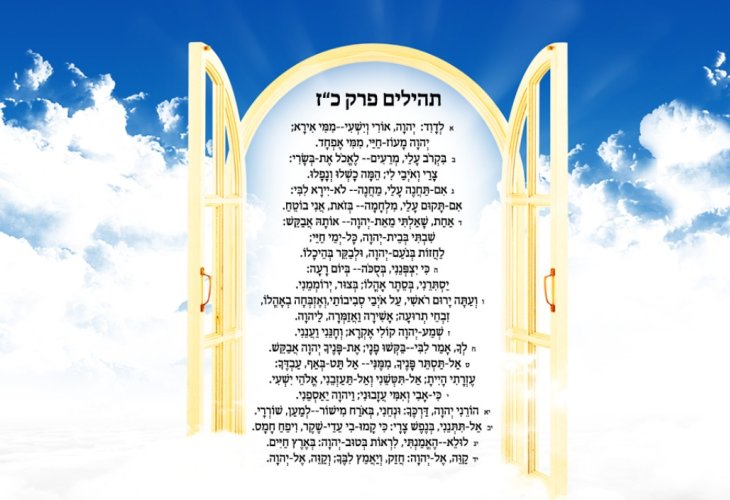
The month of Elul is known as a special season of mercy and spiritual renewal. Throughout these precious days leading up to the High Holidays, Jewish communities around the world have the custom of reciting Psalm 27 ("Of David, the Lord Is My Light and My Salvation") as a powerful prayer for Divine compassion, protection, and personal transformation.
Following are ten inspiring insights into this beloved custom.
1. Elul Is a Time of Divine Mercy
During the month of Elul, God desires to shower His people with abundant mercy. Reciting Psalm 27 is considered a powerful way to open the gates of compassion and prepare our hearts for the Days of Awe.
2. A Cherished Jewish Tradition
Across Jewish communities worldwide, it is customary to recite Psalm 27 every day during the season of mercy, from Rosh Chodesh Elul until after Simchat Torah.
3. A Powerful Promise
Rabbi Yaakov Rakach writes in Sha'arei Tefillah: "Whoever recites 'Of David, the Lord is my light and my salvation' from Rosh Chodesh Elul until after Simchat Torah — even if a harsh Heavenly decree has been issued against him, has the power to annul it. All prosecuting forces and severe decrees are removed from him. He emerges vindicated in judgment, and it is assured that he will enjoy good and pleasant days throughout his life."
4. Additional Spiritual Benefits
The work Sha'arei Rachamim adds several additional blessings for those who faithfully recite this psalm during the Days of Mercy:
A year filled with goodness and pleasantness.
Divine acceptance of one's prayers and requests.
Sustenance and livelihood throughout the coming year.
5. Why Recite It Morning and Evening?
The Arizal offers a beautiful explanation.
The verse, "My Beloved is mine and I am His; He grazes among the lilies" is understood to refer to the month of Elul. Every lily has thirteen petals, symbolizing the Thirteen Attributes of Divine Mercy.
During Elul, thirteen channels of Heavenly mercy are opened, enabling a person to change and grow spiritually.
By reciting Psalm 27, these channels are opened. Remarkably, God's Name appears thirteen times throughout the psalm. According to this teaching, each mention opens another channel of Divine compassion.
6. Hidden References to the High Holidays
The Midrash (Shocher Tov) explains that the opening verse alludes to the entire High Holiday season:
"The Lord is my light" refers to Rosh Hashanah.
"And my salvation" refers to Yom Kippur.
"For He will shelter me in His sukkah" points to Sukkot.
Thus, the psalm beautifully accompanies the entire journey from judgment to forgiveness and finally to joy.
7. Forty Days of Spiritual Rebirth
Psalm 27 is traditionally recited during the forty-day period from Rosh Chodesh Elul through Yom Kippur, the classic season of repentance.
Throughout Jewish tradition, the number forty symbolizes complete renewal and rebirth.
Examples include:
A mikveh contains forty se'ah of water, representing spiritual rebirth.
An embryo reaches a major stage of development after forty days.
The Jewish nation was spiritually formed during forty years in the wilderness.
Moses spent forty days atop Mount Sinai without eating or drinking.
Conversely, the Flood lasted forty days, bringing the destruction of the old world before a new beginning.
Elul calls upon each of us to experience that same process of inner transformation, and to become spiritually renewed from the inside out.
8. "In This I Trust"
King David declares that even when surrounded by enemies, he remains fearless: "In this I trust."
What does "this" refer to?
One explanation is that it refers to the Torah itself: "This is the Torah that Moses set before the children of Israel."
Another interpretation notes that the Hebrew word "zot" (this) has the numerical value of 408, which is the same numerical value as:
Tzom (fasting, representing repentance)
Kol (voice, representing prayer)
Mamon (charity)
These are the three great spiritual tools referred to in the High Holiday liturgy: "Repentance, prayer, and charity remove the severity of the decree."
The Radak offers an even more direct explanation: "In this" means "The Lord is my light, my salvation, and the strength of my life." Our ultimate trust belongs only in God.
9. Never Stop Hoping
The psalm concludes with the famous words: "Hope in the Lord; be strong, let your heart be courageous, and hope in the Lord."
Its message is timeless: Do not despair if your prayers are not answered immediately.
Judaism teaches that prayer is not merely a means of obtaining what we want. Often, God gives us something to hope for precisely so that we will continue turning toward Him. The hope itself — the faith, perseverance, and spiritual strengthening that come through prayer, is profoundly valuable.
Hope in God is an end in itself because it expresses complete trust in His presence and guidance.
10. When Is Psalm 27 Recited?
The common custom is to recite Psalm 27:
After Shacharit and Mincha.
According to Ashkenazi custom, after Shacharit and Ma'ariv.
Although this practice is not obligatory, it is highly recommended to become accustomed to reciting the psalm at least once each day during these special days of Divine favor.

