

Israel News
Hospital Infection Report: Where Patients Are More Likely to Catch Infections—and Where They’re Less Likely
Israel’s Health Ministry has released its annual report on hospital-acquired infections in hospital wards. In 2025, about 4,000 hospital-acquired infections were recorded in hospitals across Israel. Comparing general intensive care units, Shaare Zedek, Beilinson, and Sheba ranked worst.
- Shlomi Diaz
- | Updated
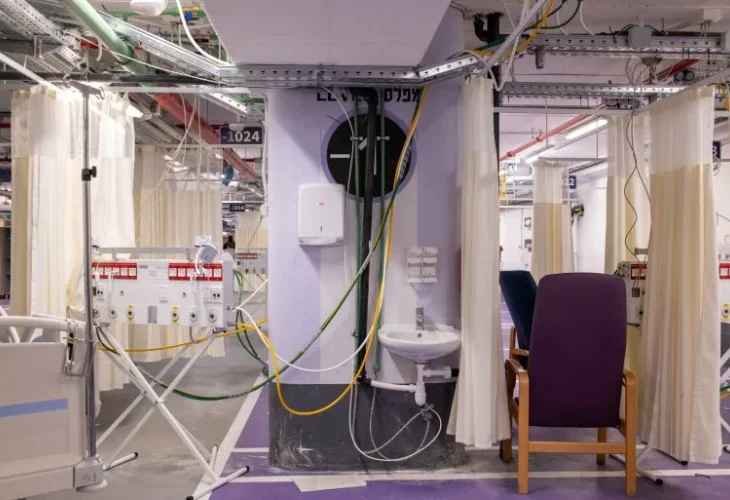 (Illustrative photo: Dor Pazuelo/Flash90)
The Health Ministry today (Thursday) published its 2025 report on infections in hospital wards across the country. According to the report, about 4,000 hospital-acquired infections were documented in hospitals, but the Health Ministry estimates that the national prevention program has already prevented thousands of cases and more than 1,300 deaths.
For example, in a comparison of general intensive care units, Shaare Zedek, Beilinson, and Sheba ranked worst, posting the highest rates of hospital-acquired bloodstream infections, with 9.6, 8.9, and 8.5 cases per 1,000 hospitalization days, respectively.
In 2025, 561 cases of hospital-acquired sepsis were recorded in general intensive care units in hospitals. These accounted for nearly 50% of all sepsis cases that year in intensive care units (1,130). In neonatal intensive care units, 192 cases were recorded, and among children there were 170 cases. In cardiac intensive care, 68 cases were recorded; in neurosurgical intensive care, 78; and in cardiothoracic surgery units, 61 cases were recorded.
Eleven hospitals met the national target of up to three cases of hospital-acquired sepsis per 1,000 hospitalization days in 2025. Among the large hospitals, Shaare Zedek had the highest number of bloodstream infection cases, followed by Beilinson, Sheba, and Hadassah Ein Kerem.
Standing out for the better were Shamir Medical Center (Assaf Harofeh) and Soroka, which met the target, with 1.3 and 1.9 cases per 1,000 hospitalization days, respectively. The target, it should be noted, is three cases per 1,000 hospitalization days.
At Ichilov, the number of cases in general intensive care stood at 4.7 per 1,000 hospitalization days, and at Rambam it was 5.8. Among mid-size hospitals, standouts on the positive side included Bnai Zion Medical Center, where 2.4 sepsis cases per 1,000 hospitalization days were recorded in the general intensive care unit, followed by Galilee Medical Center in Nahariya, HaEmek Medical Center (2.9), and Barzilai in Ashkelon (3). In this category, the worst performers were Meir (7), Wolfson (6.2), Hillel Yaffe (5.9), and Carmel (5.3).
Among small hospitals, those that met the target set by the ministry were Laniado, Hadassah Mount Scopus, Yoseftal, and the English Hospital in Nazareth.
Professor Yehuda Carmeli, director of the National Center for Infection Prevention at the Health Ministry, said in a briefing to reporters: "This is a price we pay for the ability to provide advanced modern care. Modern medical treatments challenge and bypass the body’s defense systems through catheters inserted into blood vessels, the urinary tract, or vital organs, or through very complex surgeries. Many procedures are performed on every patient, and each one is complex and involves many stages, where any imperfection in any one of them can lead to infection."
According to him, in the Western world, between 5% and 7% of patients suffer from an infection acquired in the hospital. Hospital-acquired infections also carry major functional and economic consequences, since hospital beds are occupied by those patients and this can disrupt ward operations. The OECD estimates that 6% of all hospitalization expenses are the result of hospital-acquired infections. Most hospital-acquired infections are linked to complications of medical treatment, and a significant portion of them, between 35% and 75%, can be prevented through strict work procedures, monitoring, oversight, and targeted professional interventions."

