

World News
Satellite Images Suggest New Activity at Iran's Pickaxe Nuclear Site
New satellite images suggest possible activity at Iran's Pickaxe Mountain complex, while Natanz, Fordow, and Isfahan show little visible change.
- Yuval Aviv
- | Updated
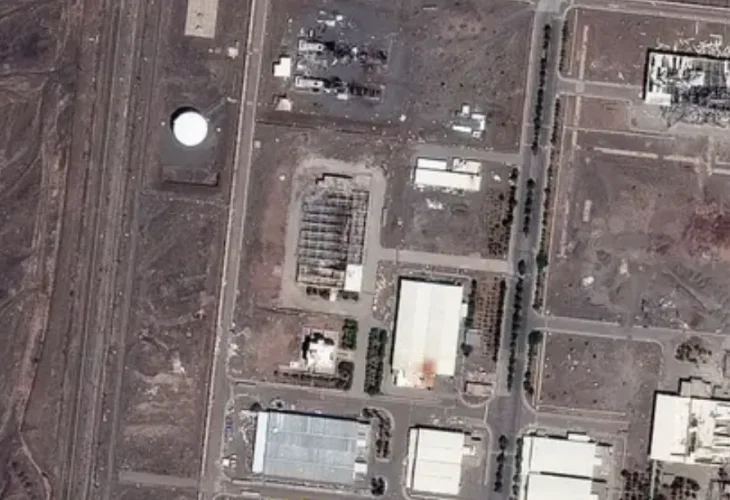 (Photo: Institute for Science and International Security)
New satellite images from late June 2026, analyzed by the Institute for Science and International Security (ISIS) and published today (Sunday) by VantorTech, suggest there may be continued activity at the underground Pickaxe Mountain complex near Natanz.
One of the key locations where activity was observed is the underground facility at Pickaxe Mountain. According to the report, the original tunnel entrances, built in 2007, remain sealed. Meanwhile, the eastern entrances to the newer tunnel complex have been partially covered with dirt since April 2026.
The institute believes this is most likely the same complex described in a recent CNN report as containing a "deliberately collapsed tunnel." However, the researchers emphasized that, in their assessment, no enriched uranium is being stored at the site.
According to the institute, the memorandum of understanding signed between Washington and Tehran requires Iran to avoid altering the current status of facilities connected to its nuclear program.
Based on that interpretation, construction or development work at sites such as the Pickaxe complex would not be be permitted. If that interpretation is correct, the activity seen in the latest satellite images could conflict with Iran's commitments under the agreement.
According to the researchers' analysis, the enrichment facility at Natanz continues to show almost no evidence of recovery.
Access points to the underground enrichment halls have not been restored, staff entrances remain destroyed, and vehicle access routes still display extensive damage. In addition, both the main and backup power systems have not yet been brought back online, while cooling system components remain scattered throughout the complex. Outside the Pilot Fuel Enrichment Plant (PFEP), which was destroyed in June 2025 and later covered over by Iran, satellite imagery identified only a single vehicle.
The report also found no major new developments at the Fordow nuclear facility. Researchers noted that the passive protective measures Iran installed during May, including mounds of dirt and rocks placed along roads leading to the tunnel entrances, remained visible in satellite images taken on June 21.
According to the institute, the layout creates a winding route that "is not intended to block the road but to slow rapid vehicle access to and from the tunnels." The tunnel entrances themselves also remain covered with dirt.
The institute added that earlier satellite images showed small dirt mounds appearing near two tunnel entrances sometime between the beginning and end of May. Researchers suggested these areas could potentially contain buried mines, while stressing that satellite imagery alone cannot confirm that conclusion.
No new activity was detected at the nuclear complex in Isfahan either. As of June 29, the tunnel entrances remained covered with dirt, and researchers found no visible signs of changes at the site.
According to the institute, Iran's current actions may also have broader strategic implications. Researchers said that the difficulty of accessing Iran's stockpile of enriched uranium reduces its immediate military value, limits the possibility of rapidly putting the material to use, and reinforces the assessment that Iran currently does not have an operational enrichment facility capable of quickly converting the material into weapons-grade uranium.
The Institute for Science and International Security said it will continue monitoring all four nuclear sites through satellite imagery in the coming months to determine whether any significant changes occur in Iran's nuclear infrastructure or activities.

