

Facts You Didn't Know
9 Villages With Some of the Strangest Rules in the World
Discover nine fascinating villages where everyday life is shaped by extraordinary local rules, from quiet hours to blue-painted homes and zero-waste living.
- Shira Dabush
- | Updated
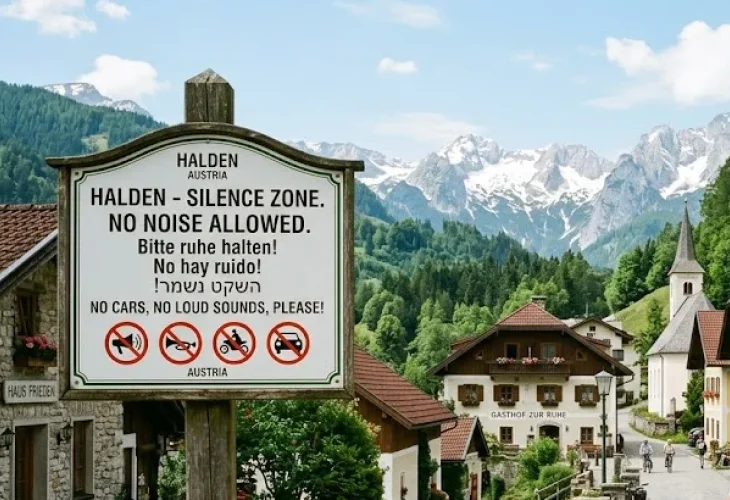
When we think about laws and regulations, we usually picture speed limits, smoking bans, or supermarket business hours.
But around the world, there are still villages with rules so unusual that tourists can barely wrap their heads around them, let alone follow them. Here are nine places that prove reality can be stranger than fiction.
1. The Place Where Death Is Essentially Off-Limits: Longyearbyen, Norway
In the northern town of Longyearbyen, located in the frozen Svalbard archipelago, no one will arrest you if you die, but for decades one especially unusual rule has been in place: the dead are not buried there.
The reason is simple. Because the ground remains permanently frozen, bodies do not decompose naturally. Scientists have found that bacteria and viruses can remain preserved in the permafrost for decades, potentially posing a public health risk. As a result, people who are seriously ill or nearing the end of life are typically transferred to mainland Norway, where they receive medical care and, if necessary, are buried.
2. The Venice of Northern Europe: Giethoorn, Netherlands
If you're tired of engine noise, honking, and endless traffic jams, the Dutch village of Giethoorn may sound like paradise.
In the center of the village, there are virtually no roads. Instead of cars, residents and visitors travel by quiet electric boats, bicycles, or simply on foot across charming wooden bridges. A network of canals connects the homes, meaning that mail carriers, neighbors, and even maintenance workers often reach front doors by boat.
3. No New Cats Allowed: Omaui, New Zealand
In the small settlement of Omaui, New Zealand, local authorities introduced one of the country's most unusual animal regulations: a ban on owning new cats.
The rule was introduced not because of a dislike of cats, but to protect New Zealand's unique wildlife. Conservation experts warned that domestic cats hunt large numbers of native birds, reptiles, and other vulnerable species. Residents who already owned cats were allowed to keep them, but once those pets die, they may not replace them with new ones.
4. Put the Cameras Away: Shirakawa-go, Japan
The historic mountain village of Shirakawa-go is famous for its centuries-old wooden homes with steep thatched roofs and is recognized as a UNESCO World Heritage Site.
As tourism surged, local authorities introduced rules to help protect residents' privacy. Visitors are asked not to photograph private homes, courtyards, or residents without permission, helping preserve both the community's privacy and the village's traditional atmosphere.
5. Quiet, No Drilling Here: Murnau, Germany
Germany is well known for its "quiet hours" (Ruhezeit), but in the Bavarian town of Murnau and many nearby communities, those rules are taken especially seriously.
During evening hours, Sundays, and public holidays, residents are prohibited from carrying out noisy work such as mowing lawns, drilling, home renovations, or operating heavy equipment. Those who repeatedly disturb the peace can face substantial fines.
6. The Blue Kingdom: Chefchaouen, Morocco
The old city of Chefchaouen in northern Morocco is famous for its striking blue streets and buildings.
Although there is no nationwide law requiring homes to be painted blue, local authorities and residents carefully preserve the city's distinctive appearance. Property owners seeking to renovate or repaint their homes are generally expected to maintain the traditional blue color palette that has become the city's trademark.
7. Zero Tolerance for Plastic: Mawlynnong, India
The small village of Mawlynnong in eastern India has earned a reputation as one of Asia's cleanest villages, thanks in part to strict environmental rules, including a ban on single-use plastic bags.
Residents and visitors are expected to dispose of trash only in specially designated bamboo bins. The entire community, from children to seniors, regularly takes part in organized neighborhood cleanups to keep the village spotless.
8. A Paradise Free of Advertising: Gásadalur, Faroe Islands
The tiny village of Gásadalur in the Faroe Islands is known for preserving its spectacular natural scenery by keeping commercial advertising to a minimum.
Visitors won't find rows of billboards, flashing neon signs, or large commercial displays competing with the dramatic cliffs, waterfalls, and ocean views that have made the village famous.
9. Recycling Taken to the Extreme: Kamikatsu, Japan
Residents of Kamikatsu have embraced one of the world's most ambitious recycling programs through an official "Zero Waste" policy.
Instead of sending garbage to landfills or incinerators, residents sort their household waste into more than 45 categories, including different types of paper, plastics, metals, and glass. There are few public trash cans and no regular curbside garbage collection. Instead, residents wash, sort, and personally deliver their recyclables to the community recycling center.
Whether these rules seem brilliant, bizarre, or somewhere in between, they all reflect the unique history, culture, and priorities of the communities that created them. What may sound strange to an outsider often serves an important purpose for the people who live there. One thing is certain: if you're planning to visit one of these villages, it's worth learning the local rules before you arrive. You might be surprised by just how different everyday life can be.

