

Israel News
Hamas Government Announces Resignation as Gaza Governance Plan Moves Forward
Hamas says a technocratic committee will assume responsibility for governing Gaza, while Israeli officials dismiss the move as a political maneuver with no practical impact.
- Yuval Aviv
- | Updated
 (Credit: shutterstock)
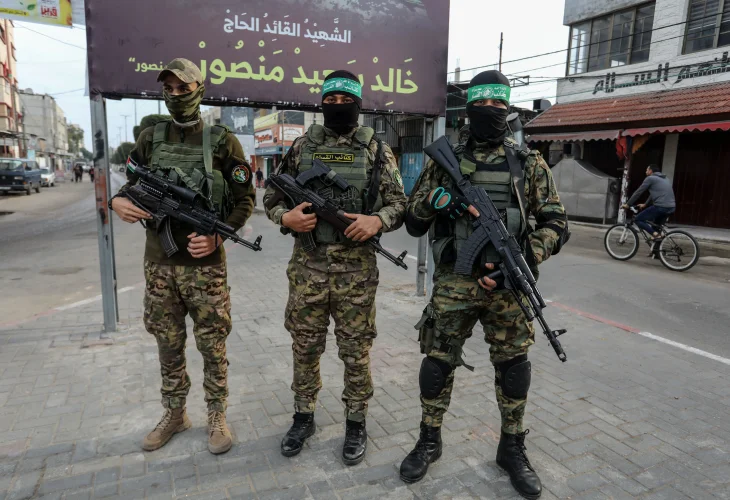
The Hamas government in the Gaza Strip announced its resignation on Monday in what the organization described as a move to allow a technocratic committee to assume responsibility for governing the territory. Hamas also stated that all government employees would remain in their positions following the administrative transition but would operate under the authority of the new technocratic body.
Senior Israeli officials dismissed the announcement as largely symbolic.
"The so-called resignation of the Hamas government, while all of its members remain in their positions, is nothing more than a public relations stunt with no practical significance," the officials said. "Hamas is concerned that it could be accused of violating the agreement, so it is trying to buy time and create political distractions."
The body that announced its resignation is officially known as the Committee for Monitoring Government Operations, which has effectively served as Gaza's governing authority under Hamas.
According to the framework being advanced as part of U.S. President Donald Trump's initiative, this committee is expected to transfer its responsibilities to a technocratic administration that will oversee the day-to-day management of the Gaza Strip.
Last week, reports revealed that the U.S. administration had decided to drop Hamas' disarmament as a precondition for advancing Gaza's reconstruction. Although dismantling Hamas' military capabilities was included in Trump's reported 20-point plan, Washington has reportedly chosen to move ahead with the plan's second phase, which focuses on the gradual reconstruction of areas in Gaza currently under Israeli control.
Under the proposed framework, Israel would gradually withdraw from those areas, which would then be handed over to an international force. Temporary residential neighborhoods would be established, and civilians would be relocated in stages. The initial phase does not include the construction of new high-rise cities, while the full reconstruction project is expected to take approximately ten years to complete.

