

Fetal Abnormalities
Raising a Child with Treacher Collins Syndrome: One Family's Journey from Grief to Purpose
When Adir was born with the rare genetic condition Treacher Collins syndrome, his parents were devastated. Today, they are helping families across Israel and teaching others the power of acceptance, resilience, and unconditional love.
- Michal Arieli
- | Updated
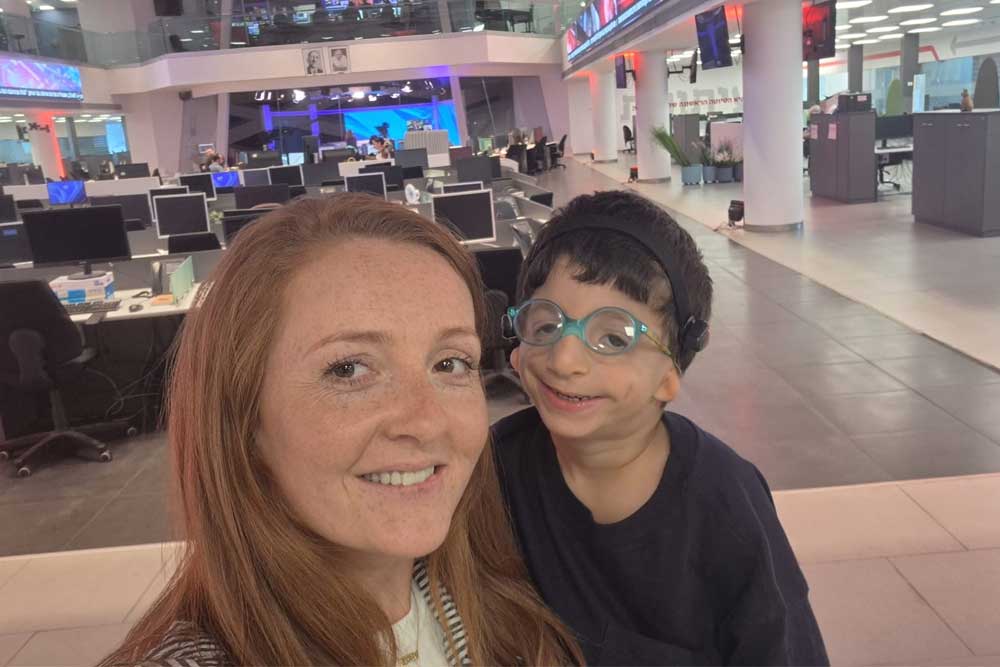
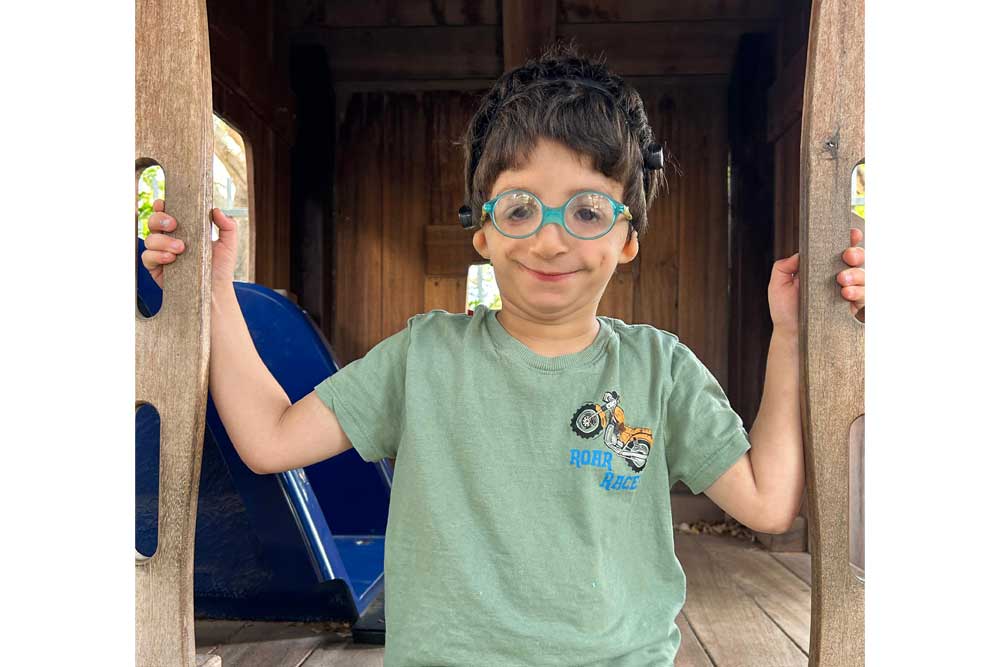
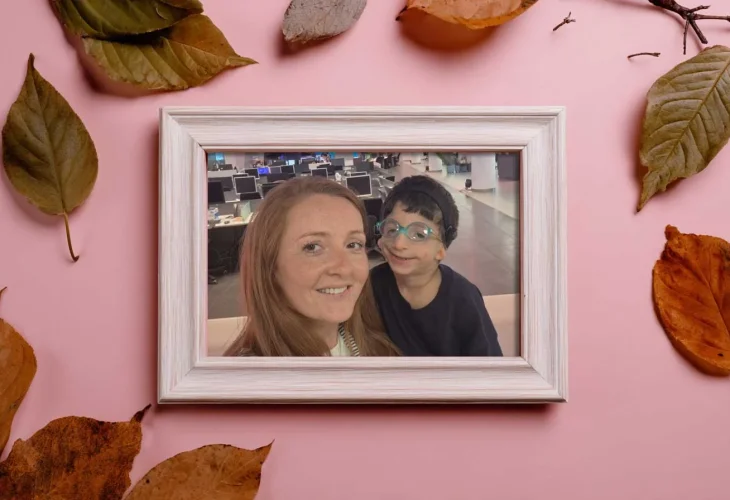 In the photo: Diana Bar and her son Adir
When Diana Bar walks down the street with her four year old son, Adir, people always look at him. Sometimes the looks are filled with pity. Sometimes people stare, laugh, or whisper. But they are always curious.
"I understand why people look," Diana says. "At the same time, it hurts so much to know that Adir has to deal with this at such a young age."
Those looks follow them everywhere, reminding Diana of the life changing journey that began in the delivery room and transformed their family's life forever.
"When Adir was born, the midwife immediately realized that something wasn't right," Diana recalls. "Although no official diagnosis could be made at that moment because there is a formal medical process for that, it was obvious from the very beginning."
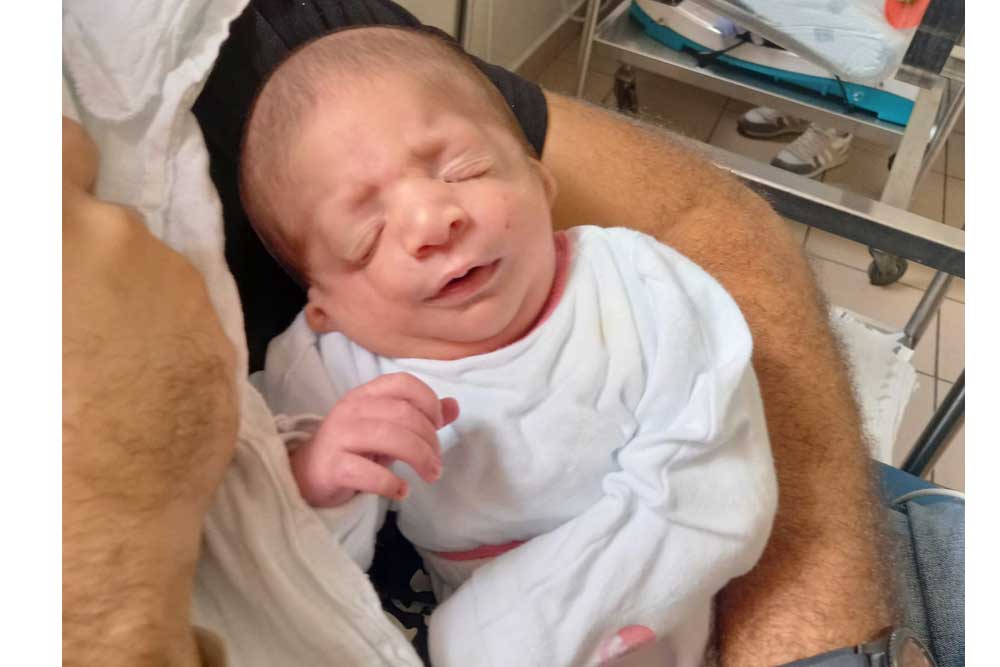
How did you react?
"It was complete shock," she says. "I remember lying in the delivery room feeling as though the ground had disappeared beneath me and the world had come to an end. I screamed. I cried. We had no idea what to do."
Her husband, Doron, was just as devastated.
"He literally collapsed onto the floor from the shock. But less than ten minutes later, he picked himself up and asked to hold Adir while he was still sitting on the floor. He hugged him tightly and said, 'I'm with you until the end. I will never leave you.'"
At that moment, neither Diana nor Doron knew that nineteen years earlier, another baby had been born in the very same hospital with Treacher Collins syndrome, a rare genetic condition that affects the development of the facial bones and ears.
That baby was Malachi Shuv.
His biological parents abandoned him shortly after birth, but an extraordinary nurse and midwife named Bat Sheva Shuv chose to adopt him into her family. Malachi grew up as one of her own children alongside her nine biological children.
"The hospital staff told me about Bat Sheva and introduced us," Diana says. "I only met Malachi himself recently, but Bat Sheva became my lifeline. She was my source of knowledge, the person we turned to for advice. More than anything, she gave me hope by telling me that their family life had never stopped because of the syndrome. On the contrary, Malachi grew up like any other child."
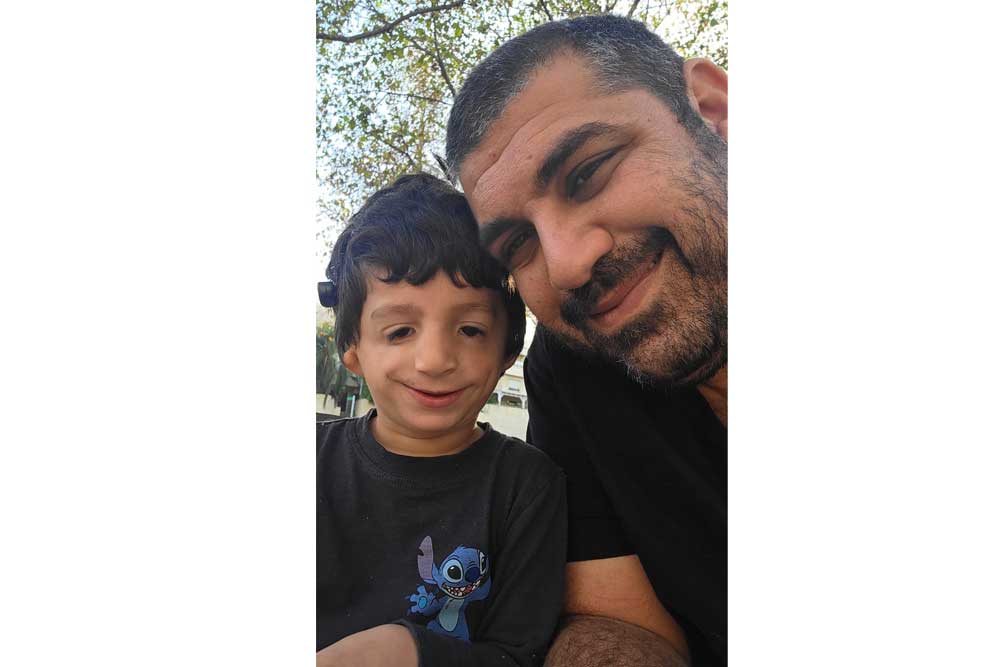 Adir with his father
Searching for Answers
Leaving the hospital thrust the young family into an overwhelming new reality.
They named their son Adir, a Hebrew name that means "mighty" or "powerful," but the months that followed were filled with uncertainty.
"At the time, there was almost no accessible information about microtia, the congenital absence or underdevelopment of the outer ear, or about facial syndromes in general. We didn't know which doctors we should be seeing. We had to figure everything out on our own."
The family went from one specialist to another.
"We saw five different kinds of doctors: ENT specialists, oral and maxillofacial surgeons, pediatricians, plastic surgeons. Our days were consumed by appointments, consultations, and endless medical visits."
While the medical battle unfolded, Diana found herself facing an emotional one.
"I personally went through an incredibly difficult year. I experienced every stage of grief," she says. "I wasn't capable of taking care of Adir, and he spent his first year growing up without much physical affection from me."
Doron immediately stepped in. "He understood how overwhelmed I was. He stopped working and became both father and mother. He cared for Adir, looked after our two older daughters, managed the house, and did absolutely everything."
Meanwhile, Diana withdrew from the world.
"I was almost completely disconnected. I would sit alone on the balcony, stare at the sky, and ask God, 'How are babies born without ears?'"
She admits she was consumed by anger.
"I told God, 'This isn't fair. I'm a good person. I do good things. Why are You doing this to me? This isn't the child I wanted. Take him away now and give me the baby I expected.'"
Occasionally, when Doron became exhausted, she would help feed Adir or take care of urgent tasks.
"But he didn't receive affection from me. No hugs, no cuddles, no gentle touch. None of the things that come so naturally between a mother and her baby."
A Lonely Journey
Throughout that painful year, Diana desperately searched for support.
"I was looking for information. I was looking for another mother who understood what I was going through. Someone I could cry with, hug, and speak honestly about what I was feeling."
She found no one.
"Bat Sheva was always there for me, but she was in a completely different stage of life. When I asked her about surgeons or current treatments, much of the information she had was no longer relevant. I longed to find another mother walking the same road, but I couldn't."
The First Word: "Mom"
Everything began to change around Adir's first birthday.
"I started noticing that he was developing completely normally from a cognitive standpoint," Diana says.
Although Treacher Collins syndrome affects physical appearance, it does not typically affect intelligence.
"People see Adir and automatically assume he has cognitive disabilities as well. That stigma was so powerful that, in the beginning, even I questioned what he would be capable of."
Today, she regrets those doubts. "It hurts me that I didn't believe in him. It hurts me that I wasn't truly there for him during the most critical year of his life."
Then came a moment she will never forget.
"Around his first birthday, he started saying a few words. The very first word he said was 'Mom.'"
Despite the emotional distance she had created, Adir had still reached for her. "He felt my presence. He wanted me. He longed for me."
That single word changed everything.
"I couldn't stay distant anymore. I returned to my daughters, to my parents, to my friends. Most importantly, I returned to Adir. That was the moment I truly became his mother."
Does Adir realize that he looks different?
"Yes," Diana says quietly. "He began understanding that about six months ago."
Until then, the struggle had belonged mostly to his parents. "Now he asks me, 'Mom, are those children laughing at me?' Of course it hurts him."
Yet Diana describes her son as someone whose spirit shines far brighter than his appearance.
"He is unbelievably funny, incredibly sweet, and very social. Children are naturally drawn to him. He is intelligent, creative, and emotionally perceptive."
She smiles as she describes him.
"He is always the first to notice when someone is sad. He instinctively knows how to comfort people and create a warm atmosphere. Many children tell their mothers, 'I love you.' Adir says something different. He tells me, 'Mom, I love you so much.'"
Looking Beyond Appearance
The gap between who Adir truly is and the way strangers react to him inspired Diana to take action.
"I know what an extraordinary child he is, and it hurts me that society doesn't always give him the chance to show people who he really is."
Today, she gives lectures about accepting people who are different. "When people ask me what they should do, I first explain what they shouldn't do. Don't stare. Don't keep looking. Don't laugh."
She also encourages parents to prepare their children before they encounter someone who looks different. "Talk to your children about accepting differences even if they don't personally know anyone with a visible disability. Raise their awareness now so that when they eventually meet someone who looks different, they'll know how to respond respectfully."
Her message extends far beyond facial differences.
"It could be a child in a wheelchair, a child who is overweight, unusually tall, or unusually short. The message is always the same: accept people as they are, and learn to see beyond appearances."
A Sea of Support
Today, Adir attends a preschool specializing in children with hearing impairments.
He receives comprehensive care, including speech therapy, occupational therapy, and emotional support, which Diana considers the most important part of his treatment at this stage.
Despite his young age, Adir has already undergone two major surgeries, one involving his skull and another to repair his palate. More surgeries are expected in the future.
"Our goal is to improve his appearance as much as possible," Diana says. "I will do everything I can to make sure he receives the best treatments and surgeries available anywhere in the world."
Where do you find the strength to keep going?
"The answer is simple," she says. "I get enormous strength from Doron."
She explains that her husband has always seen only the child, never the diagnosis.
"Sometimes I panic and tell him, 'Let's contact that doctor in Los Angeles,' or 'Let's take Adir to Boston.' He looks at me and says, 'Diana, look how beautiful he is.'"
"Doron has always seen straight into Adir's soul, just as he did the moment he was born."
Bat Sheva also continues to be an important source of encouragement.
"She tells me about Malachi's life today. He has many friends. He goes out, enjoys life, works as a DJ, and plays the drums. He grew up surrounded by friends who accepted him exactly as he is."
Turning Pain into Purpose
Over the past year, Diana and Doron decided to help other families facing similar challenges.
They founded Panim Adirot, a nonprofit organization that supports two groups: parents of children with microtia and parents of children born with various facial differences.
"We're already in close contact with dozens of families, but we know this is only the beginning," Diana says. "There are hundreds of children like Adir in Israel, and we feel it's our mission to reach every one of them."
Watching parents support one another has become one of the greatest rewards. "When one mother asks about a surgery or a hearing device, twenty other mothers immediately respond, each sharing her own experience."
She remembers how isolated they once felt.
"I remember searching desperately for even the smallest piece of information and finding nothing. Today, I feel privileged to help build the network that we wished had existed when Adir was born."
Has your faith changed through all of this? How do you feel about God today?
Diana pauses before answering.
"I consider myself a secular person with faith," she says. "In the beginning, I truly couldn't understand why God had done this to us."
Over time, however, the anger slowly gave way to something else.
"As the years have passed, the anger and confusion have been replaced by a deep sense of purpose."
Today, she sees her family's journey through a different lens.
"We now understand that nothing happened by accident. This is probably the mission we were meant to fulfill in this world."

