

Parashat Devarim
Parashat Devarim for Kids: When a Vending Machine Eats Money
A simple favor turns into a fascinating halachic question. Who should pay when a vending machine keeps the money?
- Rabbi Erez Chazani
- | Updated
"You shall sell me water for money so I can drink" (Deuteronomy 2:28).
Consider the following question:
Two yeshiva students, Yaakov and Efraim, were traveling by bus to visit the graves of righteous figures in northern Israel. During the trip, the driver stopped for a short break.
Efraim got off the bus to buy something to eat. Before he left, Yaakov called to him through the window and said, "Since you're already getting off, could you do me a favor and buy me a can of cola from the vending machine? I'll pay you back when you get back."
Efraim happily agreed.
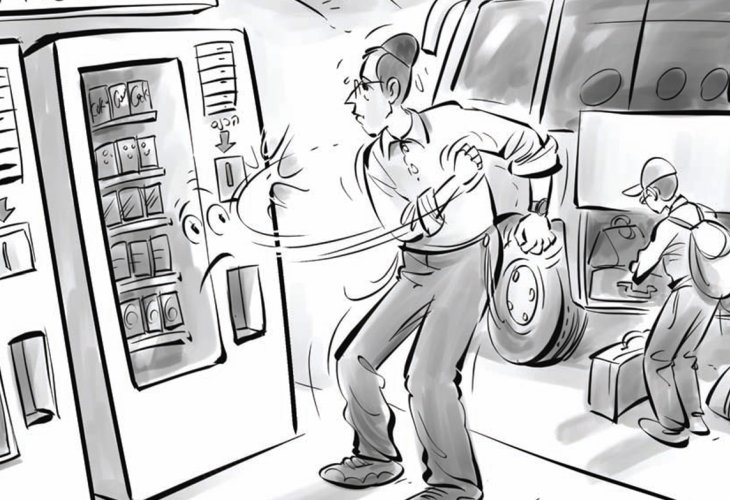
When he reached the vending machine, he discovered the can cost five shekels. The only coin he had was a ten shekel coin, so he inserted it into the machine, expecting to receive both the drink and his change.
Instead, the machine malfunctioned.
The coin became stuck, no drink came out, and no change was returned, despite Efraim's repeated attempts to get the machine working.
He returned to the bus and told Yaakov what had happened.
"The ten shekel coin got stuck in the machine," he said. "It didn't give me the can or my change."
"I'm sorry to hear that," Yaakov replied sympathetically. "May Heaven compensate you for your loss."
"My loss?" Efraim responded in surprise. "I lost those ten shekels because you asked me to buy you the drink. You should reimburse me."
Yaakov disagreed.
"First of all," he replied, "the can only costs five shekels, not ten. And in any case, I never actually received the drink, so why should I have to pay at all?"
So who is right?
Should Yaakov pay nothing because he never received the can? Should he reimburse Efraim for five shekels, the cost of the drink? Or is he responsible for the full ten shekels that were lost?
The Halachic Ruling
When Yaakov asked Efraim to buy him a can of cola, he effectively instructed him to spend money on his behalf. From the moment Efraim inserted the coin into the vending machine in order to fulfill Yaakov's request, Yaakov became obligated to reimburse him.
A similar ruling appears in the Shulchan Aruch (Choshen Mishpat 14:5, Rema). If Reuven tells Shimon, "Travel to another city so we can have our case heard before a particular beit din. Go ahead, and I'll meet you there," and Shimon spends money traveling but Reuven never arrives, Reuven must still reimburse Shimon's travel expenses. Since Shimon relied on Reuven's instructions and spent money on his behalf, Reuven is responsible for the expense.
The same principle applies here. Efraim spent money solely because Yaakov asked him to purchase the drink.
How Much Must He Pay?
Although Efraim lost a ten shekel coin, Yaakov's request was only to buy a can of cola worth five shekels. Yaakov never agreed to cover more than the cost of the drink itself. In principle, Efraim could have exchanged the ten shekel coin before making the purchase.
For that reason, Yaakov is obligated to reimburse only the amount he asked Efraim to spend on his behalf.
Bottom line: Yaakov must pay Efraim five shekels, but he is not responsible for the additional five shekels lost when the vending machine malfunctioned.
This story is adapted from the book Achat Sha'alti 2, from the teachings of the gaon Rabbi Yitzchak Zilberstein.

