

Scientific Experiments
How Can a Balloon Inflate All by Itself? A Simple, Fascinating Experiment Kids Will Love
A fun and simple baking soda and vinegar experiment that teaches children about chemical reactions while keeping them entertained
- Tehila Cohen
- | Updated
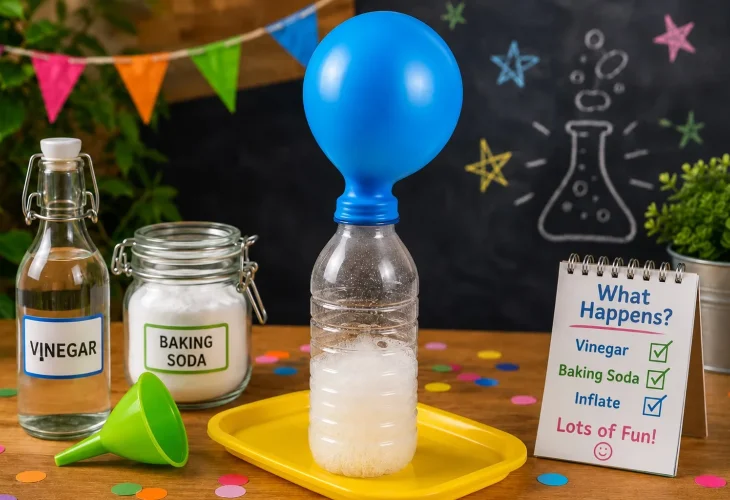
If you’re looking for a fun activity to keep the kids entertained during the holidays while sparking their curiosity, this simple science experiment is perfect. It's easy to do, safe, requires minimal cleanup, and delivers a surprising result every time.
What You'll Need
An empty, dry plastic bottle
A balloon
3 to 4 tablespoons of vinegar
1 teaspoon of baking soda
A small funnel (optional, but helpful)
How to Do It
Pour the vinegar into the plastic bottle.
Using a funnel, fill the balloon with the baking soda.
Carefully stretch the opening of the balloon over the neck of the bottle, making sure the baking soda stays inside the balloon for now.
Lift the balloon so the baking soda falls into the bottle.
Watch what happens. Within seconds, bubbles will begin to form, and the balloon will start to inflate.
What's Happening?
When the baking soda and vinegar mix, they undergo a chemical reaction. During this reaction, a gas called carbon dioxide is produced. Since the gas has nowhere to escape, it rises and fills the balloon. The more gas that is created, the more the balloon inflates. This is the same type of gas that creates the bubbles in carbonated drinks.
Turn It Into a Science Challenge
Prepare several bottles and test different ideas:
Will adding more vinegar make the balloon inflate more?
Will a larger balloon inflate faster?
What happens if you add more baking soda?
Encourage the kids to make predictions before each experiment and see whether their guesses are correct.
A Helpful Tip
It's best to perform the experiment over a tray or in the sink, especially the first few times, in case the foamy reaction rises higher than expected and spills over. Have fun experimenting!

