

History and Archaeology
How China's War on Sparrows Turned Into a National Disaster
China's campaign to eliminate sparrows was meant to boost food production, but it triggered an ecological disaster with devastating consequences.
- Yehosef Yaavetz
- | Updated
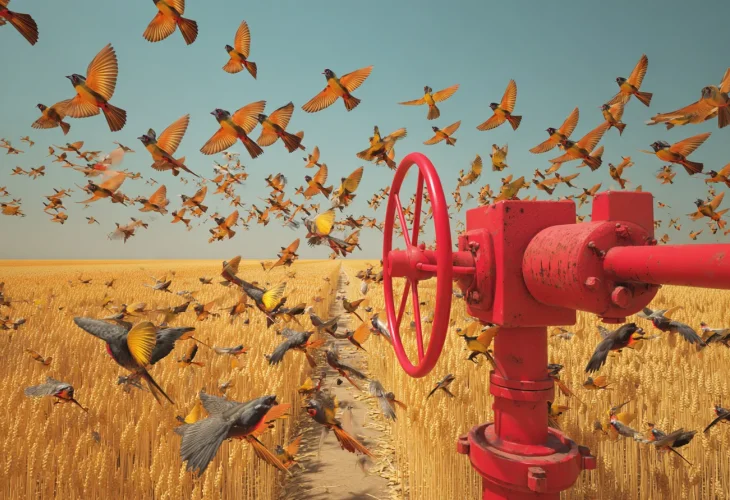
Mao Zedong was the undisputed ruler of Communist China. Communist ideology promoted the belief that humanity could control nature, reshape society, and even remake human nature itself.
In 1958, the Chinese Communist leadership launched an all-out campaign against what it called the "Four Pests": rats, flies, mosquitoes, and sparrows. These animals were considered harmful to grain production, and the government believed that eliminating them would increase agricultural output. The campaign was part of the Great Leap Forward, Mao's ambitious effort to rapidly transform China into a powerful industrial and agricultural nation.
Sparrows were singled out because officials believed they consumed large amounts of grain and therefore threatened the country's food supply.
A Nationwide Campaign
The idea seemed simple: if sparrows eat grain, then eliminating sparrows should leave more grain for people.
The government mobilized the entire population, including schoolchildren, students, and government workers, to participate. People shot sparrows, destroyed nests, smashed eggs, and used another widespread tactic: banging pots, drums, and gongs to prevent the birds from landing.
According to contemporary reports, the birds were forced to remain in flight until they died from exhaustion and fell from the sky. State propaganda portrayed participation in the campaign as a patriotic duty and an important contribution to the nation.
Historical accounts describe the killing of hundreds of millions of sparrows, with some estimates placing the number even higher. It was one of the largest wildlife eradication campaigns in history.
The Unexpected Consequences
The campaign was based on a critical misunderstanding.
While sparrows did eat some grain, they also consumed enormous numbers of insects, including locusts and other agricultural pests.
As sparrow populations collapsed, one of nature's most effective forms of pest control disappeared.
The result was an explosion in insect populations. Locusts and other crop-damaging insects spread rapidly across farmland, devastating harvests that the campaign had been intended to protect.
As Encyclopaedia Britannica notes, the sharp decline in sparrow populations contributed to a dramatic increase in locust numbers, causing widespread crop damage.
The Communist leadership had treated the ecosystem as though it were a simple equation: remove one harmful species and agricultural production will increase.
Nature proved to be far more complex.
The sparrow was not merely a consumer of grain. It was also an essential part of the ecological balance that kept insect populations under control. Removing one link from that system disrupted the entire chain.
A Costly Reversal
By 1960, the damage had become impossible to ignore.
Mao ordered an end to the anti-sparrow campaign, and sparrows were removed from the list of the Four Pests. Bedbugs were added in their place.
By then, however, China's sparrow population had been devastated. The country later imported sparrows from the Soviet Union in an effort to restore the species.
The policy change came too late to prevent widespread damage.
A 2025 study estimated that the anti-sparrow campaign alone reduced crop production by nearly 20 percent and directly contributed to approximately two million deaths.
The campaign unfolded alongside the Great Chinese Famine of 1959 to 1961, one of the deadliest famines in human history. Historians attribute the catastrophe to a combination of disastrous Great Leap Forward policies, unrealistic production quotas, false reporting by local officials, forced grain procurement, severe disruptions to agriculture, environmental damage caused by the anti-sparrow campaign, and, in some regions, droughts and floods.
While millions of ordinary Chinese citizens starved, Mao himself continued to enjoy abundant food, and state propaganda celebrated him as a wise and successful leader.
A Lesson in Human Arrogance
The anti-sparrow campaign has since become one of history's clearest examples of the unintended consequences that can result when people attempt to reshape nature without fully understanding how it works.
Mao believed that the new socialist society could conquer not only agriculture but nature itself.
Instead, the campaign demonstrated the opposite. Natural ecosystems cannot simply be redesigned by decree, and a limited understanding of how different species interact can produce results that are the exact opposite of what was intended.
Our Sages expressed this idea long ago with a timeless warning:
"Take care not to destroy My world."

