

Interesting
Inside the World's Largest Train Station: A Modern Engineering Marvel
Covering 413,000 square meters and built in just 38 months, Xiamen Xiang'an Railway Station is now the world's largest train station by building area.
- Shira Dabush
- | Updated
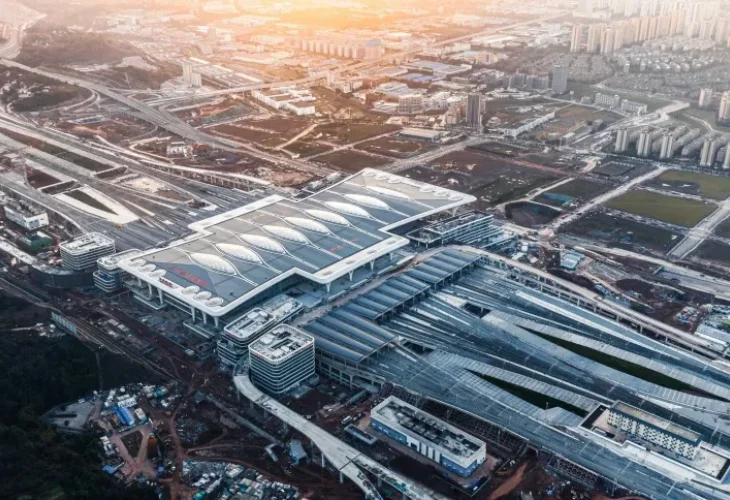
With more than 413,000 square meters (about 4.4 million square feet) of space, 29 platforms, eight floors, and over 40,000 workers involved in its construction, Xiamen Xiang'an Railway Station has set a new benchmark for modern transportation hubs.
While major infrastructure projects often take many years—or even decades—to complete, China finished one of its most ambitious railway stations in just 38 months. Today, Xiamen Xiang'an Railway Station is considered the world's largest railway station by building area.
Located in the city of Xiamen, in China's southeastern Fujian Province, the station was built as part of the country's expanding high-speed rail network, the largest of its kind in the world.
Spanning approximately 413,000 square meters (about 4.4 million square feet), the station covers an area roughly equal to 170 soccer fields. The massive complex includes eight floors, several of them underground, and 29 platforms serving dozens of rail lines. The project was equally impressive in terms of manpower: more than 40,000 workers were employed during construction, working around the clock to meet the ambitious schedule.
A Small City Under One Roof
The station was designed to accommodate enormous numbers of passengers each day. In addition to its vast waiting halls, it features shopping areas, restaurants, digital navigation systems, customer service centers, and a fully integrated transportation network connecting high-speed rail, local transit, buses, taxis, and private vehicles.
The layout was carefully planned to minimize walking distances and make transfers between trains and other forms of transportation as fast and convenient as possible.
Part of China's Expanding High-Speed Rail Network
Over the past two decades, China has invested heavily in building its high-speed rail system. Today, the network stretches across tens of thousands of kilometers, connecting major cities with trains capable of reaching speeds of up to 350 kilometers per hour (about 217 mph) on many routes.
Officials expect the new station to become a major economic hub for the region, supporting tourism, commerce, and investment while helping millions of passengers travel more efficiently each year.

