

Health and Nutrition
Are You Storing Eggs Correctly? 4 Common Mistakes That Make Eggs Spoil Faster
Learn why you should never wash eggs before storing them, where to keep them in the refrigerator, the correct way to position them, and a simple trick that can help preserve fresh eggs for weeks
- Yitzchak Eitan
- | Updated
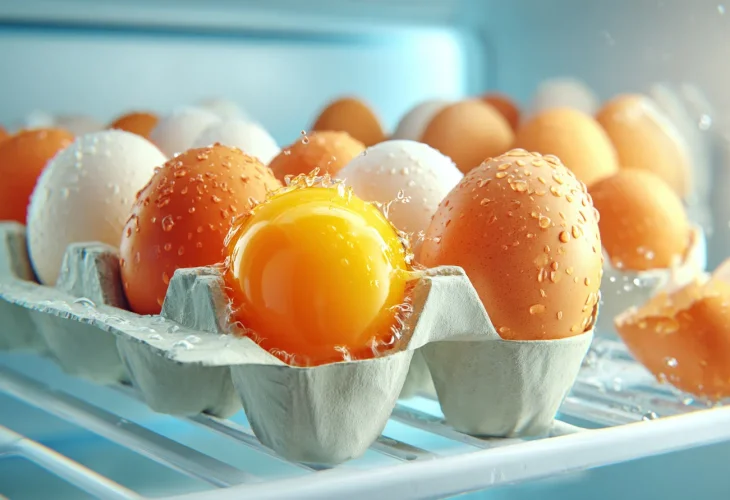
Storing eggs may seem like one of the simplest tasks in the kitchen, but small mistakes can significantly shorten their shelf life and cause them to spoil much sooner than expected. According to the YouTube channel Click DIY, many of the habits people follow are actually working against them. Following are the most common mistakes — and the best ways to keep your eggs fresh for longer.
Never Wash Eggs Before Storing Them
The most common mistake begins as soon as you return home from the grocery store: washing the eggs.
Eggshells are coated with a thin, natural protective layer called the cuticle, which seals the shell's tiny pores and prevents bacteria and contaminants from entering. Washing eggs with water removes this essential barrier, leaving the contents exposed and causing them to spoil much more quickly.
If an egg has a small amount of dirt on the shell, it's best to gently wipe it clean with a dry paper towel rather than rinsing it under water.
Don't Store Eggs in the Refrigerator Door
Another common mistake is placing eggs in the built-in egg tray on the refrigerator door.
Although this location is convenient, it is also the part of the refrigerator most exposed to temperature fluctuations every time the door is opened and closed. These constant changes accelerate the aging process and reduce the eggs' freshness.
Instead, store eggs on one of the interior shelves of the refrigerator, where the temperature remains more stable. It's also best to keep them in their original cardboard carton, which helps protect them from absorbing odors from other foods.
The Direction Matters More Than You Think
The way eggs are positioned in the carton also affects how long they stay fresh.
Every egg has a narrow end and a wider end. The wider end contains a small air cell. When eggs are stored with the narrow end facing downward and the wider end facing upward, the air cell remains stable at the top, helping to keep the yolk centered. This simple adjustment can significantly extend the egg's freshness.
A Simple Trick for Storing Eggs at Room Temperature
Experts also recommend an interesting method for preserving fresh eggs at room temperature for up to nearly a month.
The technique involves applying a very thin layer of ordinary cooking oil to the eggshell using a paper towel. The oil creates an artificial protective coating that seals the shell's pores, reducing moisture loss while helping to block bacteria and other contaminants from entering the egg.
This simple trick can help extend freshness when refrigeration is not available, provided the eggs are fresh to begin with and are stored in a cool, dry place.

