

Israel News
Prof. Yuval Elbashan: Research Data Was Twisted to Target the Haredi Community
Was the public given a flipped version of reality? Prof. Yuval Elbashan argues that data from Israel’s Council for Higher Education clearly shows that an overwhelming majority of Haredi students would not pursue academic studies without separate tracks — yet, he says, the conclusions were presented to the public in a distorted and misleading way.
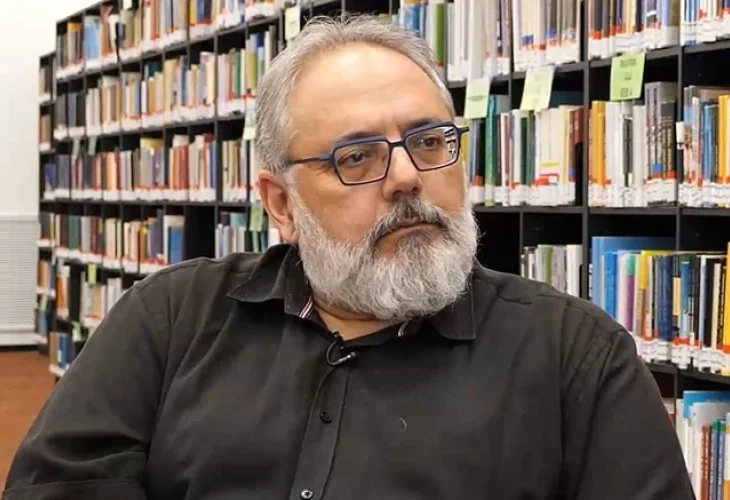 Prof. Yuval Elbashan
Prof. Yuval Elbashan has issued a sharp critique of efforts to bar gender-separated academic tracks in therapy-related degree programs for students from the Haredi sector, against the backdrop of a bill on the matter submitted to the Knesset. Writing in Yedioth Ahronoth, Elbashan argues that official data from a study conducted by the Council for Higher Education among Haredim who sought to study in academia was presented in the media in a distorted fashion, yielding a picture that is the precise opposite of the actual findings.
The attempt to invoke the study as grounds for cancelling the separate tracks, Elbashan contends, deliberately ignores its raw data. He stresses that in research of this kind one must always distinguish between the findings themselves and the interpretation laid over them, since the worldview of those who edit a study shapes the phrasing of its questions, the composition of its sample, and the analysis of its results.
Elbashan works through the questions put to participants and identifies what he describes as a flaw built into the way they were presented to the public.
"Let's begin with the central data point," he writes, "and pay very close attention to how the question was worded. The respondents — all of them Haredim who are either students or academic graduates — were not asked what they would prefer. They were handed a scenario with no alternative: there is only a mixed track for your professional training, and no separate option exists — would you enroll? It is rather like asking a vegetarian: there's only chicken or beef, will you eat? And even under this coercive ultimatum, 42% answered that they would not enroll. Fourteen percent said 'probably not,' 19% were undecided, 12% said 'probably yes,' and only 13% answered yes. In other words, the study's unambiguous finding is that even where no other option exists at all, 56% will not study without separation, and only 25% will.
"So how did the researchers arrive at the conclusion that there is 'a significant group of 44% who would enroll or are considering enrolling'? They folded every undecided respondent into the 'yes' column. Had they folded them into the 'no' column, the conclusion would have been that 75% are unwilling to study in mixed settings under any circumstances."
Why gender separation emerged as the top priority
Elbashan points to a second figure that emerges plainly from the study: participants were asked to select three principal considerations from a list of 21 when choosing a course of study. The results were unequivocal — gender separation placed first, cited by 48%, a considerable margin above the consideration that placed second (39%).
Even so, Elbashan complains, the researchers chose to foreground in their concluding language the claim that "half of the respondents did not regard this as a principal consideration."
The findings, Elbashan maintains, establish beyond any doubt that the existence of separation in academic studies is the single most important condition and consideration for the Haredi public. Anyone genuinely interested in increasing the number of Haredi therapists in the workforce should therefore be working to expand the separate tracks, not shrink them.
"For research to serve as a genuine basis for repairing reality," Elbashan concludes, "it must listen to the data as it is, and respect the choices of the people behind it."

