

Magazine
When Her Son Was Taken Hostage: She Picked Up a Paintbrush
When her son, IDF soldier Nimrod Cohen, was taken hostage in Gaza, Vicky Cohen found strength in an unexpected place.
- Michal Ariel
- | Updated
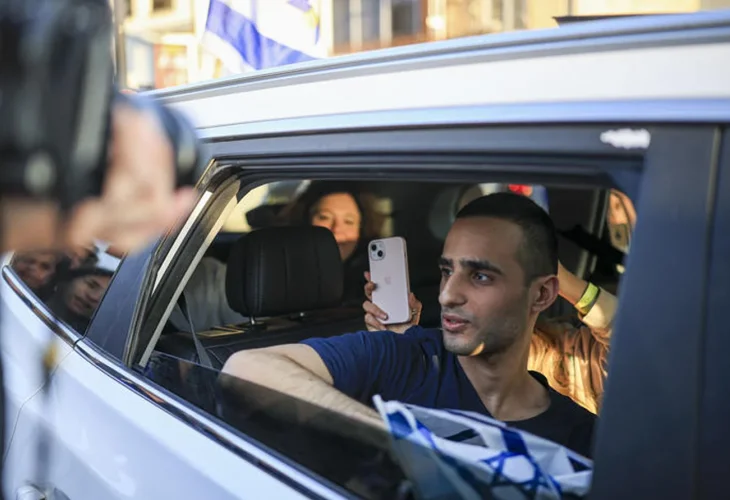 Nimrod Cohen (Photo: Flash90)
"Maybe it sounds strange, but during the hardest period, when our Nimrod was in captivity and the hostage deal that was supposed to bring him home fell apart, my response was to draw. I simply sat down and drew."
That is how Vicky Cohen, the mother of Nimrod Cohen, an IDF tank corps soldier who was kidnapped on October 7 and taken to the Gaza Strip, describes those agonizing months. By profession, Vicky is a nurse, and although she had always loved art, she viewed it as a hobby. Over the years, she created handmade birthday cards and illustrations for family celebrations, but never professionally. For her, drawing was simply a source of relaxation and emotional release.
"I returned to the world of drawing and imagination after Nimrod was kidnapped," she says. "Those were days of complete helplessness and unimaginable fear. In that feeling of having lost all control, I suddenly felt an overwhelming need to draw. I took my paints and paper out of storage and simply began."
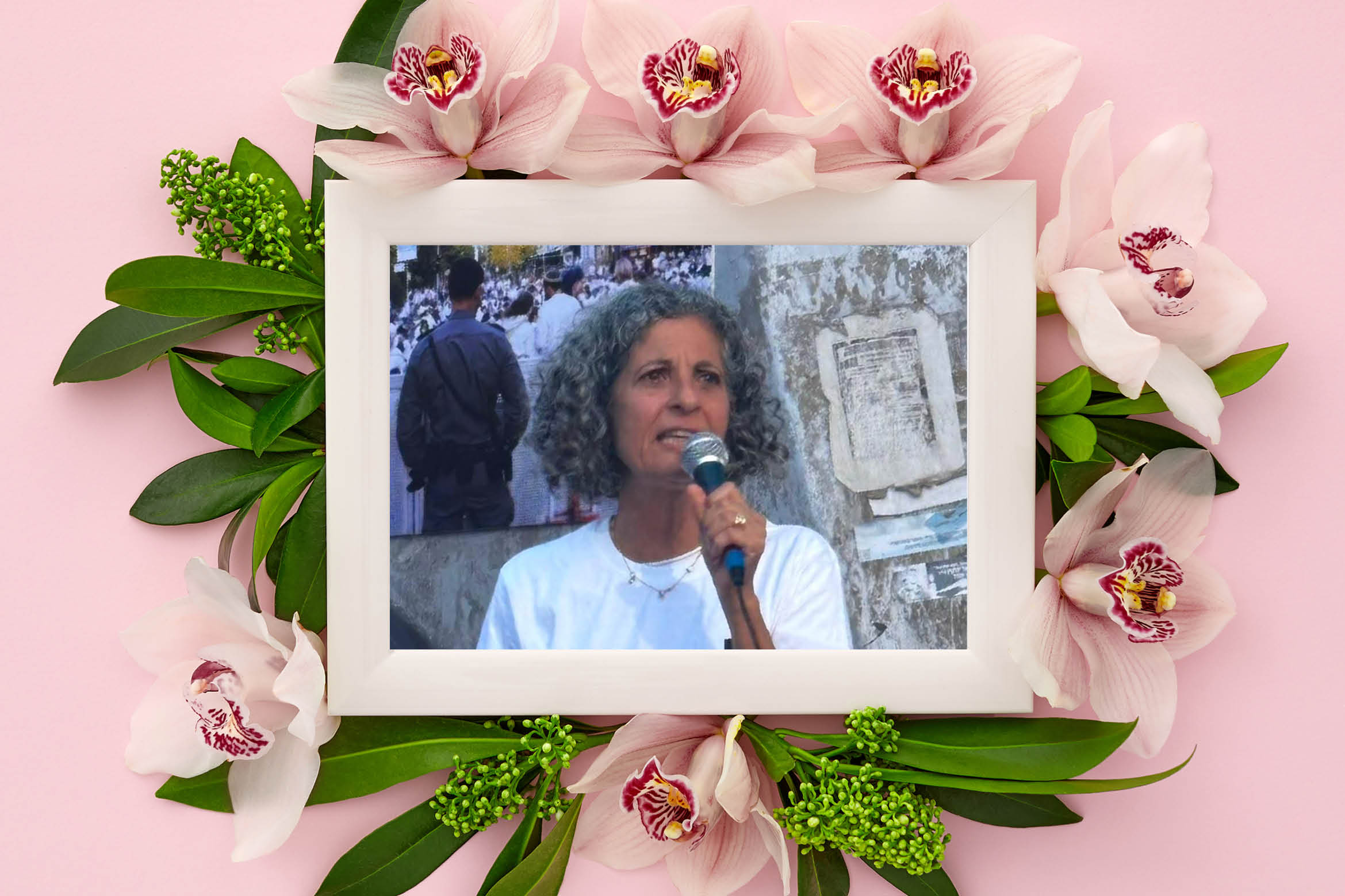 Vicky Cohen
Between the Need to Cry Out and the Fear
Vicky pauses for a moment before sharing a part of her story that few people know.
"I am the daughter of a combat trauma survivor. My father has lived with post traumatic stress ever since serving in the Sinai Campaign. Growing up, we learned to walk on tiptoe and keep the house as quiet as possible. We were careful not to raise our voices. Even joyful cheering or the sounds of children playing were off limits. I grew up in silence and inwardness, so it's no surprise that, even as a child, I escaped into the world of drawing. No one could silence me there. It was a place where I found freedom and release."
What did you draw?
"I don't even remember what I drew as a child. But when I tell people I drew while Nimrod was in captivity, they assume I must have drawn him or my longing for him. The truth is, I didn't.
"I found myself drawing colorful, radiant, almost fantastical figures that weren't necessarily real. They were the kind of images that make you smile just by looking at them. I'm sure a graphologist could analyze them and find all kinds of meaning, but for me, they simply brought comfort.
"During those two years, my illustrations also became part of several projects, including a children's Haggadah, a calendar, magnets, notepads, and other items. They were sold to help fund activities on behalf of the hostages, but even more importantly, they gave me a sense of purpose. At a time when I felt almost powerless, my creativity was able to do some good in the world."
As Nimrod's mother, what did you experience during those days of captivity?
"At first, there was complete shock. It took time before I could even begin to process the magnitude of what had happened or think about taking action.
"It also took me a long time before I agreed to speak to the media. We were constantly warned against it. People told us that because Nimrod was a soldier, it would be better not to publicize his story, so that he wouldn't end up like Ron Arad, whose fate remains unknown.
"But as time passed, I realized I couldn't stay silent. How could we not speak? The whole world needed to know who Nimrod was and that he had a family fighting for him. It was an incredibly painful dilemma, torn between the need to cry out and the overwhelming fear for our son.
"I also decided to go back to work. Maybe that sounds strange, but I felt I needed some kind of routine just to hold on to my sanity. It didn't take long to realize it was only an illusion. My heart made it clear that I had to devote every moment, and do everything possible, even what seemed impossible, to awaken the public and fight for Nimrod's release. That was my responsibility as his mother.
"I want people to know that during those two years, they saw me in newspaper headlines and heard me speaking publicly. I may have sounded strong and determined, but that was completely against my nature. I was raised not to take up space and not to raise my voice. Suddenly, I had to break out of my shell and leave my anonymity behind. It was an incredibly difficult process."
Faith, Strength, and the Public Fight
Along the way, did you feel the public was with you?
"Absolutely. I am deeply grateful to the public for standing with us throughout the entire journey.
"Even when we used strong language or called for a nationwide shutdown, it came only out of overwhelming concern for our children and the understanding that we had reached a last resort. That was after the murder of the six hostages and after the collapse of the second stage of the deal in which Nimrod was supposed to be released. At that point, people began talking about a new deal in which the soldiers would be left behind. As a mother, I simply couldn't bear the thought.
"One day, together with several other mothers, I was invited to meet with a group of rabbis in the Jerusalem area. They listened to our stories with open hearts. It was clear they truly understood how we, as mothers, were experiencing all of this. I told them about Nimrod, and they connected deeply with his story. They blessed us and all of the hostages, and I felt such compassion, sincerity, and genuine concern in that room. It was one of the places where I felt we were listened to most attentively.
"Looking back, I believe everything we did was necessary. Every public appeal, every campaign, every call to action was another piece of the puzzle that ultimately helped make it possible to reach a deal that ended the war and brought the hostages home."
Did you always believe Nimrod would return, or were there moments of despair?
"I always believed," Vicky answers. "Deep down, I never stopped believing that there was a Higher Power helping me, and I truly believed that Nimrod, who had been kidnapped alive, would come home.
"Of course, there were tremendous emotional ups and downs. It was like riding a roller coaster. There were moments of crushing heartbreak that completely knocked us down, and it took enormous strength to find our way back to faith and hope. But we had no other choice. We kept fighting, without knowing when it would happen or how, trusting that our efforts would eventually lead somewhere. Every one of us did everything we could, in our own way. The only thing that mattered was bringing Nimrod home."
What gave you strength during those days?
"First and foremost, my family. My husband, our son Yotam, and Romi, Nimrod's twin sister. We leaned on one another, and we also knew when each person needed a little space of their own. We even shared a kind of dark humor that only we could understand.
"I also found strength in nature. I would go out into the fields, breathe in the scent of the trees, and allow myself to recharge. And, of course, there was the drawing. It became my therapy, my place of rest, and one of the things that helped me keep going.
"We also received several signs of life from Nimrod during his captivity. One came through a former hostage who delivered a message from him: 'I'm okay. Love you.' About six months before his release, he was also identified in one of the videos. Every sign of life strengthened us tremendously. It confirmed what we already believed: there was someone to fight for."
Looking Ahead
Reflecting on the day Nimrod finally came home, Vicky's voice fills with emotion.
"It was an incredibly emotional day. We woke up early in the morning and boarded a special shuttle to Re'im. The families each had their own room, along with a shared area where everyone waited together. The emotions were overwhelming. None of us could really speak. We just wanted to see Nimrod already with us."
But alongside the excitement came intense fear.
"Until the very last moment, I was terrified that something would go wrong. Hamas is a murderous terrorist organization, and I knew anything could happen. I kept wondering whether they might decide to keep one soldier behind instead of returning him with the others.
"Later we learned that the release had been divided into two stages. Seven hostages were released first, followed by another thirteen. Nimrod was in the second group.
"There was one surreal moment when we spoke to Nimrod on the phone belonging to one of the other families. He was there and asked to speak with us. I will never forget that conversation. Even afterward, I still felt like I couldn't breathe until I finally saw him on the screen speaking with one of the IDF officers. Only then did I finally exhale. At that moment, I knew he was in safe hands."
Did Nimrod see the drawings you created?
"Yes. He saw them, and in many ways he also inspired the new book I'm publishing now, which features illustrations I created after he came home.
"It isn't meant to tell the full story of our journey. I share that story in lectures and other settings. Instead, the book is a collection of illustrations and short reflections that capture both the big and small moments we experienced. Nimrod encouraged me throughout the process, and I believe the book is just as meaningful to him as it is to me."
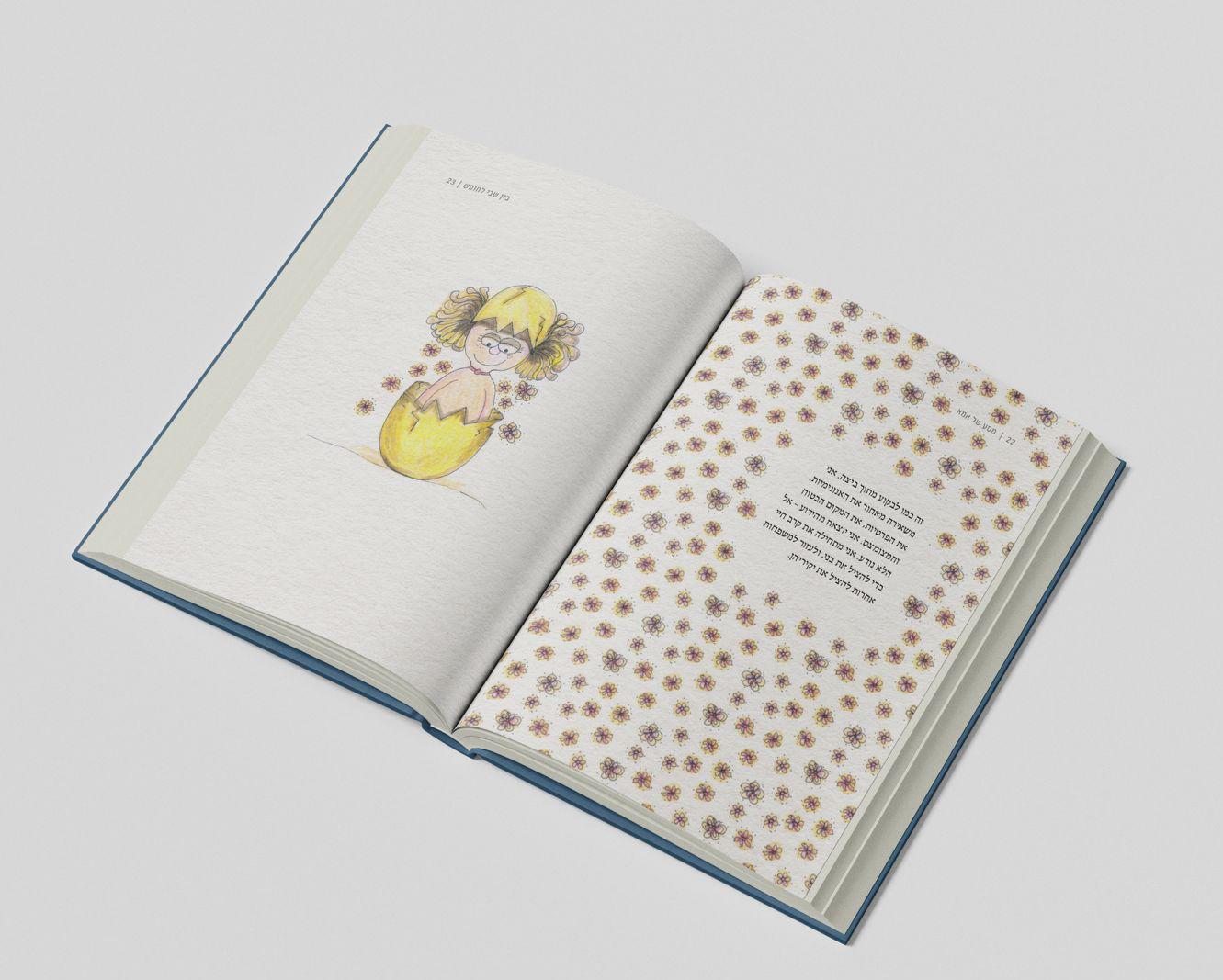 (Cover design: Dov Abramson)
How is Nimrod doing today?
"Nimrod returned to military service, and we encouraged him to do that. He wanted to complete meaningful service, and I believe it has helped him regain a sense of purpose while giving him hope and strength to move forward each day.
"The two years he spent in captivity will always be part of him, just as they will always be part of us. That chapter will never disappear, but we are learning how to live alongside it and continue moving forward."
As someone who has seen the effects of post trauma up close, are you worried?
"It is important to remember that my father never received treatment for his combat trauma because, in those years, there simply wasn't enough awareness about post traumatic stress.
"Today, the situation is completely different. From the moment Nimrod returned to Israel, he has been surrounded by an incredible support system. We are in the best possible hands, and we truly believe that whatever challenges lie ahead, we will face them together.
"We will keep moving forward, because life is stronger than anything, and that is where our focus remains."

