

Interesting
Why Two Goldfish Were Granted Legal Rights by an Argentine Court
Two goldfish living in a restaurant aquarium became the focus of a groundbreaking legal case in Argentina. Discover why the court recognized them as "non-human persons."
- Shira Dabush
- | Updated
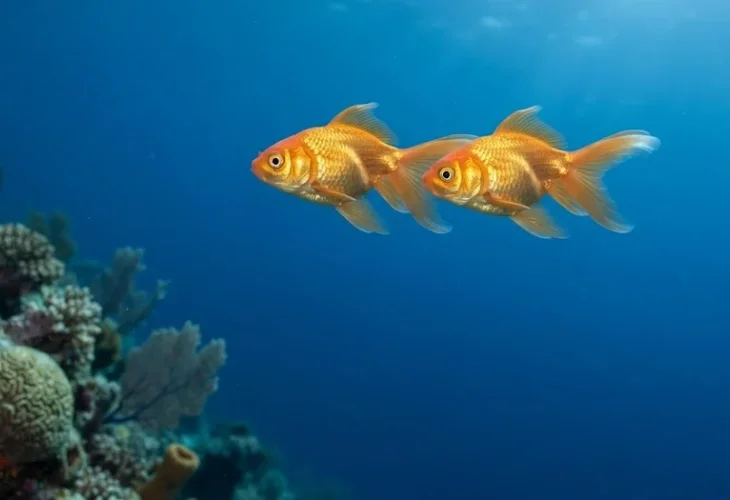
For years, two goldfish named Peda and Maggie lived in a small aquarium at the entrance of a sushi restaurant in Buenos Aires. To customers, they were simply part of the décor. But everything changed when an activist from the animal rights organization Empty Cages visited the restaurant.
According to the activist, the fish were being kept in inadequate conditions. Through attorney Matias Tropero, the organization filed a lawsuit, arguing that the restaurant's treatment of the fish violated Argentina's animal cruelty laws.
A Landmark Court Ruling
The case recently ended with a groundbreaking decision.
An Argentine court ruled that the two goldfish are "sentient beings" whose welfare deserves legal protection. The court granted them the status of "non-human persons," meaning they are recognized as beings whose interests can be represented in court when they are subjected to harmful conditions.
The ruling does not place animals on the same legal footing as human beings. Rather, it recognizes that animals are capable of suffering and that their welfare may warrant legal protection.
"Like Polar Bears in a Sauna"
During the proceedings, fish expert Carlos José Aga testified about the conditions in which Peda and Maggie were living.
He described the small display aquarium as entirely unsuitable for goldfish, comparing it to "putting two polar bears in a cage inside a sauna."
Aga also offered to adopt the fish himself, and the court approved the request.
The two goldfish were relocated from a roughly 40 liter aquarium to a private pond holding approximately 2,500 liters of water, providing them with far more appropriate living conditions.
Part of a Broader Legal Trend
This is not the first time Argentine courts have recognized animals with a special legal status.
In 2014, an orangutan named Sandra, who had spent years at the Buenos Aires Zoo, was recognized as a "non-human person" with certain legal protections. She was later transferred to an animal sanctuary in the United States.
Since then, similar legal recognition has been extended in Argentina to other animals, including horses and canaries. Lawmakers are also considering legislation known as the Sentient Beings Law, which would formally recognize animals as sentient beings under Argentine law.
What Does "Non-Human Person" Mean?
The phrase "non-human person" may sound unusual, but it is not entirely new in the legal world.
Corporations, nonprofit organizations, and certain public entities are also considered legal persons, even though they are not human beings. This legal status allows them to hold rights and responsibilities, enter into contracts, and participate in legal proceedings.
In the case of animals, however, the designation serves a different purpose. It does not grant animals the same civil rights as people. Instead, it allows courts to recognize that animals can experience pain, distress, and suffering, and to better protect their welfare when necessary.
A Debate That Reaches Beyond Argentina
The ruling has sparked widespread discussion both in Argentina and internationally.
Supporters see it as an important step forward in animal welfare, reflecting growing scientific understanding that many animals can experience pain and emotions.
Critics, however, argue that expanding animals' legal status could eventually raise difficult questions involving farming, fishing, zoos, animal research, and the use of animals for food.
For now, the decision applies only to the specific case of Peda and Maggie and does not change the legal status of all animals in Argentina.
Even so, it reflects a broader global trend as courts and lawmakers continue to reconsider how the law should treat sentient animals.

