

World News
Report: U.S. Approves Major Civilian Nuclear Deal With Saudi Arabia
The United States and Saudi Arabia are expected to sign a sweeping 30-year civilian nuclear agreement. The deal is not tied to normalization with Israel and could eventually open the door to uranium enrichment inside the kingdom.
- Yuval Aviv
- | Updated
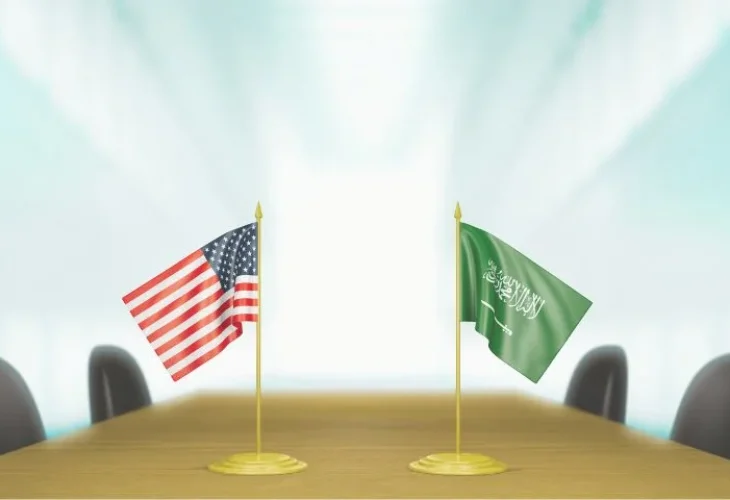
President Donald Trump has approved a civilian nuclear agreement with Saudi Arabia that is expected to give the kingdom a large-scale civilian nuclear program and, subject to certain conditions, open the possibility of establishing a uranium enrichment facility on its soil. That was reported overnight (between Tuesday and Wednesday) by The Wall Street Journal, citing officials in the American administration.
According to the report, the agreement will remain in effect for 30 years and is valued at tens of billions of dollars. Its goal is to place American companies in a central position in developing Saudi Arabia’s civilian nuclear infrastructure while reducing the involvement of foreign competitors. Trump gave his approval to the deal over the past weekend, and the official signing is expected to take place on Wednesday by U.S. Energy Secretary Chris Wright and his Saudi counterpart, after the two already discussed the details of the agreement during Wright’s first visit to the region in April 2025.
At the same time, The New York Times reported that the Trump administration has decided to separate the agreement from the requirement that Saudi Arabia recognize Israel and establish diplomatic relations with it. That condition was at the heart of the Biden administration’s efforts to advance a similar agreement, but following the October 7 attack, the move lost momentum.
One of the central clauses in the agreement states that if a joint U.S.-Saudi study finds that uranium enrichment on Saudi soil is justified, American companies would be able to build a designated facility for that purpose. Officials in the Trump administration argue that such an arrangement would ensure significant American influence over the Saudi nuclear program and help prevent it from being diverted to military purposes.
Under the emerging framework, alongside the advancement of nuclear reactor projects, American and Saudi experts will conduct a study lasting two years. As part of that review, they will examine the economic feasibility of enriching uranium in Saudi Arabia versus relying on imported nuclear fuel.
If the study’s conclusions are positive, the enrichment facility would be built using a secret mechanism known as a "black box," designed to prevent the transfer of sensitive uranium enrichment technologies to Saudi hands. It was also claimed that if, after the study, the United States opposes continuing the enrichment program, Saudi Arabia would not be able to enrich uranium on its own or through another country for ten years.
The deal is expected to go before the U.S. Congress for review in the coming days, where it could face opposition from lawmakers concerned about the wider spread of nuclear technology in the Middle East. Still, according to the report, blocking the agreement would be complicated, since it would require a joint resolution and a two-thirds majority if lawmakers need to overcome a possible Trump veto.

