

World News
‘We’re Not Okay’: New York Jews Balance Fear and Defiance After Stabbing
Community figures blame Mamdani’s rhetoric for worsening insecurity while demanding protection and insisting Jews will remain visible in New York
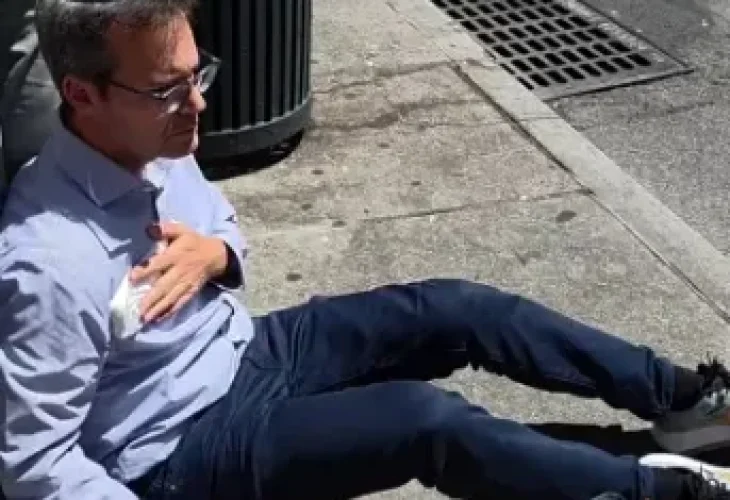 The man stabbed in Upper West Side (Facebook)
New York Jewish leaders responded Friday to the stabbing of Moshe Yezhak Grunhaus by warning that Jewish life in the city is becoming increasingly fearful, while insisting the community will neither hide nor leave. At a press conference near the Jewish Center of Manhattan, speakers treated the attack as part of a broader deterioration in Jewish confidence and said Jews would continue living openly despite growing concerns over their safety.
Grunhaus, 50, was stabbed in the chest with a screwdriver Thursday approximately 200 feet from the synagogue after leaving Tisha B’Av prayers. Police said Raul Morales shouted “Allahu Akbar” during the attack. Morales was also accused of stabbing 57-year-old Chok Sung nearby minutes earlier.
Morales was charged with attempted murder as a hate crime in the attack on Grunhaus and with attempted murder and other offenses in connection with the second stabbing. Grunhaus, who had recently moved to Florida reportedly partly because of concerns over antisemitism and Mamdani’s positions on Israel, was temporarily back in New York to clear out his apartment. He was released from the hospital Friday.
“We’re horrified and heartbroken by yesterday’s attacks. But to be clear, we’re no longer surprised,” UJA-Federation of New York CEO Eric Goldstein said. He accused Mayor Zohran Mamdani of repeatedly demonizing Israel and its supporters and contributing to a climate in which Jewish New Yorkers feel targeted.
Mark Treyger, CEO of the Jewish Community Relations Council of New York, was more careful in describing Mamdani’s responsibility.
“No elected official is responsible for every act of hate,” he said. “But every leader is responsible for helping shape the climate in which we all live.”
Speakers acknowledged that mental illness may have played a role in the attacks. Their claim was not that Mamdani directly caused the stabbing, but that hostile public rhetoric can affect people already in crisis and contribute to a wider atmosphere of fear.
Treyger said synagogues were questioning whether they could afford additional guards, while summer camps were receiving calls from anxious parents. City Council Speaker Julie Menin said she and her husband had discussed whether their daughter should continue wearing a Jewish star and whether their sons were safe wearing kippot.
Menin called the situation unacceptable and urged political leaders to “bring the temperature down,” saying that words matter and that everyone bears responsibility for changing the rhetoric.
Rabbi Yosie Levine of the Jewish Center said the security surrounding Jewish institutions showed how much had changed.
“When I was growing up, the only time we saw security outside of my synagogue or outside of my Jewish day school was when the mayor came to speak,” he said. “The police were there to protect him. Today, every time the mayor speaks, we need the police to protect us.”
Levine said Jewish life in America was beginning to resemble Jewish life in Europe, marked by armed guards, bulletproof glass and fear that rhetoric could be followed by violence.
Despite those warnings, the leaders insisted that fear would not force Jews to retreat from public life.
“We’re not going anywhere,” Goldstein said, promising that Jews would continue walking through New York “openly and proudly.”
“We will not allow hate or fear to define us,” he added.
Treyger delivered a similar message as the press conference closed.
“We might be hurt, but we’re not broken,” he said. “We’re strong. We’re resilient. We’re going to get through this, but we’re not okay.”
Mamdani did not address the leaders’ broader accusation that his rhetoric had contributed to the climate they described. He condemned the attacks, saying New York had “no tolerance for hatred of any kind” and that anyone responsible would be held fully accountable. He also noted that investigators were examining the possible role of mental illness and whether the attacks constituted hate crimes.
New York Attorney General Letitia James said police and prosecutors had asked her not to draw conclusions before the investigation was completed. She also expressed support for both the Jewish and Asian communities.
The next challenge for Jewish leaders will be deciding what comes after the declarations of fear and defiance: how much to focus on changing the city’s political climate, how much to invest in greater security, and how to reassure a community that insists it will stay while increasingly saying it does not feel safe.

