

World News
Syrian Foreign Minister: ‘We Have Nuclear Material, and It Will Remain in Syrian Custody’
Syrian Foreign Minister Asaad al-Shibani acknowledged at a joint press conference with IAEA Director General Rafael Grossi that Syria possesses nuclear material. He stressed: “It will remain in our custody; we have the right to use it for civilian purposes.”
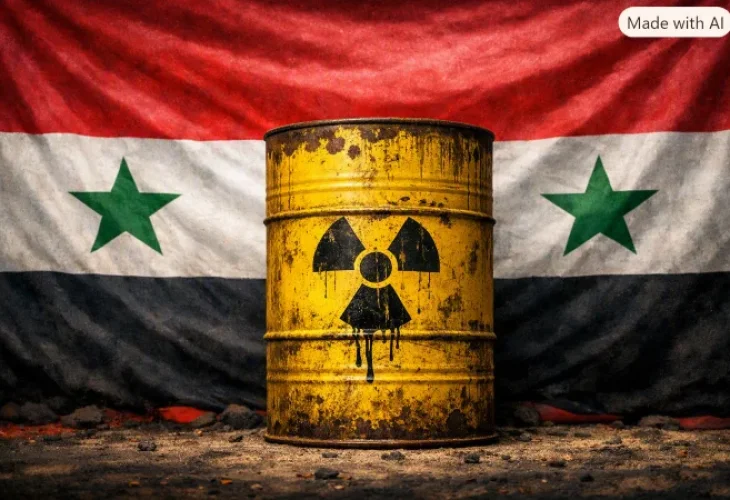
Syria’s foreign minister, Asaad al-Shibani, acknowledged today (Tuesday) that Syria possesses nuclear material. The Syrian foreign minister made the admission during a joint press conference with Rafael Grossi, director general of the International Atomic Energy Agency (IAEA).
According to al-Shibani, “The nuclear material will remain in Syrian custody, subject to IAEA guarantees. Syria has the right to use nuclear energy for civilian and peaceful purposes.” The statement came following a report last week that the IAEA was planning to remove nuclear material stored at a secret site in Syria.
The Syrian minister added: “We will work to establish the conditions needed to process these materials and store them safely.” He also condemned the “Israeli attack” in the country: “An unjustified provocation, a violation of sovereignty, and a direct threat to stability.”
It should be noted that last week, Israel threatened to bomb a secret nuclear facility discovered in Syria if the material found there was not removed from the country. Following the threat, the United States announced that it had reached understandings with Israel and Syria, and that IAEA inspectors would soon begin clearing the site and removing the material from Syria. Now, as noted, the Syrian minister has refused to comply with the request to remove the material from his country.
As a reminder, Israel bombed the reactor in Syria in 2007, damaging most of Syria’s nuclear program. However, it later emerged that several research, development, and storage sites remained, most of them inactive. After the fall of the Assad regime, the IAEA signed an agreement with Syria’s new government that allowed it to visit the reactor in al-Kibar and several other sites connected to Syria’s past nuclear activity.
One of the secret facilities monitored by Israel is known as “Site 99.” According to two Israeli officials, the Assad regime stored nuclear material there that was part of the al-Kibar reactor project. A senior American official said that this included, among other things, powder produced from uranium ore, which can be used at a later stage in the uranium-enrichment process. According to the same official, the Assad regime also stored “remnants” and additional nuclear materials left over from the al-Kibar project at the site.

