

Home Styling
Still Seeing Streaks After Cleaning Your Mirror? This Is Probably Why
Cleaning your mirror again and again but still seeing smudges? discover the common mistakes that cause streaks and how to avoid them.
- Tehila Cohen
- | Updated
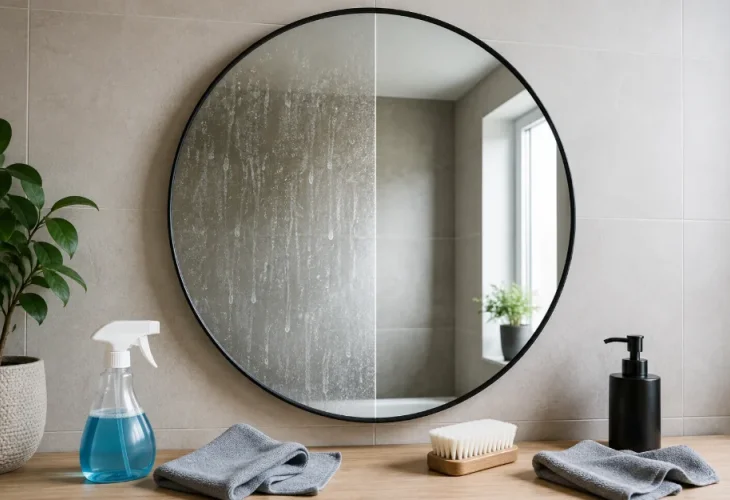
A clean, shiny mirror instantly makes a room look neater and fresher. But we all know the frustrating scenario: You clean the mirror, feel sure you’re finished, and then look at it from another angle only to discover smudges and streaks everywhere.
The natural response is to spray on a little more cleaner and wipe it again. But that may actually make the problem worse.
The Mistake: Using Too Much Cleaning Product
One of the most common reasons mirrors end up covered in streaks is simply using too much cleaning product.
When you spray the mirror generously, your cloth may not absorb and remove all of the cleaner. Some of it can dry on the glass, leaving behind a thin layer of residue that becomes particularly noticeable when light hits the mirror.
There is no need to soak the entire surface. In most cases, a small amount of cleaner is more than enough.
The cloth you use matters, too.
A cloth that has already been used to clean other surfaces may contain grease, dust, or traces of other cleaning products. When you use it on a mirror, you can end up spreading that residue across the glass instead of removing it.
For the best results, use a clean, dry microfiber cloth reserved specifically for mirrors and glass. Wash it regularly so that old dirt and cleaning products do not build up in the fibers.
Don’t Rush to Spray the Mirror Directly
Instead of spraying cleaner directly onto the mirror, try applying a small amount to your cloth first and then wiping the glass.
This gives you much better control over how much product you use and helps prevent excess cleaner from accumulating on the surface.
It can also help protect the mirror itself. Spraying too much liquid directly onto a mirror may allow moisture to collect around the edges or frame. With some mirrors, liquid that repeatedly seeps behind the glass can eventually damage the backing.
What about toothpaste splashes, fingerprints, and other stubborn marks?
Instead of covering the entire mirror with extra cleaner, treat the problem area first. Slightly dampen a clean cloth and gently wipe the spot until the residue loosens. Then clean the rest of the mirror as usual.
Finally, go over the entire surface with a separate clean, dry microfiber cloth. This last wipe helps remove any remaining moisture or cleaning-product residue before it has a chance to dry into visible streaks.
And before you put the cloth away, take one last look at the mirror from the side. Streaks that are almost invisible when you stand directly in front of the glass often become obvious from another angle.
Sometimes, the secret to a spotless mirror isn’t using more cleaner—it’s using less.

