

Home Styling
Why Do Pillows Turn Yellow? Here’s How to Clean Them
Before throwing out a yellow pillow, check whether it can be washed. here’s the right way to clean synthetic, down, and memory foam pillows without damaging them.
- Tehila Cohen
- | Updated
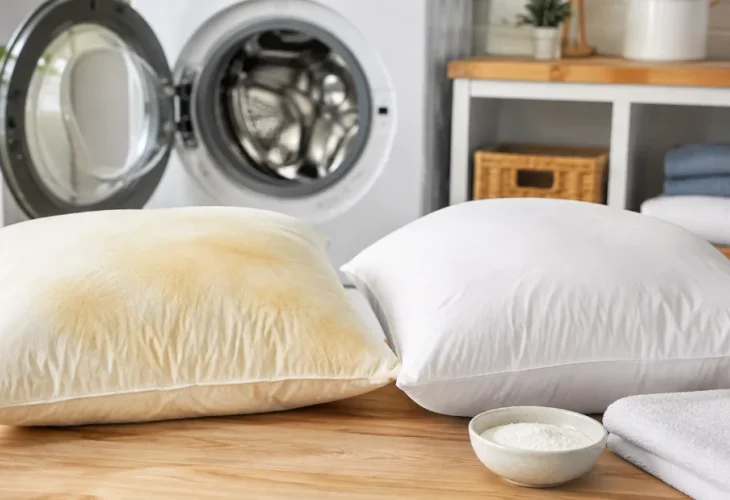
Even if you regularly change your sheets, your pillows are absorbing more than you might realize. Night after night, sweat, natural skin oils, saliva, skincare products, and moisture from wet hair can make their way through the pillowcase and into the pillow itself.
Over time, that buildup can create the familiar yellowish stains that make an otherwise clean bed look less than fresh.
A little yellowing does not necessarily mean your pillow is unsafe to sleep on, but it is a good sign that it may be time for a deeper clean. Before putting it straight into the washing machine, however, there is one important thing to check.
First Things First: Check the Care Label
Not every pillow can be washed the same way.
Many pillows filled with synthetic fibers, feathers, or down can be machine-washed, but you should always follow the manufacturer's care instructions.
Memory foam pillows are different. They generally should not be placed in a washing machine because soaking, agitation, and spinning can damage the structure of the foam.
If your pillow's label says it can be machine-washed, here's how to do it:
- Remove the pillowcase and pillow protector.
- Pre-treat visible stains with a small amount of gentle laundry detergent. If necessary, test the product on an inconspicuous area first.
- If your washing machine allows it, wash two pillows together to help keep the load balanced.
- Use a gentle cycle and the water temperature recommended on the care label, along with a small amount of detergent.
- Run an extra rinse cycle if possible to help remove detergent trapped inside the filling.
Avoid automatically reaching for bleach or a powerful stain remover. Unless the pillow's care instructions specifically allow these products, they may damage the fabric or filling and can sometimes contribute to discoloration.
What About Memory Foam Pillows?
If you have a foam or memory foam pillow, a gentler approach is usually needed.
Start by removing surface dust with a vacuum cleaner using an upholstery attachment. For stains, use a slightly damp cloth with a small amount of mild soap and gently spot-clean the affected area.
Avoid soaking the pillow or wringing it out, and do not put it in the dryer unless the manufacturer specifically says that it is safe to do so.
After cleaning, leave the pillow in a well-ventilated area until it is completely dry.
Drying Is Just as Important as Washing
Getting a pillow clean is only half the job. It also needs to dry thoroughly.
Moisture trapped deep inside the filling can lead to musty odors and potentially encourage mold growth. If the care label permits tumble drying, use the recommended setting, often low heat. Dryer balls can help keep some types of filling from clumping and help restore the pillow's shape.
If you are air-drying the pillow, place it somewhere with good airflow and turn and fluff it periodically so that all sides can dry evenly.
Most importantly, do not put the pillow back on your bed until you are certain it is completely dry inside.
How to Keep Pillows From Turning Yellow
A washable pillow protector can make a significant difference by creating an extra barrier between your pillow and the sweat, oils, and other moisture that accumulate while you sleep.
Regularly washing your pillowcases and protectors can also help, as can allowing pillows to air out occasionally. And if possible, avoid going to bed with soaking-wet hair, which adds even more moisture to the pillow.
Some discoloration will still develop naturally with time. The goal is not necessarily to keep a pillow perfectly white forever, but to keep it clean, dry, and in good condition.
And sometimes, washing is no longer enough.
If your pillow remains heavily stained or smells unpleasant even after cleaning, has developed signs of mold, has become lumpy, or has lost its shape and no longer comfortably supports your head and neck, it may be time to replace it.
After all, sometimes that yellow pillow isn't asking for another wash. It's asking for retirement.

