

Sukkot
Sukkot (Feast of Tabernacles): The Jewish Festival of Booths
The Complete Guide to Sukkot 2026 — Dates, Building a Sukkah, the Four Species, Blessings and Customs, with Hebrew Texts and English Translation
- Hidabroot
- | Updated
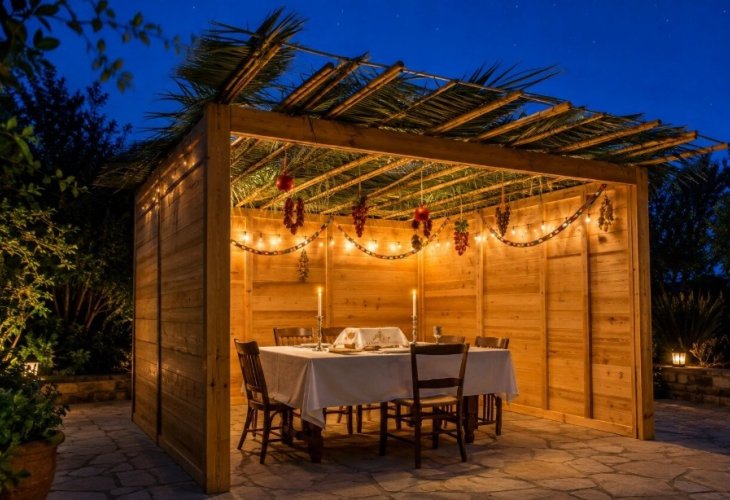
What is Sukkot?
Sukkot (the Feast of Tabernacles) is a seven-day Jewish festival that commemorates the 40 years the Israelites spent wandering in the desert after the Exodus from Egypt. Beginning on the 15th of Tishrei — five days after Yom Kippur — it is celebrated by building and dwelling in a sukkah (a temporary hut), taking the Four Species (lulav, etrog, hadassim, and aravot), and reciting Hallel. Sukkot is called "Z'man Simchateinu" (the Season of Our Rejoicing). In 2026, Sukkot begins at sundown on Friday, September 25, and ends at nightfall on Friday, October 2.
What is Sukkot?
Sukkot is one of the three pilgrimage festivals of the Jewish year — the shalosh regalim — alongside Passover and Shavuot. For seven days, Jews leave the security of their homes and move into a temporary hut with a roof of cut branches through which the stars are visible.
The commandment appears in Leviticus 23:42–43: "You shall dwell in booths for seven days… so that your generations shall know that I made the Children of Israel dwell in booths when I brought them out of the land of Egypt."
Sukkot arrives five days after Yom Kippur, and the sequence is deliberate. The Days of Awe end with judgment sealed; Sukkot opens with joy. Having spent Elul and Tishrei in introspection and repentance, the Jewish people step outside into a fragile structure and celebrate — not despite the fragility, but because of what it teaches.
The Meaning of "Sukkot"
Sukkot (סֻכּוֹת) is the plural of sukkah (סֻכָּה) — a booth, hut, or temporary shelter. The word appears throughout the Torah for structures built for shade and shelter, from the booths Jacob built for his livestock (Genesis 33:17) to the shelters of soldiers in the field.
The name of the festival is therefore entirely literal: it is the festival of the huts. The central mitzvah is not a symbolic gesture but a physical relocation — for seven days, the sukkah becomes the primary dwelling and the house becomes temporary.
Why It's Called the "Feast of Tabernacles"
The English name Feast of Tabernacles entered the language through early English Bible translations, which rendered sukkot using the Latin tabernaculum — a tent or temporary dwelling. The same root gives us the English word "tabernacle."
Festival of Booths is the more literal English rendering and is used in many modern translations. Both names refer to the same festival, and both appear widely in English-language Jewish and general usage.
The festival also carries a third biblical name: Chag HaAsif (חַג הָאָסִיף) — the Festival of Ingathering — reflecting its agricultural dimension as the harvest festival at the close of the agricultural year (Exodus 23:16).
Sukkot as "Z'man Simchateinu" — The Season of Our Rejoicing
In the festival liturgy, Sukkot is called Z'man Simchateinu (זְמַן שִׂמְחָתֵנוּ) — "the Season of Our Rejoicing."
This designation is not merely descriptive. The Torah commands joy on Sukkot with unusual emphasis, repeating it three times in the passage in Deuteronomy 16:14–15: "And you shall rejoice in your festival… and you shall be only joyful."
No other festival receives this instruction so insistently. Passover commemorates liberation; Shavuot commemorates revelation; Sukkot commands joy itself as the substance of the observance. The classical commentators connect this to the timing — Sukkot follows immediately upon Yom Kippur, when sins have been forgiven and the year has been sealed for good. The joy of Sukkot is the joy of a people who have just been reconciled with God.
When is Sukkot 2026?
Sukkot 2026: Sukkot 2026 begins at sundown on Friday, September 25, 2026 and ends at nightfall on Friday, October 2, 2026. Shemini Atzeret follows on Friday evening, October 2 through Saturday, October 3, and Simchat Torah in the diaspora on Saturday evening, October 3 through Sunday, October 4.
An important note for 2026: The first day of Sukkot falls on Shabbat (Saturday, September 26). This has a significant practical consequence — the lulav and etrog are not taken on the first day this year. The Four Species are taken beginning on the second day, Sunday, September 27. See the section on the Four Species below for the full explanation.
Sukkot Dates for the Coming Years
| Year | Hebrew Year | Begins (sundown) | Ends (nightfall) | Days |
|---|---|---|---|---|
2026 | 5787 | Fri, September 25 | Fri, October 2 | 7 |
2027 | 5788 | Fri, October 15 | Fri, October 22 | 7 |
2028 | 5789 | Wed, October 4 | Wed, October 11 | 7 |
2029 | 5790 | Sun, September 23 | Sun, September 30 | 7 |
2030 | 5791 | Fri, October 11 | Fri, October 18 | 7 |
Sukkot is seven days both in Israel and in the diaspora. It is immediately followed by Shemini Atzeret and Simchat Torah — two days in the diaspora, one combined day in Israel. All dates verified against Hebcal.
The 15th of Tishrei and the Hebrew Calendar
Sukkot always begins on the 15th of Tishrei — the seventh month of the biblical calendar, and the month that opens the Jewish new year of Rosh Hashanah.
The 15th of the month falls at the full moon, and the placement is significant: Rosh Hashanah falls on the new moon (1 Tishrei), when the moon is invisible; Yom Kippur on the 10th; and Sukkot at the full moon, when the light is complete. The month moves from darkness to fullness, and the festivals move with it — from judgment to atonement to joy.
Because the Hebrew calendar is lunisolar, Sukkot falls in late September or October on the civil calendar, always in the autumn in the Northern Hemisphere and always at the close of the harvest season in the Land of Israel.
Sukkot in Israel vs. the Diaspora
Sukkot itself is seven days in both Israel and the diaspora — one of the few festivals where the count is identical.
The difference appears at the end:
- In Israel: Shemini Atzeret and Simchat Torah are combined into a single day (22 Tishrei).
- In the diaspora: They are observed as two separate days — Shemini Atzeret on 22 Tishrei and Simchat Torah on 23 Tishrei.
The first day of Sukkot is a full festival day (Yom Tov) in Israel; in the diaspora, the first two days are Yom Tov. The intermediate days (Chol HaMoed) run from the third day in the diaspora and the second day in Israel.
The Origin and History of Sukkot
The Biblical Source (Leviticus 23:33–43)
The commandment of Sukkot appears in the Torah's calendar of festivals in Leviticus 23. The passage establishes both central mitzvot of the festival — the Four Species and the sukkah — and gives the reason for the observance.
(Leviticus 23:40, 42–43):
וּלְקַחְתֶּם לָכֶם בַּיּוֹם הָרִאשׁוֹן פְּרִי עֵץ הָדָר, כַּפֹּת תְּמָרִים, וַעֲנַף עֵץ עָבֹת, וְעַרְבֵי נָחַל; וּשְׂמַחְתֶּם לִפְנֵי יְהוָה אֱלֹהֵיכֶם שִׁבְעַת יָמִים.
בַּסֻּכֹּת תֵּשְׁבוּ שִׁבְעַת יָמִים; כָּל הָאֶזְרָח בְּיִשְׂרָאֵל יֵשְׁבוּ בַּסֻּכֹּת.
לְמַעַן יֵדְעוּ דֹרֹתֵיכֶם, כִּי בַסֻּכּוֹת הוֹשַׁבְתִּי אֶת בְּנֵי יִשְׂרָאֵל בְּהוֹצִיאִי אוֹתָם מֵאֶרֶץ מִצְרָיִם; אֲנִי יְהוָה אֱלֹהֵיכֶם.
"And you shall take for yourselves on the first day the fruit of a beautiful tree, branches of palm trees, boughs of a leafy tree, and willows of the brook; and you shall rejoice before the Lord your God for seven days.
You shall dwell in booths for seven days; every citizen in Israel shall dwell in booths.
So that your generations shall know that I made the Children of Israel dwell in booths when I brought them out of the land of Egypt; I am the Lord your God."
The Torah gives further instructions in Numbers 29:12–38 (the festival offerings) and Deuteronomy 16:13–15 (the command to rejoice).
The 40 Years of Wandering in the Desert
The stated reason for the sukkah is historical: to remember that God settled the Israelites in booths when He brought them out of Egypt.
The Talmud (Sukkah 11b) records a disagreement between two sages about what those booths actually were. Rabbi Akiva understood them literally — physical huts in which the Israelites lived during the forty years in the wilderness. Rabbi Eliezer understood them as the ananei hakavod, the Clouds of Glory that surrounded and protected the Israelite camp throughout the journey.
Both readings are preserved in Jewish tradition, and both are reflected in the way the festival is understood. The sukkah recalls both the physical fragility of the desert generation and the divine protection that sustained them within it.
Sukkot as the Harvest Festival (Chag HaAsif)
Sukkot is also an agricultural festival. In the Land of Israel, it falls at the very end of the agricultural year — after the grain has been threshed, the grapes pressed, and the produce gathered into storage. The Torah calls it Chag HaAsif — the Festival of Ingathering (Exodus 23:16).
The timing produces a deliberate tension. At the precise moment when a farmer's storehouses are fullest and his sense of security greatest, the Torah commands him to leave his house and move into a hut. The prosperity is real; so is the reminder of who provided it.
Sukkot in the Holy Temple
When the Temple stood in Jerusalem, Sukkot was among the most spectacular occasions of the year. Jews from across the Land of Israel and the diaspora ascended to Jerusalem as one of the three pilgrimage festivals.
Seventy bull offerings were brought over the course of the festival — a number the Talmud (Sukkah 55b) connects to the seventy nations of the world, making Sukkot the one festival with an explicitly universal dimension.
The festival also featured the water libation (nisuch hamayim) and the all-night celebrations of Simchat Beit HaShoevah — described in the Mishnah (Sukkah 5:1) with the famous line that whoever had not seen the joy of the water-drawing celebration had never seen true joy in their life. Levites played instruments on the fifteen steps of the Temple courtyard, sages danced with burning torches, and enormous lamps lit the whole of Jerusalem.
The Book of Nehemiah (8:14–17) records a remarkable moment of Sukkot revival after the return from Babylonian exile — the people built booths throughout Jerusalem, and the text notes that there had not been such a celebration since the days of Joshua.
The Sukkah — The Central Mitzvah
What is a Sukkah?
A sukkah (סֻכָּה) is a temporary structure with at least two and a half walls and a roof made of cut vegetation, built specifically for the seven days of Sukkot.
What distinguishes a sukkah from any other structure is its roof. The s'chach — the covering — must be made of material that grew from the ground and has been cut, and it must be loose enough that the stars are visible through it and rain can enter. A sukkah is by definition a shelter that does not fully shelter.
Its dimensions are governed by halacha: a minimum of roughly 7×7 handbreadths in area (approximately 22–28 inches square, depending on the measurement standard) and a minimum height of 10 handbreadths (approximately 32–40 inches), with a maximum height of 20 cubits (approximately 30–40 feet).
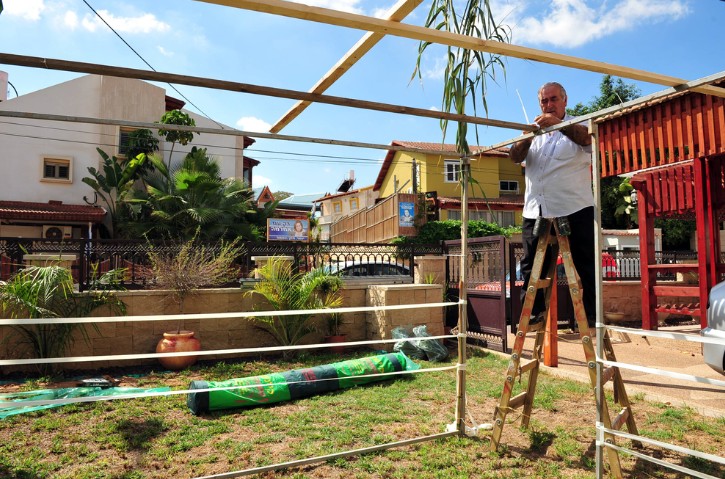 Building a sukkah frame before laying the s'chach. Photo: Flash90
How to Build a Sukkah
How to Build a Sukkah — Step by Step
Steps
1
Choose the location
The sukkah must be built outdoors, under open sky. Nothing may intervene between the s'chach and the sky — no roof, no overhanging balcony, and no tree branches directly above.
2
Check the timing.
The sukkah should be built after Yom Kippur, and ideally construction begins the day after Yom Kippur ends. It must be completed before the festival begins.
3
Build the walls.
At least two full walls plus a partial third wall (a tefach — one handbreadth — is the minimum for the third). Walls may be made of wood, canvas, fiberglass, metal, or any sturdy material. Canvas walls must be tied down firmly so they do not flap in an ordinary wind.
4
Verify the dimensions.
Confirm the minimum height (10 handbreadths), the minimum floor area, and that the walls are within three handbreadths of the ground so that no significant gap runs beneath them.
5
Lay the supports.
Beams or poles across the top to hold the s'chach. Ideally these should themselves be of material valid for s'chach; where metal or other invalid supports are used, many authorities permit it, but consult a rabbi for a large or unusual structure.
6
Lay the s'chach.
Place the cut vegetation across the top — bamboo mats designed for the purpose, palm fronds, evergreen branches, or bamboo poles. This must be the final step: the walls must be standing before the s'chach goes on.
7
Check the coverage.
There must be more shade than sunlight when the sun is overhead, but the s'chach must remain loose enough that larger stars are visible at night.
8
Decorate.
Hang decorations from the s'chach or the walls — fruit, paper chains, children's artwork, and framed Ushpizin texts.
9
Furnish it.
A table, chairs, and — for those who sleep in the sukkah — bedding. The sukkah should be furnished as a home, not as a shed.
The Kosher Requirements of a Sukkah
A sukkah is kosher when it meets the following conditions:
- Built outdoors with nothing between the s'chach and the open sky.
- At least two and a half walls, sturdy enough to stand in an ordinary wind.
- Minimum height of 10 handbreadths; maximum height of 20 cubits.
- Minimum floor area sufficient to hold a person's head, most of their body, and a small table.
- S'chach placed last, after the walls are standing.
- Built for the purpose of the festival — a structure that already existed for another purpose generally requires the s'chach to be lifted and replaced with intent for the mitzvah.
- More shade than sun from the s'chach, while remaining open enough to see stars.
S'chach — The Roof of the Sukkah
The s'chach (סְכָךְ) is the defining element of the sukkah, and its laws are precise. Valid s'chach must meet three conditions:
- It grew from the ground — plant material, not metal, plastic, or stone.
- It has been cut and is now detached from the ground — a living tree branch overhead is not valid.
- It is not susceptible to ritual impurity — meaning it has not been fashioned into a vessel or utensil.
That third condition is why wooden boards from a dismantled table or planks that serve as flooring are problematic, while raw bamboo poles, palm fronds, and evergreen branches are ideal.
Purpose-made bamboo s'chach mats — manufactured specifically for sukkah use and certified kosher — are the most common solution in North America and are widely available before the festival.
Decorating the Sukkah
Decorating the sukkah fulfils the principle of hiddur mitzvah — beautifying a commandment. There is no obligation, but the custom is ancient and universal.
Traditional decorations include hanging fruit (pomegranates, grapes, dates), paper chains, children's artwork, posters of Jerusalem and the Temple, and framed Ushpizin texts naming the seven guests.
One halachic detail: decorations hung from the s'chach may not be removed during the festival, as they become part of the sukkah. Decorations attached to the walls are less restricted. Hanging decorations should not be so dense that they effectively become a second roof beneath the s'chach.
The Mitzvah of Dwelling in the Sukkah
The Torah says teishvu — "you shall dwell." The Talmud (Sukkah 28b) derives from this the principle of "teishvu k'ein taduru" — dwell in the sukkah as you dwell in your house.
In practical terms this means:
- All meals containing bread or grain-based food are eaten in the sukkah.
- Sleeping takes place in the sukkah (see below).
- Relaxing, studying, and spending time — the ordinary activities of a home — shift to the sukkah.
The obligation on the first night is distinct and stronger: one is required to eat at least a k'zayit (an olive-bulk, approximately one ounce) of bread in the sukkah on the first night of Sukkot, even in discomfort — comparable to the obligation to eat matzah on the first night of Passover.
Casual snacks, water, and fruit may be eaten outside the sukkah, though many are stringent and eat everything inside.
When You Are Exempt from the Sukkah
Halacha provides several exemptions from the obligation to dwell in the sukkah:
Rain. If rain falls heavily enough that it would spoil the food — the traditional measure is enough to ruin a cooked dish — one is exempt and may eat indoors. The principle is mitzta'er patur min hasukkah: one who suffers discomfort is exempt. This does not apply to the first night, when one should wait for the rain to stop if possible.
Illness. A sick person is exempt, as is anyone attending to them.
Travellers. Those travelling for a legitimate purpose are exempt while on the road, though they should make reasonable effort to find a sukkah.
Extreme cold or discomfort. Where conditions make dwelling genuinely distressing rather than merely inconvenient.
Women. The mitzvah of sukkah is a positive time-bound commandment, from which women are exempt in halacha. Many nonetheless join family meals in the sukkah, and this is widely encouraged.
Young children. Children below the age of chinuch (training) are exempt.
The Four Species (Arba Minim)
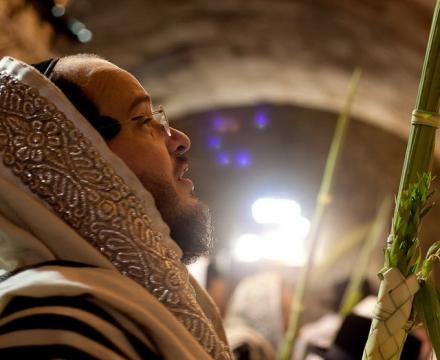 Holding the Four Species during Sukkot prayers. Photo: Flash90
What are the Four Species?
The Four Species: The Four Species (Arba Minim) are four plants taken together on each day of Sukkot except Shabbat: the lulav (palm branch), etrog (citron), three hadassim (myrtle branches), and two aravot (willow branches). They are held together, a blessing is recited, and they are waved in six directions. The commandment comes directly from Leviticus 23:40.
Three of the species — the lulav, hadassim, and aravot — are bound together in a holder, with the lulav in the centre, three myrtles to the right, and two willows to the left. The etrog is held separately in the other hand.
An important note for 2026: The Four Species are not taken on Shabbat. Since the first day of Sukkot 2026 falls on Shabbat (Saturday, September 26), the lulav and etrog will be taken for the first time on Sunday, September 27 — the second day. This rabbinic enactment was instituted out of concern that a person might carry the lulav through a public domain on Shabbat to bring it to an expert.
The Lulav (Palm Branch)
The lulav (לוּלָב) is a closed frond of the date palm, taken while its leaves are still bound together along the spine.
A kosher lulav must be at least four handbreadths longer than the myrtle and willow — traditionally at least 16 inches of spine. Its central leaf (tiyomet) must be closed and not split down the middle, and the leaves must lie flat against the spine rather than curving away.
The lulav is the tallest of the species and stands at the centre of the bound bundle.
The Etrog (Citron)
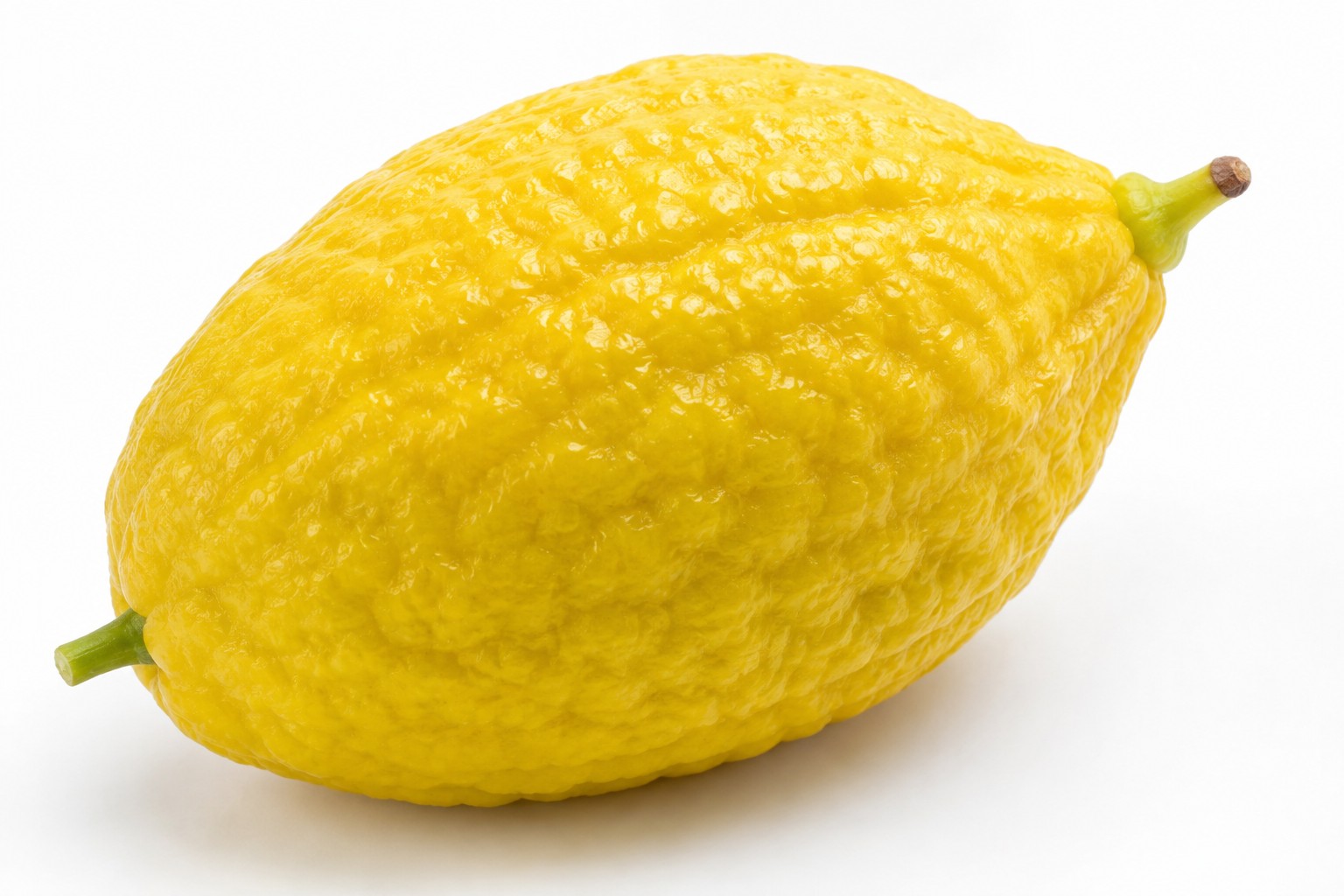 Kosher etrog with pitam intact for Sukkot
The etrog (אֶתְרוֹג) is a citron — a thick-skinned, intensely fragrant citrus fruit, cultivated in Israel, Italy, Morocco, and Greece specifically for this purpose.
The etrog carries the most exacting requirements of the four species:
- Whole and unblemished, particularly on its upper portion.
- The pitam — the small protrusion at the top — must be intact if the variety grew with one. Many etrogim shed the pitam naturally during growth and remain fully kosher; but an etrog whose pitam has broken off is invalid.
- Not grafted — the etrog must descend from an unbroken line of citron stock. This is why etrogim are purchased with certification of their orchard lineage.
- Minimum size of roughly an egg's volume.
The Yemenite etrog — notably large, ridged, and typically without a pitam — is a distinct traditional variety used in many Sephardic and Yemenite communities.
The Hadassim (Myrtle)
Three hadassim (הֲדַסִּים) — myrtle branches — are placed to the right of the lulav in the holder.
A kosher hadas must be meshulash — its leaves must grow in groups of three emerging from the same point on the stem, in rows down the length of the branch. A branch whose leaves alternate rather than growing in threes is not valid.
The hadassim must be at least three handbreadths long (approximately 11–12 inches), and their leaves should cover most of the branch.
The Aravot (Willow)
Two aravot (עֲרָבוֹת) — willow branches — are placed to the left of the lulav.
Kosher aravot have elongated leaves with smooth edges (not serrated) and a reddish stem. They must be at least three handbreadths long, with leaves still fresh and attached.
The aravot are the most perishable of the four species and typically need to be replaced during the festival as they dry out.
How to Choose a Kosher Lulav and Etrog
Sets are sold before the festival at Judaica stores, synagogues, and seasonal markets. Practical guidance:
- Buy from a reliable vendor with rabbinic certification, particularly for the etrog.
- Inspect the etrog for blemishes on the upper portion and confirm the pitam status.
- Check the lulav's central leaf is closed and not split.
- Count the hadassim leaves — verify they grow in threes.
- Buy extra aravot to replace them mid-festival.
- If unsure, ask. Most vendors expect customers to examine the set carefully, and a rabbi or knowledgeable friend can check a set in minutes.
Sets range widely in price. A basic kosher set is entirely sufficient for the mitzvah; the higher prices reflect hiddur — aesthetic perfection beyond the halachic minimum.
How to Shake the Lulav
How to Shake the Lulav — Step by Step
Steps:
Timing.
The Four Species are taken during the day, ideally in the morning before Hallel. They are not taken on Shabbat.
Hold the bound lulav
with hadassim and aravot attached) in your right hand, spine facing you.
Pick up the etrog
in your left hand, initially held upside down — with the pitam pointing downward.
Recite the blessing
over the lulav (text below). On the first day one adds Shehecheyanu.
Turn the etrog upright
so the pitam points up, and bring both hands together so the etrog touches the lulav bundle.
Wave in six directions.
Extend and draw back three times in each direction, shaking gently at the far point of each extension. The customary order in most Ashkenazi rites: east (forward), south (right), west (behind), north (left), up, down. Sephardic and Chasidic customs vary in the order — follow your community's practice.
Wave again during Hallel
at "Hodu LaShem ki tov" (both at the beginning and near the end) and at "Ana Hashem hoshia na." Left-handed individuals reverse the hands: lulav in the left, etrog in the right.
The Symbolism of the Four Species
The classical Midrash (Vayikra Rabbah 30:12) reads the Four Species as a portrait of the Jewish people, distinguished by two qualities: taste (representing Torah learning) and fragrance (representing good deeds).
| Species | Taste | Fragrance | Represents |
|---|---|---|---|
| Etrog | Yes | Yes | Those with both Torah and good deeds |
Lulav (date palm) | Yes | No | Those with Torah but not good deeds |
Hadas (myrtle) | No | Yes | Those with good deeds but not Torah |
Aravah (willow) | No | No | Those with neither |
The Midrash concludes that God binds all four together — and that the atonement of the festival depends on all four being held as one. A Jewish people that excludes any of its parts cannot fulfil this mitzvah at all.
A second classical reading maps the species onto the human body: the etrog resembles the heart, the lulav the spine, the hadas leaves the eyes, and the aravah leaves the lips. Serving God requires the whole person.
Sukkot Blessings and Prayers
Blessing for Sitting in the Sukkah (Leishev BaSukkah)
Recited before eating bread or grain-based food in the sukkah. Many recite it before every meal in the sukkah; the practice varies by custom.
בָּרוּךְ אַתָּה יְיָ אֱלֹהֵינוּ מֶלֶךְ הָעוֹלָם, אֲשֶׁר קִדְּשָׁנוּ בְּמִצְוֹתָיו וְצִוָּנוּ לֵישֵׁב בַּסֻּכָּה.
Transliteration
Baruch atah Adonai, Eloheinu melech ha'olam, asher kid'shanu b'mitzvotav v'tzivanu leishev ba'sukkah
Blessed are You, Lord our God, King of the universe, who has sanctified us with His commandments and commanded us to dwell in the sukkah.
Blessing on the Lulav (Al Netilat Lulav)
Recited while holding the lulav bundle in the right hand and the etrog — still upside down — in the left, before waving.
בָּרוּךְ אַתָּה יְיָ אֱלֹהֵינוּ מֶלֶךְ הָעוֹלָם, אֲשֶׁר קִדְּשָׁנוּ בְּמִצְוֹתָיו וְצִוָּנוּ עַל נְטִילַת לוּלָב.
Transliteration:
Baruch atah Adonai, Eloheinu melech ha'olam, asher kid'shanu b'mitzvotav v'tzivanu al netilat lulav.
Blessed are You, Lord our God, King of the universe, who has sanctified us with His commandments and commanded us concerning the taking of the lulav.
Shehecheyanu on the First Night
Recited on the first occasion of each mitzvah — on the first night in the sukkah, and on the first day the lulav is taken.
בָּרוּךְ אַתָּה יְיָ אֱלֹהֵינוּ מֶלֶךְ הָעוֹלָם, שֶׁהֶחֱיָנוּ וְקִיְּמָנוּ וְהִגִּיעָנוּ לַזְּמַן הַזֶּה.
Transliteration:
Baruch atah Adonai, Eloheinu melech ha'olam, shehecheyanu v'kiy'manu v'higianu la'z'man ha'zeh
Blessed are You, Lord our God, King of the universe, who has kept us alive, sustained us, and brought us to this season.
HaRachaman — The Sukkot Addition to Grace After Meals
Throughout the seven days of Sukkot, a special line is added to the Birkat HaMazon (Grace After Meals), in the series of HaRachaman petitions near the end.
הָרַחֲמָן הוּא יָקִים לָנוּ אֶת סֻכַּת דָּוִיד הַנּוֹפָלֶת.
Transliteration:
HaRachaman hu yakim lanu et sukkat David hanofalet.
May the Merciful One raise up for us the fallen sukkah of David.
The phrase is drawn from the prophet Amos (9:11), where the restoration of the Davidic monarchy is described as the raising up of a fallen booth. The choice of image is remarkable — the prophet could have spoken of a fallen throne or a fallen palace, and instead chose a sukkah.
Recited inside an actual sukkah, the line acquires a second layer. A person sits in a fragile structure that will be dismantled in a week, asking God to raise up the fragile structure of Jewish sovereignty that has been down for two thousand years. The smallness of the request is the point: what fell was not a fortress but a hut, and a hut can be rebuilt.
Hallel — Psalms of Praise
Full Hallel (Psalms 113–118) is recited every day of Sukkot — all seven days, plus Shemini Atzeret and Simchat Torah. This is unusual: on Passover, full Hallel is recited only on the first days.
The Talmud connects this to the fact that each day of Sukkot has its own distinct Temple offering, making each day a festival in its own right.
The lulav is waved during Hallel at the verses "Hodu LaShem ki tov" ("Give thanks to the Lord, for He is good") and "Ana Hashem hoshia na" ("Please, Lord, save us").
Hoshanot — The Special Sukkot Prayers
After the Musaf service each day of Sukkot, the congregation takes the Four Species and circles the bimah once — a procession called Hoshanot, named for its refrain.
הוֹשַׁע נָא, לְמַעַנְךָ אֱלֹהֵינוּ הוֹשַׁע נָא.
הוֹשַׁע נָא, לְמַעַנְךָ בּוֹרְאֵנוּ הוֹשַׁע נָא.
הוֹשַׁע נָא, לְמַעַנְךָ גּוֹאֲלֵנוּ הוֹשַׁע נָא.
הוֹשַׁע נָא, לְמַעַנְךָ דּוֹרְשֵׁנוּ הוֹשַׁע נָא.
Please save — for Your sake, our God, please save.
Please save — for Your sake, our Creator, please save.
Please save — for Your sake, our Redeemer, please save.
Please save — for Your sake, You who seek us, please save.
The Hoshanot are alphabetical acrostics pleading for salvation, agricultural blessing, and redemption. On Hoshana Rabbah, the seventh day, the congregation circles the bimah seven times rather than once.
The circuits recall the daily processions around the Temple altar during Sukkot, and the seven circuits of Hoshana Rabbah recall the seven circuits around Jericho.
Ushpizin — The Seven Holy Guests
Abraham, Isaac, Jacob, Moses, Aaron, Joseph, and David
Ushpizin (אוּשְׁפִּיזִין) is Aramaic for "guests." The custom, rooted in the Zohar, holds that each night of Sukkot one of seven biblical figures visits every sukkah — with a different one leading each night while the other six accompany him.
| Night | Ushpiz | Associated quality |
|---|---|---|
| 1 | Abraham | Chesed — lovingkindness |
| 2 | Isaac | Gevurah — strength and restraint |
| 3 | Jacob | Tiferet — beauty and truth |
| 4 | Moses | Netzach — endurance |
| 5 | Aaron | Hod — splendour and humility |
| 6 | Joseph | Yesod — foundation |
| 7 | David | Malchut — kingship |
Each of the seven was, in his own life, someone who left home and lived without permanent shelter — Abraham departing his birthplace, Jacob fleeing to Charan, Moses in Midian and the wilderness, David hiding from Saul. The guests of the sukkah are figures who knew what it was to dwell in impermanence.
Inviting Guests into the Sukkah
Many recite a formal invitation upon entering the sukkah each evening.
(The invitation):
עוּלוּ אוּשְׁפִּיזִין עִלָּאִין קַדִּישִׁין, עוּלוּ אֲבָהָתָן עִלָּאִין קַדִּישִׁין לְמֵיתַב בְּצִלָּא דִמְהֵימְנוּתָא עִלָּאָה.
Enter, exalted holy guests; enter, exalted holy fathers, to sit in the shade of exalted faith.
The custom carries a practical obligation alongside the mystical one. The Zohar teaches that one who welcomes the Ushpizin must also welcome actual guests — and particularly those who cannot reciprocate. Hosting the poor at one's Sukkot table is understood as the condition on which the spiritual guests accept the invitation.
Hoshana Rabbah — The Seventh Day
![Hoshana Rabbah prayers at sunrise with the Four Species. Photo: Forum Tikva]() Hoshana Rabbah prayers at sunrise with the Four Species. Photo: Forum Tikva
Hoshana Rabbah prayers at sunrise with the Four Species. Photo: Forum Tikva
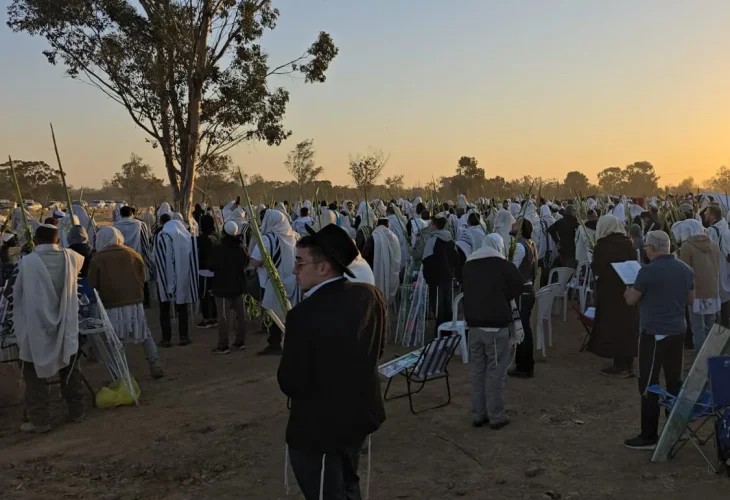 Hoshana Rabbah prayers at sunrise with the Four Species. Photo: Forum Tikva
The Custom of Beating the Willows
Hoshana Rabbah (הוֹשַׁעְנָא רַבָּה — "the Great Supplication") is the seventh and final day of Sukkot. In 2026 it falls on Friday, October 2.
The distinctive custom of the day is the beating of the willows. After the seven circuits of the bimah, worshippers set down the Four Species and take up a separate bundle of five willow branches, which they strike against the ground or a chair five times.
The custom is described in the Mishnah (Sukkah 4:5) as dating to the Temple period, and the classical sources give several explanations: the willow represents those without Torah or good deeds, and striking it away symbolises the removal of sin; the shedding leaves represent the casting off of harsh judgment; and the willow's dependence on water connects the act to the prayers for rain that follow immediately on Shemini Atzeret.
Hoshana Rabbah as the Final Day of Judgment
Jewish tradition treats Hoshana Rabbah as the true closing of the judgment that began on Rosh Hashanah. Though the verdict is sealed on Yom Kippur, the kabbalistic sources teach that the delivery of that verdict is finalised on Hoshana Rabbah — making it a last opportunity for the judgment to be softened.
This gives the day a character unlike the rest of Sukkot. Many communities hold an all-night learning vigil (Tikkun Leil Hoshana Rabbah), reading the entire book of Deuteronomy and Psalms. The chazzan wears a white kittel, as on the High Holidays. The morning prayers incorporate elements of the Yom Kippur liturgy.
The traditional greeting on Hoshana Rabbah — "Pitka tava" (Aramaic: "a good note") — reflects the belief that this is the day the note of judgment is handed over.
Shemini Atzeret and Simchat Torah
Shemini Atzeret — The Eighth Day of Assembly
Shemini Atzeret (שְׁמִינִי עֲצֶרֶת — "the Eighth Day of Assembly") follows immediately after the seven days of Sukkot, on 22 Tishrei. In 2026: Friday evening, October 2 through Saturday, October 3.
Despite following Sukkot directly, Shemini Atzeret is halachically a separate festival. The Four Species are not taken, and the obligation to dwell in the sukkah has ended — though in the diaspora many eat in the sukkah without reciting the blessing, as a compromise between the two possibilities.
The Talmud (Sukkah 55b) offers a striking image for the day. Throughout Sukkot, seventy bulls were offered for the seventy nations of the world. On Shemini Atzeret, a single bull is offered — for Israel alone. The Talmud compares it to a king who hosted a great feast for many guests, and when it ended, asked his closest friend to stay one more day, just the two of them.
Prayer for Rain (Tefillat Geshem)
The central liturgical feature of Shemini Atzeret is Tefillat Geshem — the Prayer for Rain — recited during the Musaf service. The chazzan wears a white kittel and chants it to the solemn High Holiday melody, and from this day forward the phrase "Mashiv haruach umorid hageshem" is inserted into the Amidah throughout the winter months.
(The insertion recited from Shemini Atzeret through Passover):
מַשִּׁיב הָרוּחַ וּמוֹרִיד הַגֶּשֶׁם.
He causes the wind to blow and the rain to fall.
The full Geshem prayer is an elaborate piyyut composed by Rabbi Elazar HaKalir, invoking the merit of six figures — Abraham, Isaac, Jacob, Moses, Aaron, and the twelve tribes — each connected to water in some episode of their lives. Each stanza ends with the same plea.
(The closing refrain of each stanza):
בַּעֲבוּרוֹ אַל תִּמְנַע מָיִם.
For his sake, do not withhold water.
The prayer concludes with a set of paired requests that define exactly what kind of rain is being asked for — a striking piece of liturgy that acknowledges rain can be either blessing or disaster.
שֶׁאַתָּה הוּא יְיָ אֱלֹהֵינוּ מַשִּׁיב הָרוּחַ וּמוֹרִיד הַגֶּשֶׁם.
לִבְרָכָה וְלֹא לִקְלָלָה. לְחַיִּים וְלֹא לַמָּוֶת. לְשֹׂבַע וְלֹא לְרָזוֹן.
For You are the Lord our God, who causes the wind to blow and the rain to fall —
For blessing and not for curse. For life and not for death. For abundance and not for famine.
When to Begin "V'ten Tal U'Matar"
A point frequently confused: the praise "Mashiv haruach umorid hageshem" begins on Shemini Atzeret, but the actual request for rain — "V'ten tal u'matar livracha" ("and give dew and rain for blessing") — begins later, and on different dates depending on location.
- In the Land of Israel: from the 7th of Cheshvan.
- In the diaspora: from the evening of December 4 (or December 5 in the year preceding a secular leap year).
The gap exists because the request is tied to the agricultural needs of the specific land. In Israel the delay of two weeks after Sukkot allowed pilgrims returning home from Jerusalem to complete their journey before the rains began.
The timing is agricultural and geographic throughout: the rainy season in the Land of Israel begins in autumn, and the Jewish calendar begins praising God for rain — and then asking for it — at precisely the moments the land requires.
Simchat Torah — Rejoicing with the Torah
Simchat Torah (שִׂמְחַת תּוֹרָה — "Rejoicing of the Torah") is observed in the diaspora on 23 Tishrei — in 2026, Saturday evening, October 3 through Sunday, October 4. In Israel it is combined with Shemini Atzeret on a single day.
Simchat Torah marks the completion of the annual Torah reading cycle and its immediate restart. The final portion of Deuteronomy is read, and the opening of Genesis follows without pause — a deliberate statement that the Torah has no endpoint.
The day is celebrated with hakafot — seven circuits around the synagogue with the Torah scrolls, accompanied by singing and dancing that in many communities continues for hours. Children participate fully, often carrying flags. Every adult male receives an aliyah to the Torah, and in many congregations the children are called up collectively under a spread tallit.
Two honours mark the day: Chatan Torah ("Groom of the Torah"), who is called for the final portion of Deuteronomy, and Chatan Bereishit ("Groom of Genesis"), who is called for the opening of Genesis.
Sukkot Customs and Traditions
Eating All Meals in the Sukkah
Throughout the seven days, all meals containing bread or grain-based foods are eaten in the sukkah. Rain, illness, or genuine discomfort exempt a person, and casual snacks and drinks may be taken outside — though many are stringent about this.
The first night carries a distinct obligation: at least a k'zayit of bread must be eaten in the sukkah, even under difficult conditions.
Sleeping in the Sukkah
The obligation to sleep in the sukkah is, in strict halacha, more stringent than the obligation to eat there — even a brief nap outside the sukkah is technically prohibited.
In practice, customs diverge significantly:
- Many Ashkenazi communities are lenient about sleeping in the sukkah, and the Rema records the practice of not sleeping there, connected to the exemption for discomfort and to the halacha that a married man should not separate from his wife (who is exempt from the sukkah).
- Many Sephardic and Chasidic communities maintain the obligation fully, and sleeping in the sukkah is standard.
- Climate governs a great deal in practice. In much of North America, late-September and October nights make sleeping outdoors genuinely difficult, and the exemption for discomfort applies straightforwardly.
Follow your family's and community's custom.
Chol HaMoed — The Intermediate Days
The days between the first festival days and Shemini Atzeret are Chol HaMoed (חֹל הַמּוֹעֵד) — the intermediate days. In 2026 in the diaspora, Chol HaMoed runs from Monday, September 28 through Thursday, October 1, with Hoshana Rabbah on Friday, October 2.
Chol HaMoed occupies a genuine middle status. Most categories of work are prohibited, but exceptions are broad: work needed for the festival itself, work whose postponement would cause significant financial loss, and work required for public need are all permitted. Consult a rabbi about specific employment situations.
The days are marked by family outings, trips, and visiting — Israel in particular sees enormous Chol HaMoed tourism, with sites and attractions running festival programming throughout the week. The obligation to eat in the sukkah and take the Four Species continues throughout.
Reading Kohelet (Ecclesiastes)
On the Shabbat that falls during Chol HaMoed Sukkot, Ashkenazi communities read Megillat Kohelet — the Book of Ecclesiastes — from a scroll or printed text before the Torah reading. In 2026 there is no Shabbat during Chol HaMoed, so Kohelet is read on Shemini Atzeret, Saturday, October 3.
The choice appears counterintuitive. Kohelet is the bleakest book in the Hebrew Bible — its refrain is "Havel havalim, hakol havel" ("Utter futility; all is futile") — and it is read on the festival explicitly designated as the Season of Our Rejoicing.
(The opening refrain, Kohelet 1:2):
הֲבֵל הֲבָלִים אָמַר קֹהֶלֶת, הֲבֵל הֲבָלִים הַכֹּל הָבֶל.
"Utter futility," said Kohelet. "Utter futility — all is futile."
The classical explanation turns on exactly that tension. Sukkot arrives at the harvest, at the moment of maximum abundance, and joy at that moment is at risk of curdling into complacency. Kohelet is the corrective — a sustained argument that wealth, achievement, and pleasure do not in themselves amount to a life.
The book does not end in despair. Its final verse resolves the whole argument: "The end of the matter, all having been heard: fear God and keep His commandments, for this is the whole of man" (12:13).
Read inside a sukkah — a structure that will be taken down in a week — Kohelet reads less as pessimism than as accuracy. Sephardic communities generally do not read Kohelet publicly, though many individuals study it during the festival.
Water Libation (Simchat Beit HaShoevah)
When the Temple stood, water was poured on the altar each morning of Sukkot alongside the usual wine libation — the nisuch hamayim. The water was drawn from the Shiloach spring the night before, and the drawing was accompanied by celebrations of extraordinary scale.
The Mishnah (Sukkah 5:1) records: "Whoever has not seen the joy of the water-drawing celebration has never seen joy in his life."
Today, communities hold Simchat Beit HaShoevah celebrations on the intermediate nights of Sukkot — music, dancing, and food, often in the synagogue courtyard or a large sukkah, and often continuing late into the night. In Jerusalem and Bnei Brak the celebrations draw enormous crowds, and communities across North America hold their own versions.
The Spiritual Meaning of Sukkot
Trust in God (Emunah and Bitachon)
The sukkah is a lesson in what actually provides security.
For a full week, a person leaves a solid house with locks and insulation and moves into a structure that would not survive a serious storm. Nothing about the sukkah is protective in any ordinary sense. And yet the Torah calls it a dwelling.
The classical teaching is direct: the walls of a house create an illusion of self-sufficiency that the sukkah strips away. The desert generation had no houses at all, and survived. What sustained them was not architecture.
This is why the festival falls at the harvest — at the moment of maximum material security. The sukkah is the corrective to the thought that the storehouse is what keeps a person safe.
The Fragile Sukkah as a Symbol of Life
There is a second reading of the sukkah, less about trust and more about honesty.
The sukkah does not merely teach that God protects; it teaches that life is genuinely fragile. A structure that shakes in the wind and lets in rain is a truthful representation of a human life — temporary, exposed, dependent on conditions no one controls.
What makes Sukkot remarkable is that this recognition is the setting for the festival of joy. The Torah does not command joy despite the fragility; it commands joy inside it. The sukkah is where a person sits with the truth of impermanence and celebrates anyway.
Unity of the Jewish People (Four Species)
The Four Species carry the festival's social teaching. As the Midrash reads them, the four plants represent four kinds of Jew — those with learning and good deeds, those with one, those with the other, and those with neither.
The mitzvah cannot be performed with three species. All four must be bound and held together, and the one representing those with neither Torah nor good deeds is as necessary as the etrog.
The message is deliberately uncomfortable, and it lands with particular force following the Days of Awe: whatever the differences within the Jewish people, the atonement of the festival requires that no part of it be discarded.
Sukkot in Jerusalem and at the Kotel
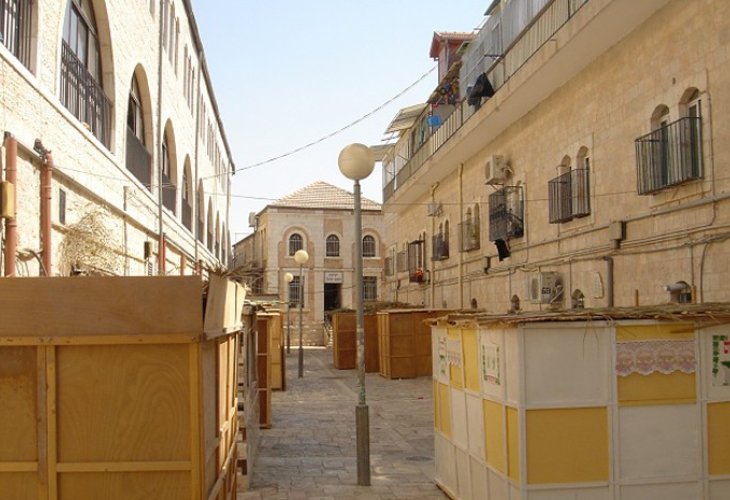 Sukkot lining a street in Jerusalem during the festival. Photo: Flash90
Sukkot was one of the three pilgrimage festivals on which Jews ascended to Jerusalem, and the city retains a distinct character during the festival that draws visitors from around the world.
The Priestly Blessing at the Kotel. The most striking mass gathering of the festival is Birkat Kohanim — the Priestly Blessing — recited at the Western Wall on Chol HaMoed Sukkot and again on Chol HaMoed Passover. Tens of thousands fill the Kotel plaza while hundreds of Kohanim ascend, cover their heads with their tallitot, and pronounce the ancient threefold blessing over the crowd. It is among the largest regular Jewish gatherings in the world.
(Birkat Kohanim — Numbers 6:24–26):
יְבָרֶכְךָ יְיָ וְיִשְׁמְרֶךָ.
יָאֵר יְיָ פָּנָיו אֵלֶיךָ וִיחֻנֶּךָּ.
יִשָּׂא יְיָ פָּנָיו אֵלֶיךָ וְיָשֵׂם לְךָ שָׁלוֹם.
May the Lord bless you and keep you.
May the Lord shine His face upon you and be gracious to you.
May the Lord turn His face toward you and grant you peace.
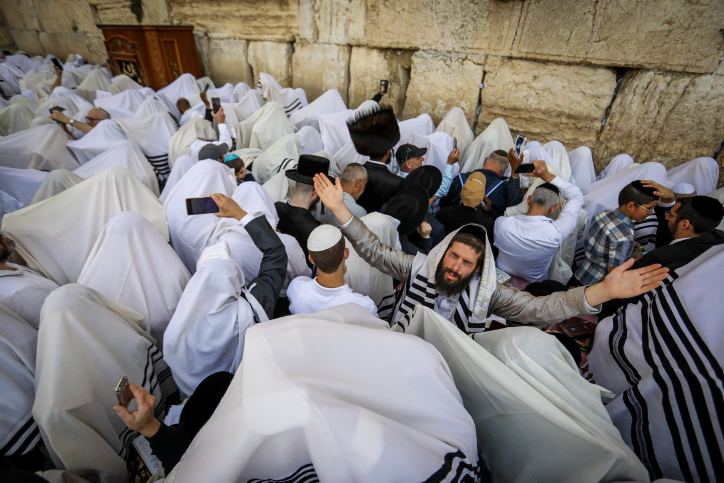 Birkat Kohanim at the Western Wall during Sukkot. Photo: Flash90
Sukkot across the city. Jerusalem in Sukkot is a city of sukkot — on balconies, in courtyards, on restaurant terraces, and in the streets of the Old City. Restaurants and hotels build sukkot for guests, and the visual effect across neighbourhoods such as the Jewish Quarter, Nachlaot, and Mea Shearim is unmistakable.
Simchat Beit HaShoevah celebrations run nightly through Chol HaMoed across Jerusalem and Bnei Brak, drawing large crowds for music and dancing that continues past midnight.
Chol HaMoed travel. The intermediate days are among the busiest tourism periods in Israel. National parks, museums, and heritage sites run festival programming, schools are closed nationwide, and families travel across the country throughout the week.
Sukkot in American Jewish Communities
Sukkot has a visible presence in American Jewish life unmatched by most festivals, precisely because its central observance is physical and outdoors.
Sukkah building is a defining feature of the season across Orthodox neighbourhoods in Brooklyn, Lakewood, Monsey, the Five Towns, Baltimore, Chicago, Los Angeles, Miami, and Toronto. Prefabricated sukkah kits — canvas-and-frame or modular panel systems — have made construction accessible to families who previously could not build one, and pop-up sukkah stores and bamboo s'chach vendors appear in Jewish neighbourhoods each September.
Apartment dwellers build on balconies, terraces, and in shared courtyards. Many synagogues and Chabad centres maintain communal sukkot open to anyone, and mobile sukkah initiatives — sukkot mounted on trucks and driven to city centres and campuses — are a widespread outreach programme.
Four Species markets open in the weeks before the festival, with vendors selling sets ranging from basic to premium. Buyers examine etrogim under magnifying glasses, and the annual pre-Sukkot market is itself a social occasion.
Chol HaMoed is a major family season. Jewish day schools close, and Chol HaMoed trips to zoos, amusement parks, and museums are a fixture of the American Orthodox calendar — with kosher food arrangements and sukkot set up at many venues.
Simchat Beit HaShoevah celebrations run through the intermediate nights, and Simchat Torah draws some of the largest synagogue attendance of the year across all denominations, with dancing that in many communities continues well past midnight.
Conservative and Reform congregations build communal sukkot, hold festival services, and increasingly emphasise Sukkot's environmental and agricultural dimensions alongside its historical meaning.
Watch: Sukkot Video Library
Sources & References
Biblical Sources:
- Leviticus 23:33–43 — the commandment of Sukkot and the Four Species.
- Numbers 6:24–26 — Birkat Kohanim, the Priestly Blessing.
- Numbers 29:12–38 — the Sukkot offerings.
- Deuteronomy 16:13–15 — the command to rejoice on Sukkot.
- Exodus 23:16 — Chag HaAsif, the Festival of Ingathering.
- Amos 9:11 — "the fallen sukkah of David," the source of the HaRachaman addition.
- Kohelet (Ecclesiastes) — read on Sukkot in Ashkenazi communities.
- Nehemiah 8:14–17 — the Sukkot revival after the return from Babylon.
Talmudic and Midrashic Sources:
- Mishnah, Tractate Sukkah (entire tractate) — the laws of the sukkah and the Four Species.
- Mishnah Sukkah 4:5 — the willow custom of Hoshana Rabbah.
- Mishnah Sukkah 5:1 — the joy of Simchat Beit HaShoevah.
- Babylonian Talmud, Sukkah 11b — Rabbi Akiva and Rabbi Eliezer on the nature of the booths.
- Babylonian Talmud, Sukkah 27b–28b — dwelling in the sukkah; "teishvu k'ein taduru."
- Babylonian Talmud, Sukkah 55b — the seventy bulls and Shemini Atzeret.
- Midrash Vayikra Rabbah 30:12 — the Four Species and the unity of the Jewish people.
- Zohar, Parashat Emor — the Ushpizin.
Halachic Sources:
- Shulchan Aruch, Orach Chayim 625–669 — the complete laws of Sukkot, the sukkah, and the Four Species.
- Rama (Rabbi Moshe Isserles), glosses to Orach Chayim 639 — Ashkenazi custom regarding sleeping in the sukkah.
- Rambam (Maimonides), Mishneh Torah, Hilchot Sukkah v'Lulav.
- Mishnah Berurah 625–669 — detailed practical halacha.
- Rulings of Rabbi Ovadia Yosef ZT"L — Sephardic practice.
Contemporary References:
- Chabad.org — practical guides to sukkah building, the Four Species, and Sukkot customs.
- Orthodox Union (OU.org) — halachic guidance on Sukkot and Chol HaMoed.
- Sefaria (sefaria.org) — full texts of Mishnah Sukkah, Talmud Sukkah, and Mishneh Torah.
- Hebcal (hebcal.com) — verified Sukkot dates, 2026–2030.
- Encyclopaedia Judaica — entries on Sukkot, the Four Species, Hoshana Rabbah, Shemini Atzeret, and Simchat Torah.
For practical halachic guidance on individual situations — sukkah construction questions, selecting the Four Species, Chol HaMoed work, or community-specific customs — consult a qualified Orthodox rabbi.
Questions & Answers
+What is Sukkot and why is it celebrated?
+When is Sukkot 2026?
+How long is Sukkot?
+What is a sukkah?
+How do I build a sukkah?
+What are the Four Species (Arba Minim)?
+How do you shake the lulav?
+Do you have to sleep in the sukkah?
+Can I eat in a sukkah if it rains?
+What is Hoshana Rabbah?
+What is the difference between Sukkot and Shemini Atzeret?
+What does Ushpizin mean?
+Why is Sukkot called "Z'man Simchateinu"?
+What do you say to someone celebrating Sukkot?
+Why do we read Kohelet (Ecclesiastes) on Sukkot?
+When do we start saying "V'ten tal u'matar"?
+What is Birkat Kohanim at the Kotel?

