

Magazine
44 Years After Sultan Yacoub: Yehuda Katz Is Finally Home
After 44 years, Yehuda Katz, the last missing soldier from the Battle of Sultan Yacoub, has come home. Fellow soldier Avi Rat reflects on the battle and decades of waiting.
- Michal Arieli
- | Updated
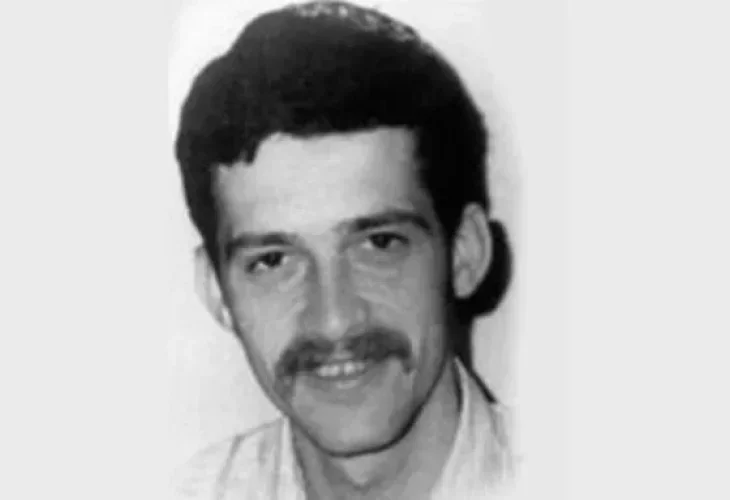 Sgt. Yehuda Katz, of blessed memory (Photo: IDF Spokesperson)
After 44 years of uncertainty, countless prayers, and a determined public campaign, it was announced this week that the remains of Yehuda Katz, of blessed memory, the last missing soldier from the Battle of Sultan Yacoub during the First Lebanon War, had been brought back to Israel.
For his family, it marks the end of more than four decades without answers. For the soldiers who fought alongside him, it is the closing of a circle they never stopped waiting for.
Avi Rat, a writer, educator, and lecturer, was one of Katz’s fellow soldiers.
“Hearing that Yehuda is coming home brings enormous joy and relief,” he says. “At the same time, it takes you back to all those years that have passed, and of course to that terrible battle that exacted such a heavy price from us. I am in touch with other friends who fought in that battle, and I can say firsthand that no one simply returned to normal life afterward. The missing soldiers were always in our hearts.”
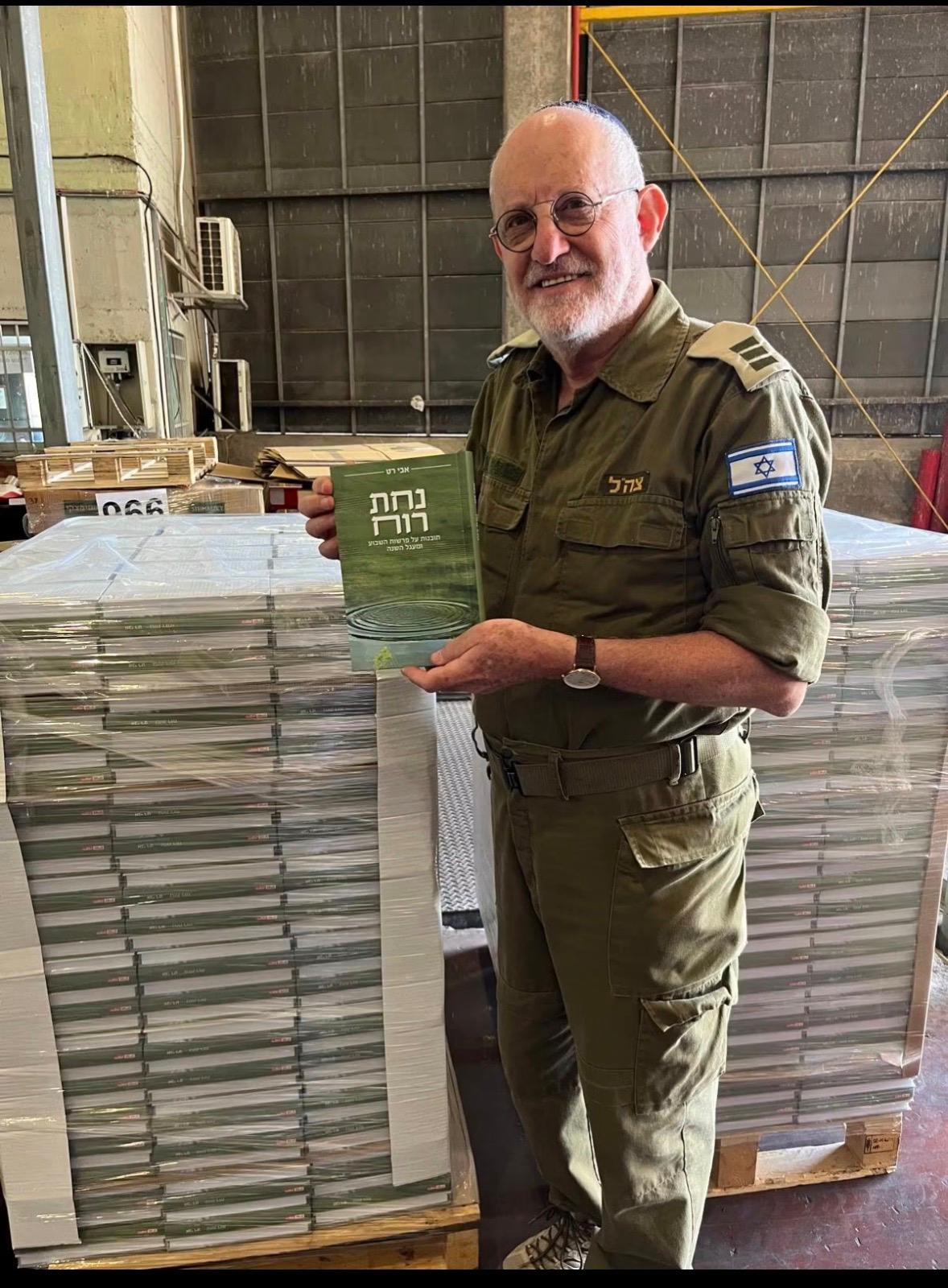 Avi Rat
A Battle That Changed Everything
Rat takes us back 44 years to the events that preceded the battle.
“The early 1980s in Lebanon were marked by unrelenting terrorism: attacks on communities in northern Israel, bus bombings, and Katyusha rocket fire, which reached a peak after the attempted assassination of Israel’s ambassador to London, Shlomo Argov.
“The goal was to push the artillery positions away from northern Israel,” he explains, “and that is why we were sent on the mission.”
By “we,” Rat means the armored battalion in which he served.
“Most of our crew were students from yeshivot hesder, primarily Yeshivat HaKotel, Kerem B’Yavneh, Shaalvim, and Yeshivat HaDarom. We were in the final week of regular service before heading into reserve duty. Some of us were married, with children waiting at home. I was married and had a year-and-a-half-old child.”
For approximately six days, the fighting proceeded relatively as expected. Then, on Thursday, the 19th of Sivan, 5742, everything changed.
“We were caught in a Syrian ambush by forces that outnumbered us 12 to one, completely contrary to all the intelligence assessments we had received,” Rat recalls. “They controlled the high ground, creating a total surprise.
“The Battle of Sultan Yacoub continued until Friday afternoon, one full day, and was marked by extraordinary bravery, but tragically also by wounded and fallen soldiers. Only when it ended did we understand that it had become one of the most difficult and painful battles in IDF history: 20 soldiers were killed, dozens were wounded, and six fighters were listed as missing.”
From that moment, Rat says, he and his fellow soldiers were determined to do everything they could to bring their friends home.
A year and a half after the battle, Zohar Lifshitz and Aryeh Lieberman were returned. Three years later, Hezi Shai was brought back.
“After that, three missing soldiers remained: Zechariah Baumel, Zvika Feldman, and Yehuda Katz. My friends and I continued with our lives, but we never forgot our missing friends. Over the years, we continued holding gatherings and demonstrations and working through the media in Israel and around the world. We did everything we could to find out what had happened to them.”
Were there any developments over the years?
“There were a few developments. Every time, we thought, ‘This is it. There’s a breakthrough, and something is about to happen.’ But the disappointment was crushing, especially for the parents, who grew older over the years and wanted only to see their sons return home.
“Yehuda’s parents were both Holocaust survivors, and they hoped to see their son again, which tragically did not happen in their lifetimes.
“About six years ago, we learned that Zechariah Baumel’s body had been found and brought for burial in Jerusalem. A year and a half later, Zvika Feldman was located, and yesterday we were informed that Yehuda Katz had been found.”
How did the families cope with such a long wait?
“They tried to be strong, but they went through a real nightmare. It is impossible to put the depth of their pain and sorrow into words.
“Think about it: 44 years of uncertainty, with no grave to cry over and not even the ability to find comfort or do something in memory of their children and for the elevation of their souls, because there was no certainty that they were no longer alive.
“Every year, Memorial Day came around, and they were not counted among Israel’s fallen soldiers. The families lived with this open wound for decades.
“The parents fought like lions and led many campaigns, meeting with presidents and prime ministers, anyone who might possibly help solve the mystery, but to no avail. Over the years, they all passed away, but we continued our efforts and stayed in touch with the other family members.
“For us, those 44 years included Torah classes and Torah study in their merit, alongside political and media activity. It weighed on our conscience and our shoulders the entire time. The knowledge that we had not brought our friends home, alive or for burial, never let go.”
Closing a 44-Year Circle
Did you speak with the families after their sons were returned?
“Of course. I spoke with the Baumel and Feldman families after their return. It is difficult to say there was great joy, because this is a process of mourning filled with pain and longing.
“But there is also a measure of comfort. At last, there is a grave they can visit, there is a memorial day, and it is possible to commemorate the deceased and do things in his memory and for the elevation of his soul, which was not possible before.
“I have not yet spoken with the Katz family. As mentioned, the parents are no longer alive, and his brother and sister remain. They are surely going through very difficult moments. It is still early, and I will contact them later.”
Do you feel that with the return of the fallen soldiers, the questions surrounding their disappearance have finally been resolved?
“There are many questions. We have been asking them for decades, and we have no answers to most of them,” he responds. “But the truth is that this is not what occupies us right now. Right now, we are saying goodbye to Yehuda, who was a close friend of ours and has finally come home.”
How do you explain the fact that, among all your friends, you in particular made this such a major part of your life?
“As I mentioned, I was not the only one. I have other friends who did this too, each in his own way.
“In my case, I felt a moral, values-based, and personal obligation to act because I was known as a media figure and had connections. That is probably why people heard me more.
“I used to invite the families to my family celebrations and, of course, to evenings of spiritual inspiration and Torah classes that we held in honor of the missing soldiers. I know that other friends did the same.
“We all had one clear goal: not to leave the families alone and not to let the issue disappear from the public agenda. After all, other wars broke out over the years, and new tragedies could have caused the old ones to be forgotten. We could not allow our friends to be forgotten.
“Our mission was to keep their story alive, and at least in that sense, I can say that we have now come full circle.”
Do you think that without those efforts, this chapter might never have been brought to a close?
“I am certain that if we had not applied pressure, persisted, and pushed, each person in his own place, role, and according to his abilities, the missing soldiers might have been forgotten and perhaps, Heaven forbid, might not have been brought to kever Yisrael.
“I am also certain that their parents did their work in Heaven and that their merit surely stood by their children.
“All of this was alongside the extensive work of IDF and Mossad personnel, who did sacred work to uncover the information, reach the right place, and ultimately bring back the remains.
“All of this has led to the fact that soon we will be able to accompany Yehuda to his final resting place and, as friends, begin to heal ourselves as well.”

