

Words of Torah
Fall Seven Times and Rise Again: The Torah’s Message About Failure
Proverbs teaches that even a righteous person falls. What defines us is not avoiding every setback, but finding the strength to get back up, take the next small step, and keep growing
- Yonatan HaLevi
- | Updated
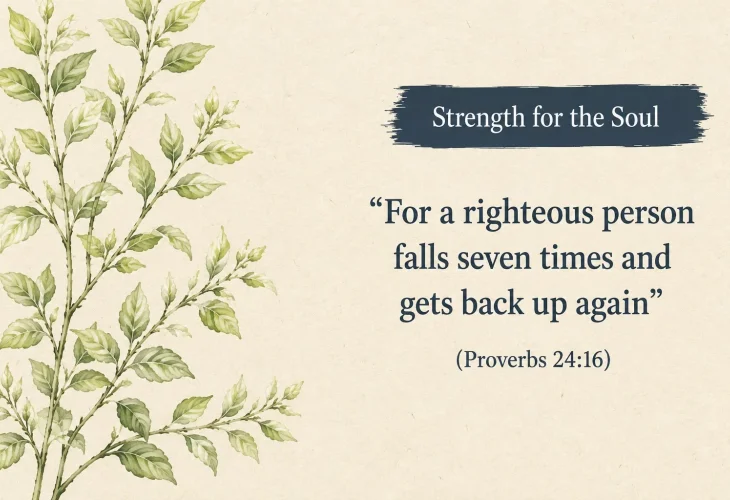
“For a Righteous Person May Fall Seven Times and Rise Again” (Proverbs 24:16).
The Malbim explains: “Although the righteous person may fall seven times, he will rise again with God’s help. But the wicked will stumble through the very evil they prepared for the righteous; through it they will fall and not rise.”
We are all familiar with thoughts like: “I failed again,” “Once again, I didn’t keep the commitment I made,” or “I ended up in the same place again.” And we know the discouragement that can follow.
But the verse teaches us that even a righteous person falls. What distinguishes the righteous person is not a life without setbacks, but the ability to get back up. A fall does not erase everything you have built. One difficult day does not turn an entire period of growth into a failure. One mistake does not define who you are.
Sometimes the greatest mistake is not the fall itself, but the thought that follows: “I already failed, so there’s no point in continuing.” This is precisely where the most important word in the verse comes in: “and rises.”
Examples From Everyday Life
If you missed a day of learning, don’t wait until next week. Open a book and learn for five minutes today.
If you stumbled again in a character trait you have been working on, don’t tell yourself, “This is just who I am.” Try again, even with one small step.
If you commit to a positive habit and then break it, you don’t need to make a dramatic new beginning. Simply return to it.
The next time you fall, don’t ask only, “Why did this happen to me again?” Ask instead: “What is one small step I can take right now?”
You don’t need to fix everything in a single day. You simply must refuse to stay down.

