

The Month of Elul
The Many Faces of Slichot
How Slichot became a different expression of repentance in Ashkenazi, Sephardic, and Mizrahi Jewish communities
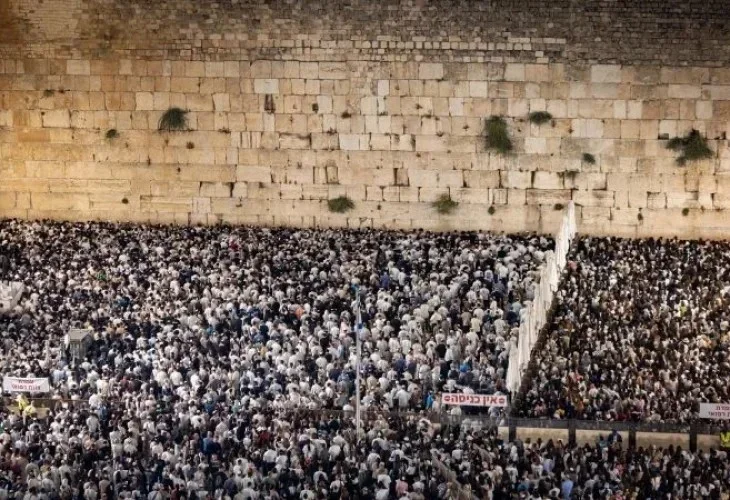 The Selichot prayer gathering (Photo: Chaim Goldberg, Flash90)
Every year, as Elul draws the Jewish calendar toward Rosh Hashanah, Jewish communities around the world rise before dawn—or gather late at night—to recite Slichot, the penitential prayers that usher in the season of repentance. At first glance, it looks like a single, ancient tradition. In reality, Slichot is less one custom than a family of customs, each shaped by the particular history of the community that carried it through exile.
Ashkenazi Jews in the Rhineland, Sephardim in Iberia and later the Ottoman world, and Mizrahi communities from Baghdad to North Africa all inherited the same basic idea: that human beings can appeal to God's mercy through prayer and liturgical poetry. But each community built something different around that core. The story of Slichot is, in miniature, the story of the Jewish diaspora itself.
A Custom, Not a Law
Unlike the fixed daily prayers, Slichot never became a formal halachic obligation. The Shulchan Aruch calls its recitation simply a "beautiful custom" (minhag yafeh). That status helps explain why Slichot developed so many regional variations. There was no single legal formula enforcing uniformity—only local practice, communal memory, and the creativity of generations of paytanim, or liturgical poets.
The theological heart of the service is a passage in the Babylonian Talmud, in Tractate Rosh Hashanah 17b. God is described as wrapping Himself like a prayer leader and showing Moses the order of the Thirteen Attributes of Mercy, promising that whenever Israel recites them, forgiveness will follow. Drawn from Exodus 34:6–7, the Thirteen Attributes remain the structural core of Slichot in every Jewish community, however different the surrounding poetry may be.
The organized practice of reciting penitential prayers before the High Holidays appears in the sources of the Geonim, the heads of the great Babylonian academies of the early medieval period. Scholars trace the earliest known Slichot compositions to the time of Rav Amram Gaon and Rav Saadia Gaon in the ninth and tenth centuries. In other words, the Slichot tradition as we know it emerged not in the Temple period or even primarily in the Land of Israel, but in the Babylonian diaspora.
By the eleventh century, Jewish communities across the diaspora were composing their own Slichot, and the tradition began to develop along distinct regional lines.
Why the Timing Split: Elul or the Week Before Rosh Hashanah?
Perhaps the most familiar difference between Jewish communities is simply when Slichot begins. That difference, too, has roots in the diaspora.
Medieval halachic authorities recorded several competing customs. In the region of Barcelona, Slichot began on the 25th of Elul; in Gerona, they were recited only beginning with Rosh Hashanah itself, a practice later reflected in Maimonides' ruling that one should rise early during the Ten Days of Repentance.
The custom that eventually became widespread among Sephardic and Mizrahi Jews was more ambitious: beginning the day after Rosh Chodesh Elul and continuing every day through Yom Kippur.
The practice is connected to the tradition that Moses ascended Mount Sinai on Rosh Chodesh Elul to receive the second set of tablets, remaining there for forty days as God and Israel were reconciled. Reciting Slichot throughout those same forty days became a way of ritually reenacting that reconciliation.
Ashkenazi communities in medieval Central and Eastern Europe developed a different system. At least four days of Slichot were considered necessary before Rosh Hashanah, so the service began on Motzaei Shabbat immediately preceding the holiday—or, when Rosh Hashanah fell too early in the week, on the Saturday night before that.
The Terumat HaDeshen later offered a spiritual explanation for the timing. The Divine Presence rests only amid joy, he explained, and the conclusion of Shabbat—a day of rest and completed mitzvah—was therefore considered an especially auspicious time to begin pleading for forgiveness.
The difference remains striking. In most years, Ashkenazi Jews recite Slichot for a little more than a week. Sephardic and Mizrahi Jews may recite them for nearly forty days. Anyone who has moved between the two traditions knows that this is not a minor liturgical distinction: it changes the entire feel of Elul.
Trauma, Poetry, and the Character of a Tradition
The differences between the traditions go beyond the calendar. They extend to the emotional character of the prayers themselves.
Much of the Ashkenazi Slichot corpus was composed in the generations following the First Crusade of 1096, when Jewish communities in the Rhineland endured massacres that left a deep imprint on Jewish memory—and on Jewish liturgy. Many of these poems are, quite literally, poetry of massacre and mourning.
That history gave Ashkenazi Slichot a particular emotional register: fear, trembling, grief, and an acute awareness of Jewish vulnerability. After October 7, 2023, some Israelis encountered these medieval poems with a new immediacy, hearing in eleventh-century descriptions of slaughter and loss echoes of their own moment.
Mishael Vaknin, a researcher of the genre, has drawn the
