

Health and Nutrition
Could Your White Noise Machine Be Harming Your Hearing?
White noise can help mask distracting sounds, but volume, distance, and duration matter. Here’s how to use a white noise machine more safely.
- Yitzchak Eitan
- | Updated
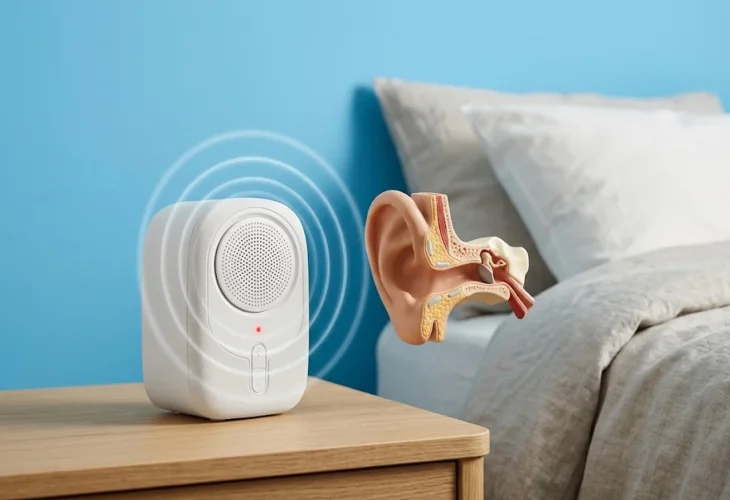
White noise machines have become increasingly popular, particularly on social media, and many people now consider them an essential part of their nighttime routine. Adults use them to help fall asleep, while parents may rely on them to soothe babies and mask household or street noise.
But hearing experts warn that these devices are not completely risk-free. When used too loudly, too close to the listener, or for long periods of time, they could potentially expose the ears to unsafe levels of sound.
A white noise machine produces a steady background sound designed to mask distracting noises and create a more consistent environment for sleep or concentration. The concern is not white noise itself, but the volume, duration, and distance from the device.
Unlike a sudden extremely loud noise that can cause immediate hearing damage, excessive noise exposure can also have cumulative effects. Some white noise machines are capable of producing sound levels high enough to raise concerns, particularly when they are used continuously throughout the night and positioned close to the listener.
Why Babies Require Extra Caution
White noise machines are especially popular among parents of babies, but this is also where careful use becomes particularly important.
Infants have developing auditory systems, and a machine placed close to a crib can expose a baby to higher sound levels than parents may realize. Because babies cannot tell us when a sound is uncomfortable or too loud, parents need to control the volume and placement themselves.
Researchers have also raised questions about whether prolonged exposure to continuous background noise could affect auditory development and the way young children learn to process sounds. Research in this area is still developing, however, so it is important not to treat these concerns as proof that appropriately used white noise causes developmental problems.
How to Use White Noise More Safely
You don’t necessarily have to give up white noise altogether. The key is to use it carefully.
Keep the machine well away from the bed or crib rather than placing it beside the listener’s head, and use the lowest volume that effectively masks unwanted sounds. For babies in particular, greater distance and a conservative volume are sensible precautions.
A timer can also be useful. If the sound is mainly needed to help someone fall asleep, the machine can be set to switch off rather than continuing unnecessarily throughout the entire night.
A fan or air purifier may also provide the steady background sound some people find soothing, although these devices can vary in volume too, so they should still be used at a comfortable sound level.
Ultimately, white noise doesn’t need to be frightening or avoided altogether. The important thing is to remember that something playing quietly in the background can still become significant when it is close, loud, and running for hours at a time. When it comes to protecting hearing, lower volume, greater distance, and less unnecessary exposure are simple precautions worth taking.

