

Abortion
“They Asked If I Wanted an Abortion. I Said: ‘For This?!’”
A cleft lip and palate diagnosis brought an unexpected question during pregnancy. Now one mother is sharing what happened next.
- Tamar Ben Simon
- | Updated
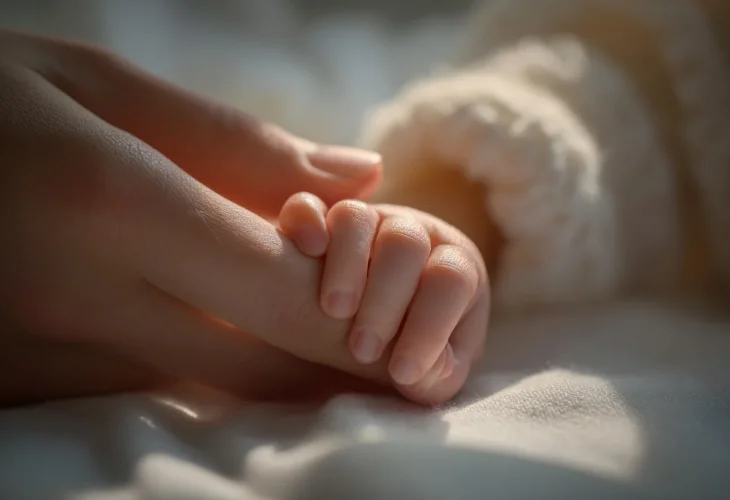
When my daughter Tohar was born at 35 weeks, amid the joy of her arrival and my recovery from childbirth, I noticed something was different. Even while we were still in the hospital, I realized I was dealing with difficulties I had never experienced with my older daughter, Avigail.
Tohar couldn’t nurse or drink from a regular bottle. She could only eat from a special bottle designed for premature babies. Even then, feeding her took hours as she ate little by little. And once she finally managed to eat, the milk would come out through her nose.
I turned to a doctor in the NICU, who attributed all of these signs to her prematurity, and that was how we were discharged from the hospital.
For the next two months, I was confused and exhausted. I spent hours trying to nurse her and struggled through long, drawn-out feedings, including throughout the night. I asked doctors what could be wrong, but I was told that everything was fine and that she didn’t have a tongue-tie.
Supposedly, everything was fine.
The Nurse Who Finally Saw It
Then I took Tohar to the well-baby clinic for her two-month vaccination.
A nurse named Marina greeted me and began asking questions about Tohar’s feeding and nursing difficulties. She tried to understand with me what could be causing them.
When Tohar cried during the vaccination, Marina suddenly exclaimed, “I know—it’s a cleft palate!”
She tried to show me what she could see inside Tohar’s mouth. I couldn’t see it myself, but it turned out that Tohar had been born with a cleft in her soft palate.
At one year old, she underwent surgery. Afterward, she was able to eat without difficulty, and we felt that the ordeal was finally behind us.
But four years later, everything became much more complicated.
“Are You Sure You Want to Have This Baby?”
I became pregnant again, and during the prenatal tests, doctors identified a cleft lip and palate extending from the uvula to the nose.
At appointment after appointment, the doctors asked me whether I wanted to terminate the pregnancy and whether I was sure I wanted to raise a baby with this condition.
They asked me so many times that eventually I decided I did not want to give birth at that hospital.
When they asked whether I had undergone all the recommended tests, I told them that I had done everything except amniocentesis.
They told me it was the most important test.
I couldn’t let that pass without responding. I told them that I saw no point in undergoing the test if I already knew that I intended to keep my baby.
Then Binyamin was born.
Like his sister, he arrived at 35 weeks, this time by emergency C-section. We spent a month in the NICU, and he needed a feeding tube until we were eventually able to feed him successfully.
At six months old, he underwent surgery, followed by another operation at one year old. Today, we can finally say that this chapter is behind us. Along the way, we were also blessed with good messengers, including surgeons who believed in him and helped us through the journey.
“For This?!”
After Binyamin was discharged from the NICU, I told a neighbor about everything we had been through.
I described how, in the middle of an ultrasound, instead of first explaining the treatment options available to us, I was asked whether I wanted to terminate the pregnancy.
My immediate response had been: “For this?!”
At the time, I had no idea that this same neighbor—and many other women like her—had terminated pregnancies following the very same diagnosis.
Today, we are on the other side of the experience.
Recently, Binyamin’s surgeon contacted me and asked whether I would be willing to speak with a couple whose unborn baby had received a similar diagnosis.
That request made me realize that perhaps our story could help other parents facing the same frightening moment.
That is why I decided to share it: not because every family’s experience will be identical, but because parents receiving a cleft lip or palate diagnosis deserve to know that there can also be treatment, recovery, good doctors, and hope on the other side.

