

Israel News
“We Won’t Repeat Gaza’s Mistakes”: The Challenges of Deploying an International Force in Lebanon
Talks on deploying an international force in Lebanon are continuing, but a European official says implementation remains far off. Israel is considering a temporary force ahead of the end of UNIFIL’s operational mandate and has drawn clear red lines.
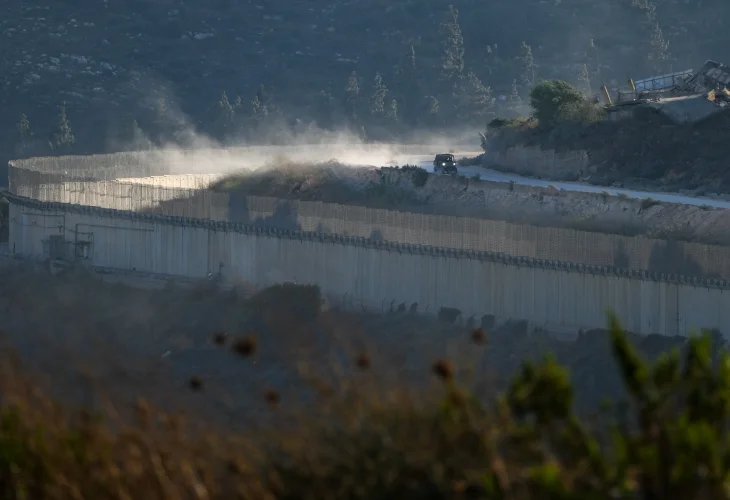 (Photo: Eyal Margolin, Flash90)
Talks to formulate a new international mechanism in southern Lebanon are continuing, but the road to deploying forces on the ground is still long. A European official involved in efforts to implement the tripartite framework between Israel, Lebanon, and the United States told i24NEWS on Monday evening that discussions with the Americans, Israelis, and Lebanese are ongoing. At this stage, however, deploying an international force in Lebanon remains a distant goal.
According to the official, the central issue currently occupying the parties is not which countries will send troops, but creating a clear, agreed-upon mechanism to determine how the ceasefire is monitored and how the process of mobilizing forces will be managed. Only after the protocols, mandate, and operational framework are defined will it be possible to move forward with a practical discussion about deploying troops on the ground.
The parties, he said, want to avoid repeating what he described as a mistake made in Gaza: discussing the composition and dispatch of an international force before its mandate, authorities, and mode of operation had been clearly defined. Another round of talks is expected to take place in Rome, though no date has yet been set.
Despite the escalation in southern Lebanon in recent days and the challenges still facing the parties, the European official said he was “relatively optimistic.” Europe, he said, remains involved in the efforts and hopes it can contribute to implementing the agreement.
Alongside the diplomatic talks, Israel is already considering how to prepare for the day after UNIFIL ends its operational activity. According to a report on Channel 14, amid the increase in strikes in Lebanon, officials are considering advancing the introduction of a temporary international verification force into the country in the near future. The goal is to create an alternative mechanism before UNIFIL’s operational mandate ends and to prevent the United Nations from maintaining a significant foothold in southern Lebanon afterward.
UNIFIL’s operational mandate is expected to end on December 31. After that date, the force is expected to cease its operational activities and begin an orderly withdrawal from Lebanon. Israel wants to avoid reaching the end of the year without an alternative force ready to enter the area and fill the vacuum that would be created.
Israel fears that without a ready alternative mechanism, a vacuum could emerge that would allow the United Nations to work toward extending its existing presence or promoting another framework that would preserve a significant presence in southern Lebanon. For that reason, officials are considering moving up the deployment of the temporary verification force, so it can begin operating even before UNIFIL’s operational mandate expires and provide continuity for what comes next.
The identity of the countries that could participate in the force is also already under discussion. Among the options being considered by Israel are Greece, Switzerland, Italy, and Indonesia. By contrast, the participation of France, Spain, Turkey, and the United Kingdom has already been ruled out entirely.
Israel has set a red line on the matter: A country that acts against Israel in the international arena, through legislation, diplomatic measures, or activity in international courts, will not be allowed a foothold in security mechanisms that could directly affect Israeli interests.

