

Torah Personalities
When Cholera Struck: How Rabbi Akiva Eiger Navigated Rosh Hashanah
As cholera swept through Poznań in 1831, Rabbi Akiva Eiger faced a difficult question: How could Jews observe the High Holidays without putting lives at risk?
- Yehosef Yaavetz
- | Updated
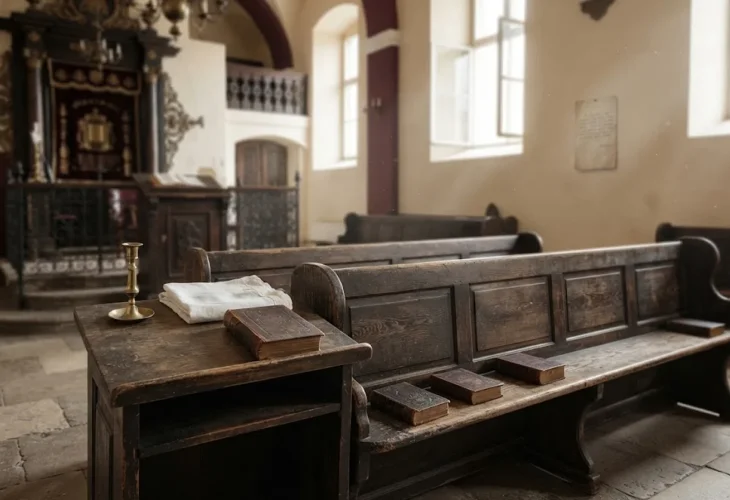
In the month of Elul 5591, in 1831, Poznań found itself in an unprecedented situation. The city, then under Prussian rule, was struck by the second wave of cholera sweeping across Europe. The disease was still relatively new to Central Europe, medical knowledge about it was limited, and fear was widespread.
Against this backdrop, Rabbi Akiva Eiger, the rabbi of Poznań, faced one of the most difficult decisions a community leader could make: What should High Holiday prayers look like when gathering in synagogue could itself put lives at risk?
High Holiday Prayers During an Epidemic
Rabbi Akiva Eiger issued a series of instructions intended to allow his community to observe the High Holidays while protecting public health.
In a letter dated the 20th of Elul 5591, responding to his student Rabbi Eliyahu Guttmacher, who would later become the rabbi of Pleszew, Rabbi Akiva Eiger addressed the danger of crowded synagogues:
“I received his letter regarding prayer in the synagogue. In my view, it is true that gathering in a confined place is not proper, but it is possible to pray in groups, each time with a small number of people, approximately 15 individuals, beginning at dawn, followed by another group.”
But this solution was not sufficient for Rosh Hashanah, when the services were especially long.
Ahead of the holiday, the community reorganized. Rabbi Akiva Eiger’s regulations limited the number of people permitted to enter the synagogue during the High Holidays, with worshippers assigned by lottery. Some members of the community were able to pray in synagogue on Rosh Hashanah, while others attended on Yom Kippur. Everyone else prayed at home.
Rabbi Akiva Eiger also shortened the services. This was particularly unusual during the High Holidays, when lengthy prayers were part of the community’s tradition. He instructed worshippers not to remain in synagogue longer than necessary and established extended breaks between services.
On Yom Kippur, when worshippers might otherwise remain in synagogue for many hours, even greater precautions were required. According to regulations collected in Rabbi Akiva Eiger’s Rulings and Regulations, synagogues were required to close at 10:00 p.m. on the night of Yom Kippur. The instructions explicitly stated: “Everyone is obligated to rest at home at night.”
Rabbi Akiva Eiger understood how difficult these restrictions would be for Jews accustomed to spending much of the High Holidays in synagogue. With no alternative, he even asked the local police to help enforce the rules, requesting that officers maintain order around the synagogues, particularly as worshippers entered and left.
“Danger Is More Severe Than Prohibition”
Rabbi Akiva Eiger’s instructions extended far beyond synagogue attendance.
In Letter 147, written on the 24th of Marcheshvan 5592, he described to his friend Rabbi Moshe Katz, head of the rabbinical court of Ansbach, the precautions he had repeatedly urged his community to follow.
“I also warned repeatedly, with warning upon warning, that their conduct in eating and drinking should follow what the doctors had arranged and determined as precautions. They should distance themselves from these things as far as an arrow’s flight, as though they were forbidden foods, and they must not violate their instructions by even a hair’s breadth.”
He then made the principle unmistakably clear: “One who violates the doctors’ instructions regarding proper conduct sins greatly against Hashem, for danger is more severe than prohibition.”
His public health instructions were detailed. Following the medical understanding of his time, Rabbi Akiva Eiger warned against foods doctors believed could be harmful, cautioned against excessive consumption of liquor, and emphasized personal and household cleanliness, changing clothes frequently, and proper ventilation.
He instructed people to open their windows in the morning to allow fresh air into their homes and, when the sun was shining, to go outside and breathe fresh air. Alongside these practical measures, he offered another piece of advice: “One should not worry and should keep far away from every kind of sadness.”
Caring for Those Who Could Not Afford Help
One of Rabbi Akiva Eiger’s greatest concerns during the epidemic was the plight of the poor. Families that had lost their livelihoods could not always afford medical care or adequate food, and some were too ashamed to ask the community for help.
In Letter 147, he described people who had lost their property and were suffering privately: “And in private their souls wept as they endured hardship without humiliating themselves before others.”
Rabbi Akiva Eiger therefore insisted that community leaders actively seek out those who needed assistance rather than waiting for them to ask. Help was to be provided discreetly, preserving their dignity.
He also confronted another dangerous problem: Some people avoided calling a doctor because they were afraid of the expense. He described how people would notice the first signs of illness but hide them rather than seek medical attention. “They would delay for a day or two, until the illness became severe.”
His instruction was unequivocal: “They should not delay even a moment, and should call the doctor at once.”
Prayer Alongside Practical Action
For Rabbi Akiva Eiger, following medical guidance did not replace spiritual reflection. Alongside the practical precautions, he called on the community “to examine their deeds and correct what has been distorted ... to knock on Hashem’s door with prayers and supplications.”
He also established a special prayer during the epidemic that included a prayer for the Prussian king, Frederick William III, his family, ministers, servants, and the people of the country.
The king later sent Rabbi Akiva Eiger a letter expressing appreciation for his careful handling of the epidemic within his community.
Rabbi Akiva Eiger lived for several more years. Rosh Hashanah 5598 would be the final Rosh Hashanah of his life. On the 13th of Tishrei 5598, just three days after Yom Kippur, the renowned Torah scholar and leader passed away.
His response to the cholera epidemic remains a striking chapter in Jewish history. Faced with a frightening disease and the approach of Judaism’s holiest days, Rabbi Akiva Eiger did not see protecting health and serving Hashem as competing priorities. He shortened prayers, restricted synagogue attendance, urged his community to follow doctors’ instructions, and made sure the vulnerable received help, while continuing to call for prayer and spiritual reflection.
For him, protecting life was itself part of the responsibility of serving Hashem.

