

Magazine
Rabbi Gershon Edelstein: The Life and Leadership of a Torah Giant
From studying Torah in secret in Soviet Russia to leading the Ponevezh Yeshiva, discover the remarkable life, educational philosophy, and compassionate leadership of Rabbi Gershon Edelstein
- Michal Arieli
- | Updated
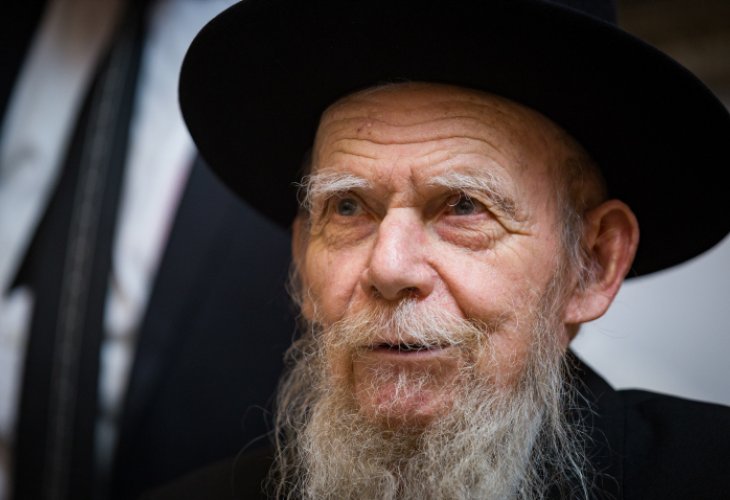 Rabbi Gershon Edelstein (Photo: Aharon Krohn/Flash90)
Rabbi Gershon Edelstein did not need an official coronation ceremony to announce that he had been chosen to continue the path of the great Torah leader Rabbi Aharon Yehuda Leib Shteinman, of blessed memory. For members of the Lithuanian Haredi community, the transition seemed only natural. During Rabbi Shteinman’s later years, Rabbi Edelstein had already filled in for him on various occasions, and Rabbi Shteinman himself had indicated several times that Rabbi Edelstein would eventually succeed him.
During the previous year as well, whenever Rabbi Shteinman was hospitalized or too weak to participate in important meetings, decisions were placed in Rabbi Edelstein’s hands. Members of Knesset from Degel HaTorah also became frequent visitors to his home.
The Two Rabbinic Brothers
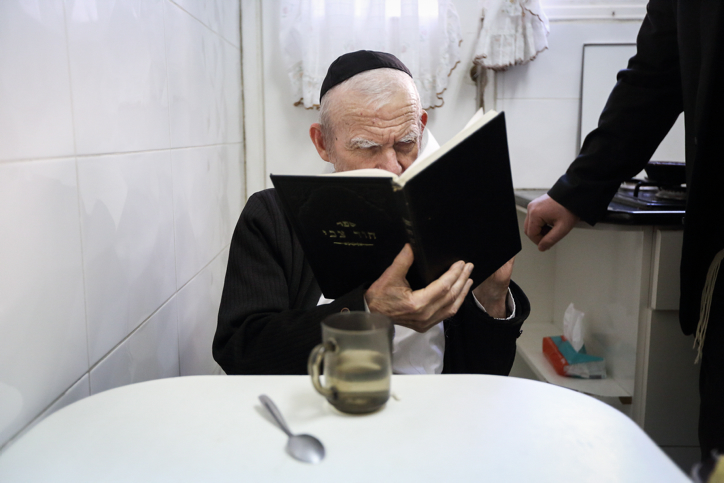
Rabbi Edelstein, then 94 and serving as head of the renowned Ponevezh Yeshiva, devoted close to 18 hours a day to Torah study while also receiving hundreds of people who came to seek his advice and guidance. But he did not reach this position overnight. His life had been shaped by decades of extraordinary effort, perseverance, and devotion to Torah.
He was born in 1923 in the Soviet Union, in the town of Shumyachi near Smolensk, to Rabbi Tzvi Yehuda Edelstein and his wife, Miriam. He was the oldest child in the family. His younger brother was Rabbi Yaakov Edelstein, of blessed memory, the longtime rabbi of Ramat Hasharon, and his sister was Pesia Gershonowitz, whose husband served as a rabbi in Netivot until his passing.
The Edelstein family endured difficult years in the Soviet Union. When Gershon and Yaakov were still young children, their mother obtained falsified birth certificates that listed them as several years younger than their actual ages. She hoped that by doing so, she could prevent them from being forced to attend a Communist school.
For a time, the brothers lived with their aunt in Klimovichi, where they studied Torah in secret. Several years later, devastating news arrived: their mother had died of typhus. Their father then informed them that they should return home because he had managed to obtain permits allowing the family to leave for Eretz Yisrael.
Together with their grandmother, they sailed from Odessa aboard a dilapidated ship and eventually reached the Holy Land.
The small family initially settled in Jerusalem, where they lived for about six months, before moving to Ramat Hasharon. Since there was no religious school in the city for the two boys, their father taught them Gemara at home while they sat on orange crates. He also hired a private teacher to teach them secular subjects, including grammar, mathematics, and English, subjects considered particularly important at the time.
A year after the family arrived in Ramat Hasharon, their father was appointed rabbi of the city. At the beginning of the month of Elul, the two brothers began studying at the Lomza Yeshiva in Petah Tikva.
A year later, their father, who had remarried, asked them to return home. Now that the burden of running the household would no longer fall upon them, he explained, they would be able to study peacefully together with him. The brothers later recalled those years of learning with their father as among the sweetest and most fruitful periods of their lives.
Several years later, when the Ponevezh Yeshiva was established, the brothers were invited to join and became two of its first six students. Soon afterward, Rabbi Yosef Shlomo Kahaneman, founder of the yeshiva, appointed Rabbi Gershon to oversee the Torah education of young students who had arrived from Europe after the Holocaust. A few years later, he was given the additional responsibility of delivering classes to the younger students.
During that period, the brothers lived in the home of Rabbi Michel Yehuda Lefkowitz, who rented his only bedroom to yeshiva students.
In 1948, Rabbi Gershon married Henia Rachel, who passed away many years later. They had four sons and three daughters and were blessed over the years with many grandchildren and great-grandchildren. Many of their descendants went on to serve as prominent roshei yeshiva and Torah teachers.
In 1950, Rabbi Tzvi Yehuda Edelstein passed away. Rabbi Gershon considered succeeding his father as rabbi of Ramat Hasharon, but because he already held a position at the yeshiva, the role ultimately went to his brother, Rabbi Yaakov Edelstein.
“Adapt Yourself to the Student”
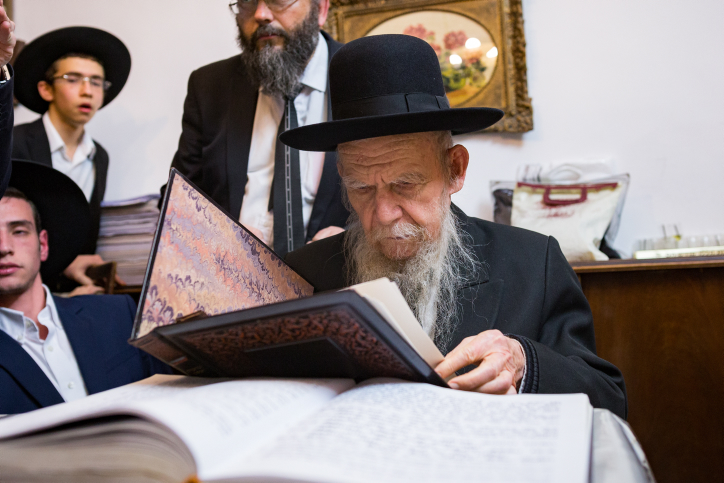
From the time Rabbi Gershon arrived in Eretz Yisrael, he never traveled abroad, not even for outreach trips. According to those close to him, his daily schedule remained remarkably consistent.
He would wake shortly after five in the morning and pray at the yeshiva near his home. His breakfast consisted of half a slice of whole wheat bread and a small amount of vegetables. He would then attend britot in Bnei Brak where he had been invited to serve as sandak, before returning to Torah study until noon.
At noon, he delivered his regular shiur at the yeshiva. Afterward, he ate a cooked lunch, and at 3:30 p.m. he opened his home to the public for approximately 40 minutes. He then returned to his studies until midnight, taking only a brief break for dinner.
For some 80 years, according to the account, he had avoided sweet foods entirely. When thirsty, he drank only boiled water. He often referred to what he called “the Rambam’s diet” as a model for healthy living.
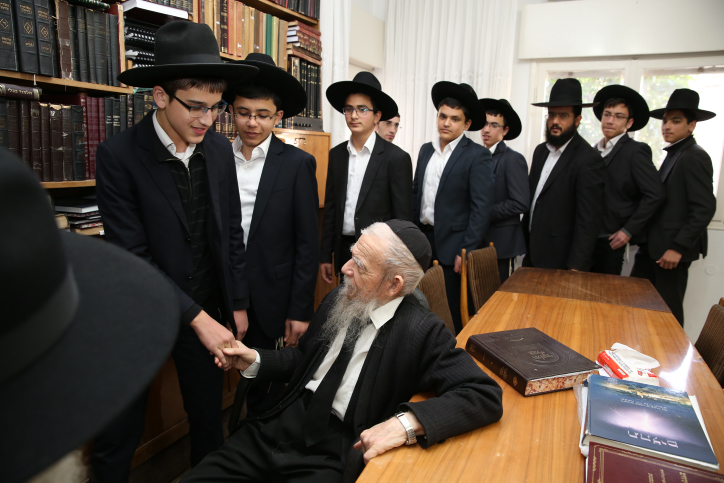
His educational philosophy was centered on the individual student. Rabbi Edelstein believed that a student’s method of learning should be suited to his natural personality and abilities. When the style of learning fits the student, he maintained, the student experiences greater satisfaction and finds it easier to remain committed over time. He also generally encouraged learning many pages of Gemara at a relatively brisk pace.
Just as important was the personal relationship between educator and student. Rabbi Edelstein urged teachers to take a genuine interest in their students, seeing this relationship as the foundation for cultivating a love of Torah.
At one educational conference, he explained that the connection between teacher and student should not revolve exclusively around Torah study. A teacher should ask how the student is doing and take an interest in what is happening in his home and personal life.
This applied even to children who seemed perfectly well behaved and did not present any obvious difficulties. They, too, needed to feel that their teachers cared about them personally.
Rabbi Edelstein was also a strong supporter of Torah educational networks and outreach schools. He believed that when a child received a Torah education, the influence could spread throughout the family, strengthening their connection to Torah and mitzvot.
He frequently cited the teaching, “Love people and bring them close to Torah,” emphasizing the order of those words. A student cannot truly be brought closer to Torah, he taught, without first being genuinely loved. The educator’s first responsibility, therefore, is to love his students.
“Do Not Be Angry With Secular Jews”
Rabbi Edelstein often spoke to his students about combining Torah study with proper conduct toward others. One story he frequently told concerned a married Torah scholar who was completely immersed in his learning and avoided unnecessary conversation. When he returned home, he would eat, rest, and immediately resume his studies.
Eventually, the man came to understand that this was not the proper way to live. He also needed to take an interest in his family and give them the attention they deserved. Once he began doing so, his family life was transformed.
Rabbi Edelstein emphasized that particular attention must be given to one’s wife and to her need for conversation and companionship. Torah devotion, in his view, could not come at the expense of sensitivity to the people closest to a person.
Several years earlier, Rabbi Edelstein had also made a striking statement about secular Israelis who served in the military. If they risked their lives to save others out of love for their fellow human beings, he said, they had a share in the World to Come comparable to that of the “martyrs of Lod.”
The Talmudic account refers to two brothers who sacrificed their lives to save the Jewish residents of Lod. After a king’s daughter was found dead and the Jews were threatened with collective punishment unless the murderer was found, the brothers falsely confessed to the crime in order to save the community. The Sages spoke of the extraordinary spiritual stature of their sacrifice.
During a period of intense hostility toward the Haredi community, Rabbi Edelstein similarly cautioned against responding with hatred. He described the hostility as a decree from Heaven and urged the Haredi community to respond by examining and improving its own conduct.
Whatever the circumstances, he emphasized, secular Jews should be viewed with compassion.
He expressed a similar approach toward those who had left religious observance, describing them as people who should not simply be rejected. He urged families not to drive them away from home, but to treat them respectfully and even continue supporting them financially when necessary. Everything possible, he said, should be done to help preserve their connection to their families.
Rabbi Shteinman’s Respect for Rabbi Edelstein
Rabbi Shteinman’s esteem for Rabbi Edelstein had been apparent for many years.
About 15 years earlier, Rabbi Shteinman’s son related that during the Ten Days of Repentance, he was once about to lead the evening prayer. His father stopped him and gave him an instruction: since Rabbi Gershon Edelstein was present, when the prayer ended he should wait for Rabbi Edelstein and under no circumstances wait for Rabbi Shteinman himself.
The message was unmistakable. Rabbi Shteinman was willing to forgo the honor due to him in order to honor Rabbi Edelstein.
Rabbi Shteinman also regularly encouraged yeshiva students to attend Rabbi Edelstein’s shiurim, saying that there was much to gain from his approach to understanding Torah. He even entrusted Rabbi Edelstein with reviewing his Torah work Ayelet HaShachar.
It was therefore fitting that at Rabbi Shteinman’s funeral, Rabbi Gershon Edelstein was the only person to deliver a eulogy.
A Leadership of Wisdom, Love, and Dialogue
Those close to Rabbi Edelstein saw considerable continuity between his outlook and that of Rabbi Shteinman. Rabbi Edelstein, too, was regarded as relatively moderate in his public approach.
During a controversy over public Shabbat observance, for example, he reportedly urged Haredi members of Knesset not to threaten to leave the coalition. At the same time, he instructed them to work to change the law in order to prevent Shabbat desecration, without unnecessary escalation or inflammatory statements.
For decades, Rabbi Gershon maintained a close relationship with Rabbi Shteinman and consulted him frequently. Rabbi Edelstein later recalled that they discussed the subjects and structure of yeshiva shiurim as well as many other matters. Their years of consultation may help explain why their approaches were so similar on many issues.
Yet the two men were not identical. Rabbi Edelstein was known for a more reserved and firm personality, qualities that those around him believed could serve him well under the enormous responsibilities now placed upon him.
Those responsibilities also raised a concern among his associates: perhaps the demands of leadership would eventually force him to give up the yeshiva shiurim that had defined so much of his life and devote his time more fully to the needs of the Jewish people.
Whatever changes awaited him, one thing seemed clear. Rabbi Gershon Edelstein would continue the style of leadership associated with Rabbi Shteinman: pursuing his goals not through confrontation, but through wisdom, love, perseverance, and dialogue.

