

Rosh Hashanah
What You Need to Know Before Rosh Hashanah
A Practical Guide to Starting the Year Right
- Yam Sarah Kohen
- | Updated
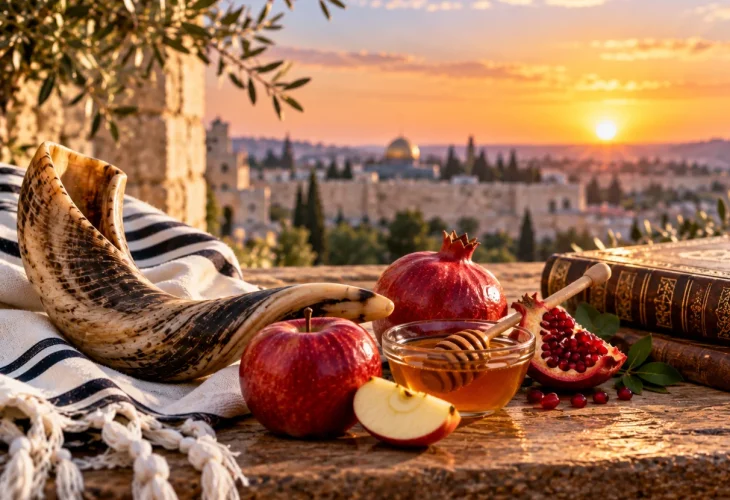
Rosh Hashanah preparation begins before the Chag itself. Erev Rosh Hashanah is a time to make things right, prepare spiritually, and ask Hashem for what we need. Then we enter Rosh Hashanah with simcha, good thoughts, good middot, and a desire to crown Hashem as our King.
Erev Rosh Hashanah: Before Chatzot
1. If you did not do so yet, now is the time to ask for forgiveness. Apologize to anyone you may have hurt or spoken badly about, and ask for selicha and mechilah.
2. Read Viduy before chatzot.
3. Ask Hashem for your needs: health, joy, a happy marriage, healthy children, parnassah, yeud, Torah, middot, family, and all your heart’s desires.
4. If possible, visit a Tzadik's Grave. It is a good minhag before Rosh Hashanah because it awakens us, and we want the Tzadikim to pray for us to have a Shana Tova.
5. If possible, men should go to the mikveh. It is very good to do so on Erev Rosh Hashanah.
After Chatzot: Enter Spirit of the Holiday With Joy
After chatzot, Halachic midday, shift your focus to happiness and preparing for the holiday. Be in a good mood, be kind, practice good middot, and don’t dwell on bad things. Get into the holiday spirit and start preparing for Rosh Hashanah.
Think positively, do everything leshem Shamayim, and dress nicely in honor of the holiday. It is better not to ask for personal berachot at this point.
Candle Lighting
Light an additional long lasting candle so that there will be an existing flame available for lighting on the second day.
It is both Shabbat and Yom Tov this year.At candle lighting, pray — it is an et ratzon.
And ask yourself:
What can I do this year to promise Hashem that next year He can have a home and a crown? Live that on Rosh Hashanah.
The Rosh Hashanah Mindset
The central focus of Rosh Hashanah is simple: Crown Hashem, be happy, think positively, guard your behavior, and draw closer to Him.
Do everything leshem Shamayim. Smile, spread love and good energy, be kind and helpful, and make others happy. Eat, drink, and enjoy the Chag.
At the same time, be especially careful with every word, action, thought, and look. Avoid anger, lashon hara, gossip, lies, arguments, and wasting time talking about nonsense. Some even do a taanit dibur, fast from speech, in order to maintain the seriousness of this day of judgement.
Be mevater. Practice shmirat halashon. Be sweet like honey.
Think Good
Have positive thoughts about the coming year. Know that the year will be good, B”H, and think of the best judgment for yourself, your family, and all of Am Yisrael.
The most important thoughts are those that bring you closer to Hashem. See the good in Hashem. He is all good.
Be calm. Don’t be stressed, anxious, confused, or in disress. Always remember that the Judge is our loving and merciful Father. Hashem created us, understands our struggles, and sees our heart. He loves us more than anything in this world. Be calm, have good thoughts, and be happy before the King.
Real teshuvah is in the heart.
Tell Hashem: Hashem, everything I want is so I can serve You better and more properly.
I want to get married so I can raise kids to Torah and Yirat Shamayim. I want a nice house so I can host people comfortably for Shiurey Torah.
Think about everything you hope for this year: serving Hashem with joy, health, spiritual growth, moving forward, becoming a wife and mother, buying a house, and all the blessings, including geulah.
Focus on your good qualities and on how amazing you want to become, and how good your intentions are, even though you're not perfect. Have a clean heart, pure desires, and love for Hashem and His children.
Hashem loves us and wants only to do what's best for us. It is possible for Hashem to make this your best year yet, filled with the spirituality and all the blessings you want, B”H.
Give Hashem Malchut. Crown Hashem!
Do not cry, and do not become angry.
Cut Off the Real Enemies
When we ask for our enemies to be “cut off,” think of the enemies Above — the mekatregim. Those are the real enemies we need to cut off. The ones down here are like puppets. No one will bother us down here if we are good up there. The way to be "good up there" is to correct our actions down here. That is what we should focus on. Teshuvah — Returning to Hashem.
What to Do During Rosh Hashanah
Make the most of the day:
Wake up early, preferably for netz. Pray, learn, smile, think of your blessings, and be happy.
From sunrise until chatzot, think positive thoughts only and fill up your time with Mitzvot.
Avoid sleeping during the day, preferably altogether, but at least until after chatzot. The idea is that if you sleep, you’ll have a sleepy year. If you are very tired, sleep after chatzot.
Avoid personal requests that bring you pain or sadness. You may ask for spiritual and general needs: to love Hashem, have good middot and parnassah, and for Am Yisrael. Pray for the soldiers and the protection of all of Am Israel.
On the first day, pray for ruchaniyut; on the second, for gashmiyut.
If possible: finish two Books of Tehillim, either yourself or together with others. This will bring you tremendous blessings and salvations B"H in the coming year.
Eat delicious foods you love, drink, and enjoy. Your neshama also needs to enjoy in order to have fuel to keep going.
Look nice, clean, and beautiful for the new year. We are given the chance to begin again. Hashem judges us based on who we are right now, and we have the opportunity to choose goodness and start the year in the best way possible, B"H.Although women are not obligated to hear shofar, it is a very good minhag for them to do so.
Some have the tradition to keep salt on the table for hamtakat hadinim. Zaatar, sugar, and honey are also good to have.
It's best to avoid eating spicy and sour things on Rosh Hashanah, unless you really really enjoy them.
Avoid walnuts and pecans—because egoz has the gematria value of chet. Cashews and other nuts are fine. And more importantly: don’t do a chet(transgression)—don’t scream, fight, or argue.
A man should buy his wife a gift, and she should make food he likes. There is a mitzvah to be happy: men with meat and wine, children with sweets and chocolate, and women with jewelry, clothes, or gifts in general. One technically does not have to buy his wife something for Rosh Hashanah, but it is best to at least give her new clothes or something she likes. On Sukkot, one must buy her jewelry or something she likes; for Rosh Hashanah, it is good to buy her something as well.
Seder Leil Rosh Hashanah
The basic order is:
Good Pesukim to say beforehand (optional: found in the siddur before Kiddish).
Kiddush.
Netillat Yadayim.
Bless the challah and eat a kezayit.
Simanim.
Seudah — enjoy!
Birkat Hamazon, thanking Hashem for all the good.
Shehecheyanu is said both nights. One person says Shehecheyanu, everyone else says Amen! On the second night there is a machloket regarding Shehecheyanu; Maran said to recite it. It is best to have a new fruit or wear a new dress.
The Simanim
According to the custom of the Sephardim, it is best to wash after Kiddush, eat a kezayit of Lechem Mishneh, and then do the seder of the simanim. However, if you are leading your seder, check your siddur to see the order in which it says to lead the seder and any other necessary Halachot and customs.
Do the simanim after Hamotzi. First make the blessing on the fruit, eat a bite, then say the Yehi Ratzon and continue eating.
It is proper to check everything properly for worms. If there is a doubt of worms, you can hold it and make the appropriate Yehi Ratzon without eating it.
The Gemara says to use good simanim on Rosh Hashanah so that we will have good simanim throughout the year.
I will not go into all the details here, but it is proper to go through your siddur to see exactly what to do and how to do it.
Pomegranate — We for zechuyot and mitzvot like a rimon;
Head — Representing children and offspring. LeRosh VeLo LeZanav: to be for the head and not the tail. Regarding fish/head of an animal: better not to eat fish, but you can. Another animal head is preferable.
Additional simanim: Karti, Beets, Carrots, Dates, Pumpkin, Rubia
The Festival Meals
1. It is a mitzvah to honor and enjoy Yom Tov with special food. Avoid eating a full meal late on Erev Yom Tov so that you have an appetite for the festival meal.
2. At every festival meal, say Hamotzi over two challot, as on Shabbat. Some dip the bread in honey, and some continue this custom through Simchat Torah.
3. There is no obligation to eat a third meal on either day of Rosh Hashanah, unless it is on Shabbat.
4. Add Ya’aleh Veyavo in Birkat Hamazon. If it was forgotten and the blessing of Boneh Yerushalayim was already completed, Birkat Hamazon does not need to be repeated. Ashkenazim, however, repeat Birkat Hamazon on the first night of Rosh Hashanah, but not during the daytime.
More Halachot of the Simanim
1. Eating the simanim is a good custom, not an obligation. If you are being hosted, you should not insist if one is missing. However, if you are leading your own Seder, it is proper to prepare in advance and do everything according to the minhag.
2. When they are eaten during the meal, no Ha’adamah or Shehakol is recited, but Borei Pri Ha’etz is recited over the dates.
3. Do not interrupt between a blessing and an eating. Say the Yehi Ratzon either before the blessing or after tasting the food.
4. You don’t have to eat a siman. You may hold it, say the Yehi Ratzon, and put it down; in that case, no blessing is recited.
5. No separate after-blessing is necessary because the simanim are covered by Birkat Hamazon.
How to Conduct Yourself on Rosh Hashanah
On Rosh Hashanah, Hashem decides who will live and who will not, who will be poor or wealthy, and who will be at peace or suffer. Therefore, conduct yourself with solemnity and great reverence.
Take particular care with lashon hara, gossip, falsehood, anger, and idle conversation. A "speech fast" is worthwhile.
Some do not sleep during the daytime; others are particular only until midday.
Use the precious hours to say Tehillim. The custom is to complete the entire Book of Psalms each day, and some complete it twice. If you cannot finish alone, divide it among a group and involve the household.
Shofar
Rosh Hashanah is Yom Teruah, and there is an obligation to hear the shofar for men.
Generally, 101 blasts are blown in synagogue; according to Yemenite custom, 71 are blown.
Someone who missed the synagogue blowing can fulfill the obligation with 30 blasts: three sets each of Tashrat, Tashat, and Tarat, heard at any point during the day. Someone who heard only part needs to hear only what is missing.
Someone passing a synagogue may hear the blasts and intend to fulfill the obligation. Someone passing a private home does not fulfill the obligation through blasts heard there, even if they stop and intend to do so.
Women are not obligated but make an effort to hear shofar. It is a good custom to blow 30 blasts after services for women and men who missed them.
Children should be educated to hear the shofar, but very young children who disturb others should not be brought to the public blowing.
A woman, a child below bar mitzvah, or a deaf person who cannot hear even with hearing aids cannot blow on behalf of others.
Someone who already fulfilled the mitzvah may recite the blessing and blow again for someone who has not.
The baal tokea must know and review the halachot. It is advisable to have someone knowledgeable call out the order and determine whether a blast needs to be repeated.
Tashlich
After Minchah on the first day, it is customary to say Tashlich near flowing water, preferably where there are fish, such as the sea or a river.
The name comes from the verse: “And You shall cast all the sins into the depths of the sea.” It is customary to shake the ends of one’s garment while saying this verse.
Ashkenazi women have the custom of saying Tashlich; Sephardic women do not. Some Yemenite communities do not perform Tashlich at all, either men or women.
Have in mind to cleanse your sins and start from a new page.
Preparing for the Second Day
Nothing may be prepared on the first day specifically for the second day. The second-night table may only be set after nightfall, and food prepared on the first day may not be reheated for the second night during the first night until after nightfall.
Second-Night Candle Lighting
The flame must be transferred from an existing flame. Do not light a match or lighter normally. A match may be struck from a match that is already lit. This can only be done after nightfall in general, but especially this year because of Shabbat.
The match or lighter may not be extinguished; put it down and allow it to go out by itself.
The candle-lighting blessings are the same as on the first night.
Shehecheyanu is recited also at Kiddush on the second night, preferably with a new fruit or new garment present as well.
May we be written and signed for a sweet new year!

