

Raising Children
Stop Entertaining Your Kids: Why Boredom Is Good for Them
Your child says they’re bored, but you may not need to fix it. Psychologists explain how unstructured time can support creativity, independence, and emotional development.
- יצחק איתן
- | Updated
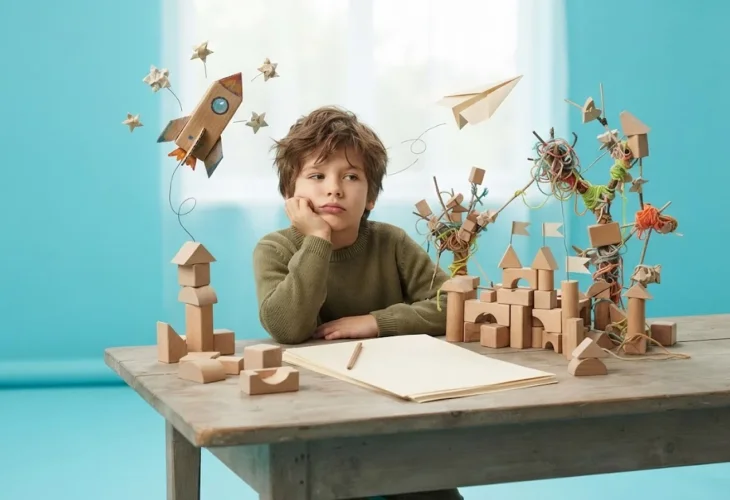
Afternoons can easily become a challenge for parents. When children complain that they have nothing to do, the instinct is often to fill the time with extracurricular activities, planned tasks, or, perhaps most tempting of all, screens. But psychologists warn that constantly trying to prevent children from experiencing unstructured time may actually interfere with healthy development. Those seemingly empty moments can play an important role in children’s emotional and cognitive growth.
What Happens When Children Have Nothing to Do?
Dr. Amy Kincaid Tody, a child psychologist, explains that when children are not constantly flooded with outside stimulation, a particular neural network involved in internal thought becomes active.
“This network operates when attention is directed inward,” Dr. Tody explains. According to her, when a child gazes out the window, wanders around the yard, or simply sits without a planned activity, the brain has an opportunity to process experiences, develop the imagination, consider other people’s perspectives, and organize memories.
By immediately filling every quiet moment with external stimulation, parents may unintentionally take away opportunities for children to reflect, imagine, and entertain themselves.
Why Did Unstructured Time Disappear?
Dr. Marco-Antonio Hartman, a child psychologist at the Phoenix Children’s Medical Center clinic, says parenting began to shift in three major waves starting around 1979. First came growing concerns about children’s safety. Then came an increased focus on achievement, which contributed to less recess and free play in schools. Finally, smart devices arrived, making it possible to fill virtually every spare moment with entertainment.
According to Hartman, the pressure to constantly optimize children’s time can lead parents to view unstructured time as wasted time. In reality, he explains, those unscheduled moments can be valuable opportunities for growth.
Let Them Figure Out What Comes Next
Dr. Holly Schiff, a clinical child psychologist, adds that learning to cope with having nothing to do can help children build emotional resilience. When parents immediately step in to solve every moment of discomfort, children have fewer opportunities to practice managing those feelings independently.
When children are instead given the space to work through that discomfort on their own, they can develop important skills such as problem-solving, cognitive flexibility, emotional regulation, and decision-making.
This does not mean parents need to leave children without anything available to them. Experts recommend setting clear limits around screen time while making open-ended activities easily accessible, such as books, building toys, art supplies, or other materials that encourage independent play. Then comes the harder part for many parents: resisting the urge to immediately provide the next activity.
A child wandering around the house wondering what to do may look bored, but that does not necessarily mean something has gone wrong. Given a little time and space, that quiet afternoon may become an opportunity for imagination, independence, and creativity to take over.

