

Raising Children
Raising a Child With Epilepsy: What One Mother Wants Parents to Know
For years, Leah tried to hide her daughter’s epilepsy. Now she shares why she stopped, what she wishes teachers understood, and what other parents should know.
- Michal Arieli
- | Updated
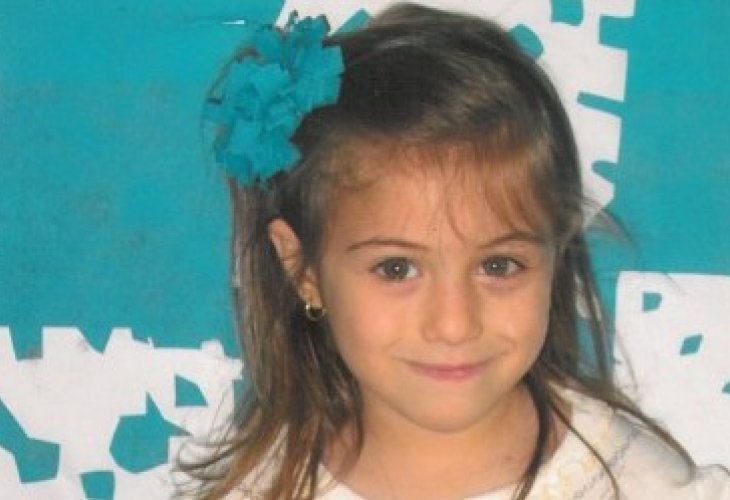 Sima Cohen as a child
“It was an incredibly fateful moment,” preschool teacher Devorah recalls. “I left the girls in the yard for just a moment and stepped back into the classroom to get some scissors. As I opened the drawer, I heard a faint voice in the distance: ‘Goldi, Goldi, get down!’ I looked out the window and let out a strangled cry.
“In those few seconds, I saw Goldi, the mischievous one in the class, perched at the top of the railing separating our yard from the neighbors’ property. Their yard was more than a full story below ours. Goldi’s knees were touching the edge of the railing, and her little body was leaning forward.”
The assistant froze, while Devorah ran outside in a panic.
“I pulled her down with trembling hands, placed her on the ground, and cried, ‘That’s dangerous!’ I held her tightly as my mind raced through terrifying thoughts of what could have happened. I sat down on a chair, gripping her little hand. How could I have left the girls alone, even for a moment? I couldn’t forgive myself.”
When Goldi’s mother arrived to pick her up that afternoon and opened her arms to her daughter, Devorah was still shaken.
“Baruch Hashem, you have someone to take home from preschool today,” she told her.
Her mother smiled. “What did the little one get into today?”
After hearing the story, she was not entirely surprised.
“Yes, we don’t let Goldi go out on the balcony at home either. Right, Goldi?” she said to the toddler in her arms. “We let Faigy, her little sister, play on the balcony, but Goldi isn’t allowed. It’s very dangerous.”
Then she turned to Devorah. “This one climbs everything. It’s a real danger to her life!”
The following morning, Goldi’s mother arrived at preschool carrying an elaborate chocolate bar tied with ribbons.
“This is for you,” she told Devorah with a smile, “to help you recover from yesterday.”
Life With Epilepsy
This frightening scene is recounted by writer Devorah Neugershal in her book Little Secrets. The “Goldi” in the story is a real child. Her name is Sima Cohen, and today she is eleven and a half years old.
Her tendency toward risky climbing was connected, according to her mother, to challenges surrounding the epilepsy she had been diagnosed with at just three months old.
“Until then, she was a perfectly typical baby,” says her mother, Leah. “But when she was three months old, we woke up one morning and found Sima having a seizure. Of course, we immediately called an ambulance, and she was rushed to the hospital. They quickly diagnosed epilepsy after ruling out other possibilities. The neurologists tried to reassure us, saying they see about 1,000 such cases a year, but we were anything but calm. She was our firstborn, and all I remember from that time is stress and panic. We were young, brand-new parents and had no idea what to do.”
Sima began taking medication, but administering it every day presented another challenge.
“It was really hard to get Sima to take her medication,” Leah recalls. “She had serious feeding difficulties, and convincing her to swallow medicine was a nightmare. But after some time on the medication, she stabilized and the seizures stopped.”
Although the seizures subsided, Leah says Sima began experiencing developmental difficulties, including delays in language.
“Until she was three months old, she was developing typically. The day before her first seizure, she had even started rolling over, and suddenly, after everything happened, it was as though that progress had disappeared. In terms of motor skills, she wasn’t affected at all. If anything, she could climb places other children couldn’t. But in other areas, there were delays, and they were noticeable. At two, she started attending a private preschool, but it was very difficult for her there, so the following year we enrolled her in a language-development class.”
When Sima was three and a half, her doctor determined that the medication she was taking was not suitable for her. Leah says they were also told that the medication had contributed to some of the difficulties Sima was experiencing.
“We didn’t know how to cope. There was a stage when even the smallest bump would set her off. She would burst into tears and immediately have a seizure. It was incredibly stressful. I’ll never forget taking her to a store once when a woman in line accidentally bumped into her. Sima immediately started seizing. Everyone panicked and called emergency services.
“Thankfully, one of our neighbors happened to be there. He knew Sima’s situation well and reassured everyone that I knew what to do. Only because he was there did we avoid ending up in an ambulance.”
When Sima was five and appeared to experience another seizure, her medication was changed once again.
“We went through ups and downs, but by the time she was five, Sima had, Baruch Hashem, stabilized,” Leah says.
The Power of Community
From then until third grade, things remained relatively quiet.
“Sima was in a typical classroom, and everything was going beautifully,” Leah recalls. “In a way, we became complacent. We felt that the difficult chapter was behind us. But at the beginning of third grade, after a very long period without seizures, Sima had one in bed. We had to begin treatment again, and she went back on medication. We also started noticing unusual behavior in class, and she began falling far behind.”
An EEG revealed that there was more going on than the family had realized.
“We thought she was stable, but the EEG showed a lot of activity. It turned out that during sleep, for example, there were many seizures we hadn’t been aware of at all.”
Following further testing and consultations, Sima began taking another medication. Leah says it helped control the seizures but was accompanied by side effects that affected her at school.
“She started struggling with memory, restlessness, and confusion,” her mother says.
Isn’t there a medication that treats epilepsy without affecting everyday functioning?
“Unfortunately, as far as I know, there isn’t,” Leah replies. “Some children experience milder effects and you can barely tell, while others have epilepsy that puts them in a much more serious medical situation than Sima’s. But there still isn’t a medication that only prevents seizures without potentially causing side effects.”
Leah says Sima also began experiencing episodes in which she would briefly disconnect from her surroundings. Such episodes could lead to falls and injuries, so another medication was added to her treatment. According to Leah, that medication also caused sleepiness and other frustrating side effects.
Today, Sima is a sweet, bright eleven-and-a-half-year-old who attends a small class within a regular school.
“She loves learning and loves her friends,” Leah says. “From the outside, you would never guess what she is dealing with. She looks completely typical. But she continues to take medication and bravely faces challenges that are not simple at all.”
Helping a Child With Epilepsy Feel Understood
How does the community respond?
“Over the years, we’ve encountered some educational teams who were understanding and supportive, and others who didn’t know how to respond to or relate to a child like Sima,” Leah says. “I want to say a few important things to teachers who have children like this in their classes. Please try to understand that behavior can sometimes be connected to what the child is going through or to medication side effects. And during a seizure, don’t panic. Ask the parents in advance to explain exactly what needs to be done and follow the child’s medical plan.”
Leah remains particularly grateful to one mother from Sima’s preschool who took the time to explain Sima’s condition to her own daughter.
“She always invited Sima over and played with her,” Leah recalls.
Another important source of support has been a group for observant mothers of children with epilepsy.
“It’s a group of a few dozen mothers. We have a WhatsApp support group, and we learn so much from one another because every family knows epilepsy from a different angle. One mother once asked the group about a particular issue and later told us that she had discussed it with her neurologist. The neurologist was amazed by how much she knew.”
The mothers also occasionally meet in person for programs and talks, bringing refreshments they prepare themselves. In addition, they divide up Tehillim to recite each day and say special chapters in times of need, such as when one of the children is undergoing treatment or surgery.
Leah also has a message for other parents raising children with epilepsy.
“Some parents try to hide the condition. They think that if their child is stable, there is no reason for them to live with the stigma of being ‘sick.’ I hid it in the early years too, but it boxed me in. I couldn’t send my daughter to friends’ houses because I was always thinking, ‘What if something happens?’ It affected Sima’s social life. I did everything I could to keep people from knowing, but then if she had a seizure in front of someone, it was always embarrassing.
“Eventually, I decided to put all my cards on the table. I’m not hiding anything anymore. It’s also easier for my daughter when people are aware of what she is dealing with and make an effort to understand her.”
“This Is Our Mission”
What gives you strength through such a difficult reality?
“When things are hard and I find myself asking again and again, ‘Why did this happen to me?’ I strengthen myself with a particular thought,” Leah says. “I imagine that before I came into the world, Hashem showed me everything I would go through. He also told me that there would be a sweet child who would need a warm home to help and support her, and I agreed to receive her and be her mother.
“And I imagine that before Sima was born, Hashem also showed her what she would go through. Now it is up to both of us to face it together and understand that this is our mission in the world.
“Whenever things become difficult, I imagine Hashem saying to us: ‘My daughters, well done for doing what you promised Me. I’m proud of you.’”

