

For the Woman
Coloring Your Hair at Home? Avoid These 7 Common Mistakes
From choosing a shade based on the box to leaving dye on too long, these seven common mistakes can affect your at-home hair color and even damage your hair.
- תהילה כהן
- | Updated
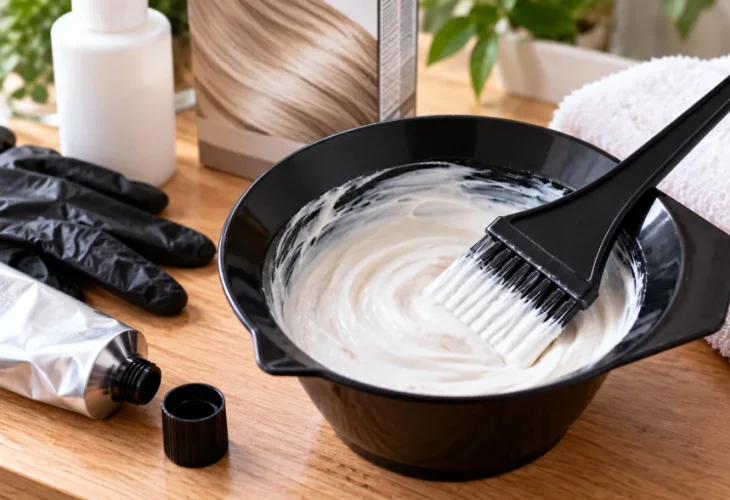
Coloring your hair at home can seem simple enough: choose a shade, mix the product, apply it, and wait. But a few seemingly harmless mistakes can be the difference between an even, glossy result and a color you immediately want to fix.
The most important rule is also the simplest: Always follow the instructions that come with your specific product. Processing times, application methods, allergy-testing instructions, and mixing ratios can vary between formulas.
With that in mind, here are seven common mistakes to avoid when coloring your hair at home.
1. Choosing a Shade Based Only on the Photo on the Box
That glossy photo can be tempting, but it is not a guarantee of how the color will look on your hair.
Your result depends on your starting color, whether your hair has previously been dyed or chemically treated, its condition, and the type of color you are using. Instead of relying solely on the model pictured on the front, check the shade guide showing how the color is expected to appear on different starting shades.
And remember: applying a lighter box dye over hair that has already been permanently colored dark will not necessarily give you the lighter result shown on the package.
2. Skipping the Allergy Test
You have used the same brand for years without a problem, so surely you can skip the allergy test this time?
Not necessarily.
An allergic reaction to hair dye can occur even if you have previously used coloring products without experiencing one. Follow the manufacturer's allergy-testing instructions before every application, including the recommended timing.
If you develop symptoms such as significant burning, swelling, a rash, or other signs of an allergic reaction, stop using the product. Difficulty breathing, swelling of the face or throat, or other signs of a severe allergic reaction require urgent medical attention.
3. Skipping the Strand Test
A strand test may feel like an unnecessary extra step when you are eager to see your new color, but it can save you from a much bigger problem later.
Testing the dye on a small, inconspicuous section of hair can give you a preview of the final shade and help you see how your hair responds to the product.
It can be particularly useful if your hair has previously been colored, bleached, chemically treated, or if you are making a significant change.
4. Automatically Applying Dye From Roots to Ends
If you are simply touching up regrowth, repeatedly applying permanent color over hair that has already been dyed can create unnecessary color buildup and may contribute to dryness or damage.
Root touch-ups and full-head applications are not necessarily performed in the same way. Some products instruct you to apply color to the roots first and bring it through the lengths only for a short period, while others have different directions.
This is one area where following the instructions for your exact product really matters.
5. Leaving the Dye on Longer for a “Better” Result
More time does not necessarily mean better color.
Hair dyes are formulated with specific processing times. Leaving the product on longer than directed is not a reliable way to make the shade richer, lighter, or longer lasting, and it may increase the risk of scalp irritation or unnecessary hair damage.
Set a timer and follow the recommended processing time rather than guessing.
6. Trying to Stretch One Box Too Far
If you have long, very thick, or particularly dense hair, one box of color may not be enough.
Running out halfway through application can mean that some sections receive plenty of product while others are barely saturated, increasing the chance of an uneven result.
Before you start, check the manufacturer's guidance for your hair length and thickness. If your hair is long or thick, you may need more than one box.
It is much better to have enough product ready before you begin than to discover halfway through that you are trying to make the last few drops cover half your head.
7. Attempting a Dramatic Color Change in One Session
Going from very dark hair to blonde is not the same as refreshing your brown roots or adding a slightly warmer tone.
Major transformations often involve lightening, color correction, or several stages. Trying to force a dramatic change in a single at-home session can result in patchy color, unexpected tones, or significant damage.
The same applies when attempting to correct a color result that has already gone wrong. Adding another chemical process immediately can sometimes make the problem worse.
For major lightening, complicated color correction, or hair that is already significantly damaged, professional help may be the safer option.
One Final Rule: Don't Improvise With Hair Chemicals
Hair dye is one area where experimenting with the instructions is rarely a good idea.
Do not randomly combine dyes, developers, bleaches, or other chemical products unless the manufacturer specifically instructs you to do so. Wear the recommended gloves, use the product in an appropriately ventilated space, and do not apply hair dye to a scalp that is irritated, injured, or unusually sensitive.
At-home hair color can produce beautiful results, but preparation matters. Check the shade guide, do the recommended tests, make sure you have enough product, and resist the temptation to leave it on “just a little longer.”
Sometimes the secret to better color is simply doing exactly what the instructions say.

