

Health and Nutrition
Could the Bacteria on Your Tongue Affect Your Memory?
Researchers studying 60 adults found intriguing links between tongue bacteria, reaction times, and cognitive performance. Here's what the findings mean.
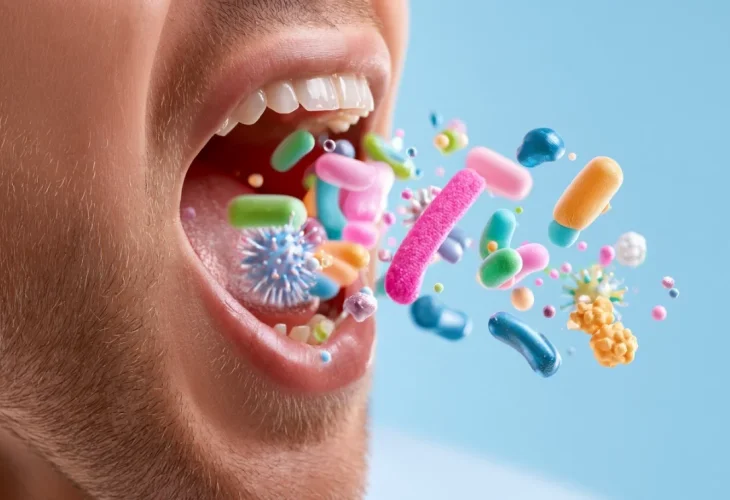
When you're struggling to remember someone's name or trying to come up with a quick answer to a question, your tongue probably isn't the first place you'd look for an explanation. But a new study is drawing attention to the bacteria that live on our tongues and exploring whether they may be connected to how our brains process information.
Published in the scientific journal PLOS ONE, the study examined the relationship between tongue bacteria and cognitive performance in 60 healthy adults from Britain and Belgium. Researchers found that higher levels of certain bacteria were associated with faster reaction times and better performance on some cognitive tests.
However, the findings weren't straightforward. A bacterium associated with better performance on one task wasn't necessarily linked to better results on another, suggesting that the relationship between oral bacteria and brain function may be more complicated than it initially appears.
What Do Tongue Bacteria Have to Do With the Brain?
To understand why researchers are interested in this connection, it helps to look at a process that begins with the foods we eat.
Certain vegetables, including beets, contain naturally occurring nitrates. After we consume them, some of the nitrate is absorbed into the bloodstream and eventually returns to the mouth through saliva.
That's where bacteria on the tongue come in. Certain species help convert nitrate into nitrite, which can then contribute to the production of nitric oxide, a molecule that helps relax and widen blood vessels.
Researchers are interested in whether this process could help explain a possible connection between oral bacteria, blood flow, and cognitive performance.
However, while the biological process is well established, the study does not prove that it explains differences in memory, attention, or reaction speed.
What Did the Researchers Discover?
The research team, led by Joanna L'Heureux of the University of Exeter in collaboration with researchers from Vrije Universiteit Brussel, recruited 30 participants from each country.
Each group included 15 younger adults, generally in their twenties, and 15 older adults, whose average ages were in their sixties or seventies.
Participants completed tests assessing memory, attention, emotion recognition, and processing speed. Researchers also measured their blood pressure and collected blood, saliva, and tongue swab samples.
All participants were non-smokers, and those who had recently taken antibiotics or had a history of oral disease were excluded.
One of the more consistent findings involved a bacterium called Prevotella histicola. In both countries, participants with higher levels of this bacterium tended to respond faster on certain cognitive tests, although the specific tasks differed between the British and Belgian groups.
Another bacterium, Haemophilus parainfluenzae, produced more mixed results.
Among Belgian participants, higher levels were associated with faster responses on emotion recognition and visual learning tasks, as well as greater accuracy in working memory.
In Britain, the same bacterium was linked to faster responses on some tasks but slower responses on emotion recognition tests.
These differences highlight an important point: the findings don't suggest that having more of any particular bacterium automatically leads to better memory or sharper thinking.
It's also worth noting that all 60 participants were healthy and passed a cognitive screening test. The researchers were examining differences in cognitive performance among healthy adults, not diagnosing dementia or other forms of cognitive impairment.
What Does This Mean for Your Memory?
Although the results are intriguing, it's too early to draw practical conclusions.
The study was relatively small, involving just 30 participants in each country. Researchers also didn't control participants' diets or thoroughly assess factors such as sleep and physical activity, all of which could influence cognitive performance.
Most importantly, the research identified associations, not cause and effect. It remains unclear whether differences in tongue bacteria influence cognitive performance, whether other factors affect both, or whether the findings reflect a more complex relationship.
Larger studies involving more diverse populations will be needed to determine whether these associations hold up and to better understand the mechanisms involved.
For now, there's no evidence from this study that changing the bacteria on your tongue will improve your memory or help you think faster.
Still, the research opens an interesting avenue for scientists investigating the relationship between the microorganisms living in our bodies and the way our brains function.
The next time you struggle to remember a name, your tongue probably won't have the answer. But the bacteria living on it may one day help researchers better understand how the body and brain are connected.

