

Magazine
“I Felt I Was Born With a Jewish Soul”
The Journey That Began in a Church in Russia and Ended With an Orthodox Conversion
- Shira Dabush
- | Updated
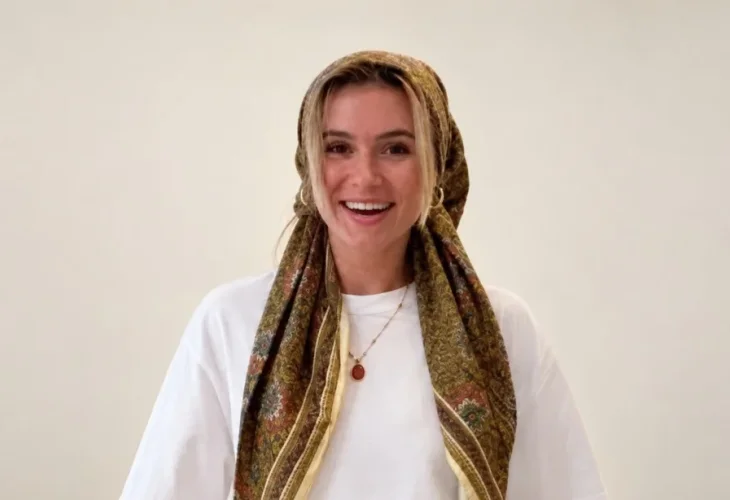
Nesia Magidish grew up in Russia in an Orthodox Christian home, wore a cross and was baptized as a baby. But already at the age of 12, while standing in church beside her mother, she felt with her entire body that this was not where she belonged.
“I still remember telling my mother that if the goal was for me to be close to God, I would find my own way to reach Him”. With these words, Nesia Magidish, formerly Nastya, begins our conversation. She was only 12 years old. She barely knew any observant Jews, did not know what a Jewish Shabbat was, and certainly never imagined that one day she would stand before a Beit Din and choose to join the Jewish people with tears in her eyes.
Today, twenty years later, she is living in Israel with her husband, covering her hair and observing mitzvot. “I believe I was born with a Jewish soul”. She says today that she cannot explain exactly how it happened, but Judaism became an integral part of her. “It was always part of me, long before I had the words or the knowledge to give it a name. For me, conversion was the process through which I finally connected to something that had been mine all along”.
For most of her life, the only holidays she knew were Christian ones. “On Easter, my mother and I painted eggs, baked the traditional holiday cake and brought food to church to be blessed”. “I was baptized in church when I was born and I had a godmother. I wore a cross my entire life”.
Judaism, by contrast, was somewhere far away. It did not enter her world until the age of 12.
That is a very young age for a girl to begin exploring another religion. How did you even reach the point where you felt you needed to discover something other than Christianity?
“It happened after an uncle I was very close to passed away. His death caused my mother to become more religious and to start attending church regularly, which meant that I also had to go with her. His loss shook our family, but when I stood in church, instead of feeling comforted, I felt that I did not belong”.
When she asked her mother why they continued going to church, her mother answered simply: in order to become closer to God.
“If that is the goal, to become closer to God, then I will find my own way to reach Him”.
“Looking back, I understand that this was the real beginning of my spiritual journey. I did not know what that ‘way of my own’ would be. I had no idea. But in a sense, I committed myself to something without even knowing what form it would take. Over time, Hashem showed me the way”.
A Special Gift: A Kabbalah Book
Three years later, one of her Jewish friends at school gave her a book about Kabbalah. Nesia flipped through the pages without really understanding what she was reading, but something drew her to it.
“I have a very mathematical way of thinking, and the moment I saw the structure of the Tree of the Sefirot, something inside me lit up. When I began delving into the explanations and saw the structure of the interconnected shapes and the geometry, I felt an inner warmth and curiosity that did not come from the intellect, but from the soul”.
She even drew “Keter” and kept the drawing. But life moved on, and Judaism once again became distant. The questions, however, never disappeared: Why did the same patterns keep repeating themselves in her life? What was true happiness? And what was missing? “I realized that happiness has to begin inside you. It is not something you receive from outside. It is a state of mind that has to be built from within”.
In 2023, Nesia was living in Amsterdam when a trip to Thailand unexpectedly brought her back toward the Jewish world.
“A friend convinced me to travel to Thailand and visit a certain club. We planned to make three stops from south to north, and the club was near the third stop, but for some reason I cannot explain, I decided to go to the club already during the second stop”.
“I saw the advertisement for the party, I saw who the DJ was and something inside me said, ‘I need to be there’. So I went”.
And that was where she met Shaked.
There was nothing about his appearance that would have identified him to her as Jewish. But during their conversation, he told her that he was Jewish, and suddenly a word that had almost disappeared from her life returned to center stage.
The more they got to know each other, the more Shaked touched on ideas she already believed in. “I believed in the Creator, I believed that actions have consequences and that a person needs to continue growing and working on themselves. I also loved chesed, volunteering, helping and being there for others, and at the time I did not know that chesed is one of the central pillars of Jewish life”. She continues, “Suddenly, through my conversations with Shaked, I discovered that the ideas I had been searching for all my life were not disconnected from reality. They even had names”.
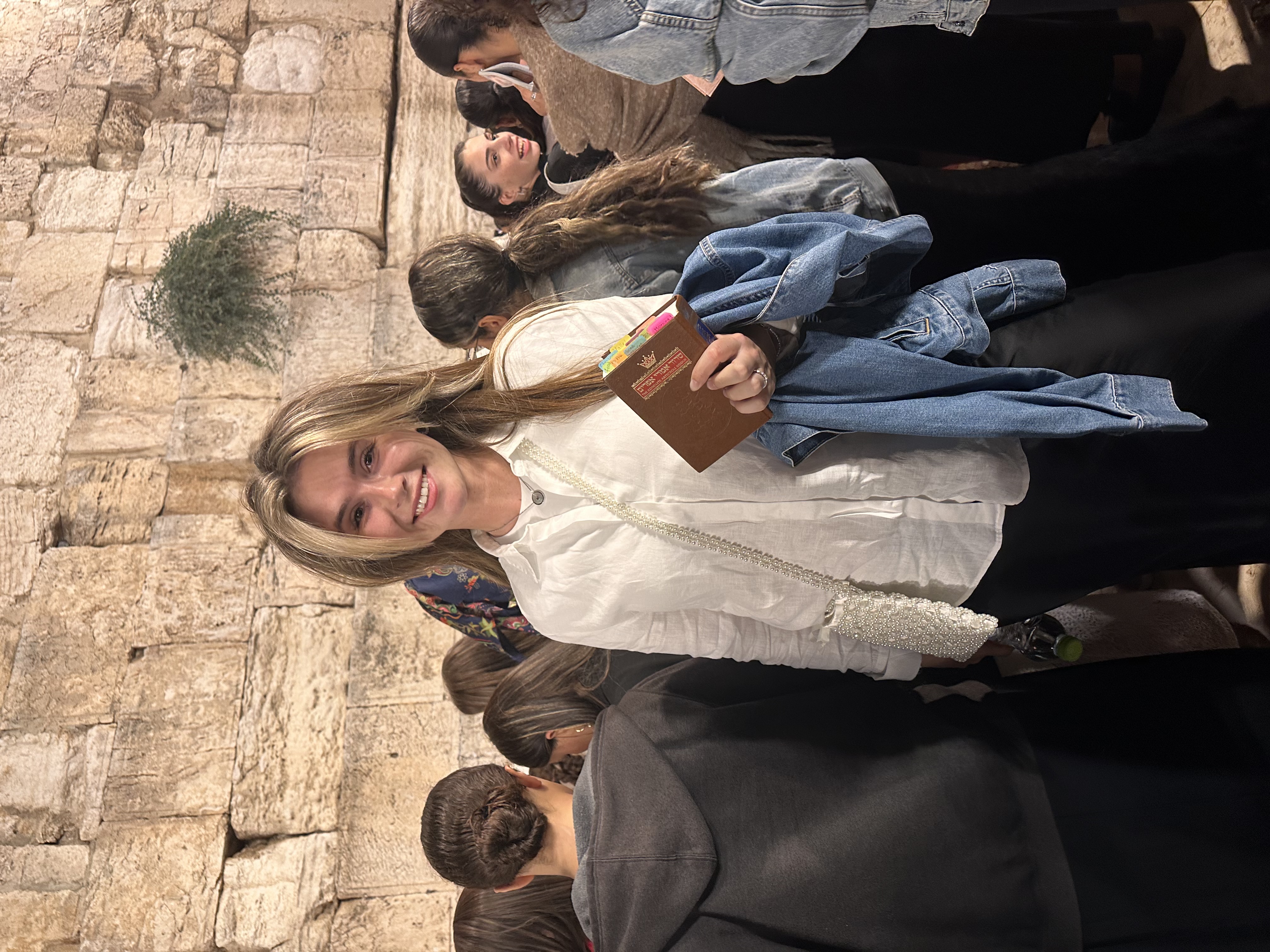
“Suddenly I Found Answers to What I Had Felt at 12”
When Shaked returned to Israel, Nesia already knew that she was not going to give up on him. During her first visit to Israel in May 2023, the possibility of conversion came up.
She did not immediately say yes. When the subject came up again, she felt that Shaked was putting pressure on her.
“I felt that he was entering a space that belonged entirely to me and trying to shape it. I respected his values and his vision for the future, but something so delicate and intimate could not be done through pressure. It had to be my journey”.
From that point, Nesia began searching on her own. When she felt ready, she approached the rabbi who would guide her through the conversion process.
“Even then, I did not really feel that this was necessarily the right thing for me. For me, it was about beginning a journey in which I would find out whether this life truly belonged to me”.
Before that certainty took shape, Nesia says, she needed to understand not only why Judaism was right for her, but also why Christianity had never felt right. She began researching the historical development of Christianity.
“I found answers to something I had felt in my body for years, to why I reacted the way I did every time I stood in church. That was the first real turning point”.
After that, Judaism began to open up to her in a different way. She encountered chesed within the community and discovered that, for her, it was not merely a beautiful principle.
“I saw that it was not an abstract value. It was the fabric of daily life, and I remember simply thinking: This is exactly what I have been looking for, and here people actually live this way”.
When Nesia began studying Torah in with a teacher and a study group, her connection deepened further.
“It was a process that changed me in ways I had not expected. It brought me to a completely different level of understanding and connection”.
Then came a moment she still finds difficult to explain. She had already scheduled her first meeting with the rabbi. She was driving with the woman who would later become her mother-in-law when “Mi SheMaamin” began to play.
Nesia did not know the song or understand the lyrics. Then she began to cry.
“I just cried hard, without warning and without any explanation I could give myself at that moment”. When she arrived home, she looked up a translation of the lyrics. “Then it made sense. For me, it was simply an awakening of the soul. Something inside me recognized the song before my mind had any way of understanding it”.
But then their story took an almost paradoxical turn. Shaked had initially raised the possibility of conversion, but as Nesia progressed, she found herself becoming more deeply observant than he was.
About six months before she completed her conversion, they had to confront a frightening question: Did they really want to build the same kind of home?
“We realized that I was progressing faster and going deeper into mitzvah observance than he was at that stage”.
Suddenly, the conversation shifted from “Will you convert for me?” to “What kind of home do you really want? How important is religious observance truly to you?”.
“The gap existed, and it was frightening”. Nesia says, “But I decided to do exactly what I had asked him to do at the beginning of my journey: respect the fact that a person’s spiritual path belongs only to that person. Suddenly I was in his shoes, and I understood that becoming a baal teshuvah and returning to mitzvah observance after living a traditional life can sometimes be even harder than conversion”.
So what did you do?
“Instead of pressuring him to progress at my pace, I prayed to Hashem to give him the strength for whatever was waiting for him to discover along his own path”.
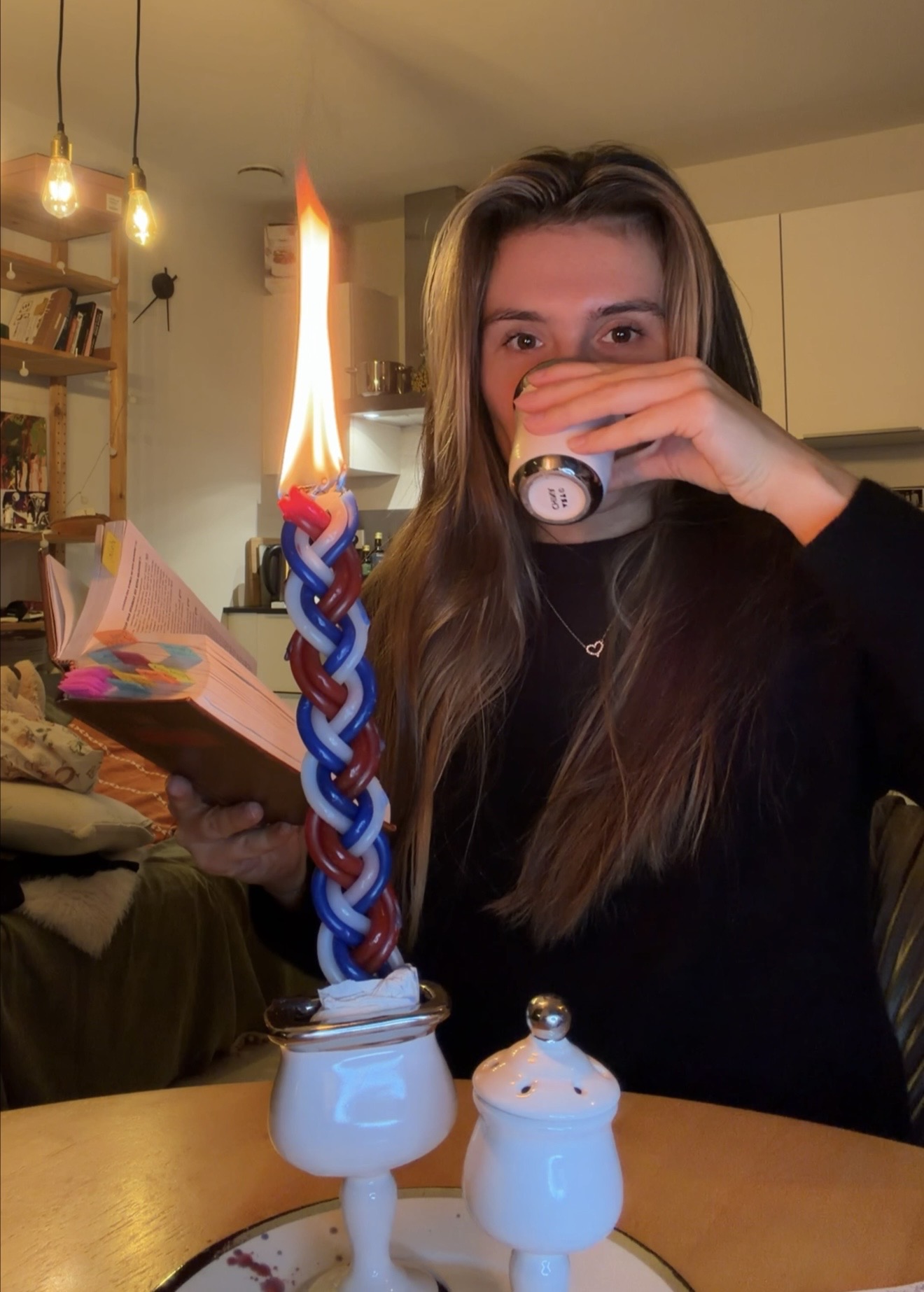
“My Father Asked Why I Needed Any of This at All”
Someone looking from the outside at a woman moving from a non-Jewish life into the Orthodox world might assume that the greatest challenge would be modesty. For Nesia, however, it was Shabbat.
“My real challenge was actually Shabbat. At first, I tried to take everything on too quickly, without easing into it gradually. Looking back, that was a mistake”.
She eventually learned to approach Shabbat observance more gradually.
Was there ever a stage when Shabbat, or other things that were changing in your life, made you want to give up on the conversion?
“The thought of giving up on the conversion completely never crossed my mind, but there is no question that the change required me to reshape every area of my life, including my career. I left my job in the corporate world because it was no longer right for me, and my relationships with people close to me changed as well”.
Some relationships did not survive. “In some cases, non-Jewish people from other parts of my life chose to cut ties with me because of antisemitism that surfaced as I began living more openly as a woman connected to the Jewish people and Judaism”.
Then came the pivotal conversation with her father.
“It was three months before I completed the conversion process. I remember that we sat down for a very meaningful and serious conversation, and when I told him about the change I was about to make, he did not understand why I needed any of it. From his perspective, the conversion was completely unnecessary. He suggested that Shaked and I simply get married and live together without it”.
By that stage, however, Nesia had already confronted the question for herself.
“The conversation with my father was almost like another Beit Din. He reflected back to me difficult questions that I had already needed to confront myself, the same questions the rabbis had asked me”.
What kinds of questions, for example?
“How and on what we intended to live in Israel, and whether our children would serve in the army. I did not try to pretend that I had answers to all his questions. I told him that I did not have answers, only faith. And that if these were the conditions of the life I was choosing, then that was what Hashem intended for me”.
Over time, her father began to embrace her new life. When Nesia and Shaked visited Russia and brought meat from a kosher store, her father bought a new grill rack and helped prepare the barbecue area according to the requirements of kashrut.
“He asked what needed to be done and wanted to make sure he was doing everything correctly”.
During their visit, her parents also asked about Kiddush, the holidays and Jewish customs. During the most recent Chanukah, the family stood together in front of the menorah and lit the candles together.
“That picture alone says everything about how far we have come. I feel fortunate for the way my family has walked alongside me through this journey”.
The Journey Was Only Beginning
It is easy to imagine conversion as the climactic moment: the Beit Din, the immersion and the feeling that you have finally reached your destination. But Nesia sees it differently.
“I think the best way to understand conversion is like finishing elementary school. You have completed the first grades, and now you can move on to something much bigger. But there is no longer someone standing over you checking whether you did your homework. From now on, it is just you and the Creator”.
What did you discover on the day after your conversion that no one can truly prepare a convert for in advance?
“Before the conversion, I felt as though I were a welcome guest in a beautiful home that belonged to someone else. You are invited in, you are allowed to sit in the living room and use the kitchen, and you can even feel comfortable there. But there are rooms you cannot enter, not because you are not loved, but because it is still not your home. After conversion, it is as though you have moved into a new home. All the rooms are open to you, but along with that comes something else: full responsibility for the house, for maintaining it, caring for it and for the people who live there beside you”.
Since completing her conversion, Nesia has moved from Amsterdam to Israel, and every day she continues to discover new beginnings in her observance of mitzvot.
“Sometimes it feels as though I started again at a more advanced level of the same game. The work did not end with conversion. It simply became a different kind of work”.
As we reach the end of our conversation, I ask her to imagine herself returning to that 12-year-old girl standing in a church, daring to tell her mother that she would find her own way to God. Nesia no longer tries to hide what she feels.
“I feel that I was born with a Jewish soul. It was always part of me, long before I had the words or the knowledge to give it a name. For me, conversion was the process through which I finally connected to something that had been mine all along”.

