

Naturopathy and Natural Medicine
Are Your Vitamins Actually Helping? 8 Supplement Myths Explained
From vitamin C to biotin, discover 8 common myths about supplements and learn which vitamins may help, which don't, and what risks to consider.
- Shira Priant
- | Updated
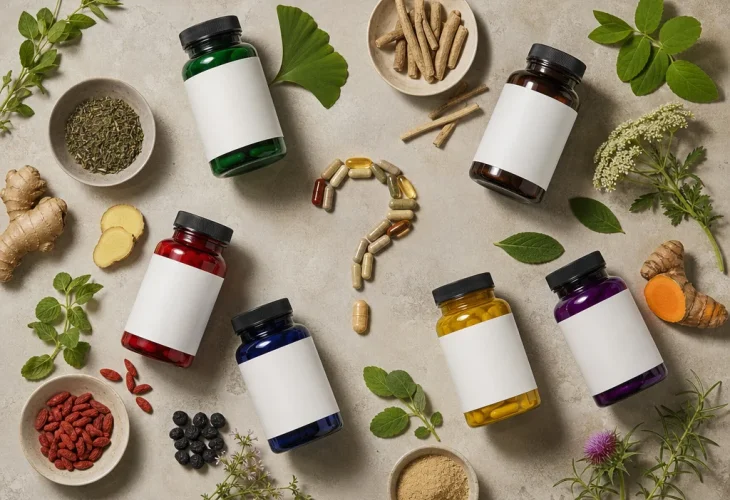
From daily multivitamins to vitamin C, collagen, and supplements promising healthier hair, dietary supplements have become a regular part of many Americans' routines. They're often marketed as simple ways to improve health, prevent illness, or make up for nutrients missing from our diets.
But how much of what we believe about supplements is actually supported by science?
While certain vitamins and minerals are essential in specific circumstances, taking supplements without a clear need doesn't necessarily improve your health. In some cases, excessive doses or interactions with medications can even cause harm.
Here are eight common myths about vitamins and supplements, and what scientific research actually tells us.
1. "Everyone Should Take a Multivitamin, Just to Be Safe"
Taking a daily multivitamin can feel like an easy way to make sure your body gets everything it needs. But for generally healthy adults, the benefits aren't as clear as many people assume.
In 2022, the U.S. Preventive Services Task Force (USPSTF) concluded that there wasn't enough evidence to determine whether multivitamin supplements help prevent cardiovascular disease or cancer.
This doesn't mean multivitamins are necessarily harmful or that they never serve a purpose. Rather, research hasn't established that taking them routinely prevents these diseases in otherwise healthy adults.
The recommendation also doesn't apply to people with diagnosed nutritional deficiencies or specific medical needs, for whom supplementation may be beneficial.
2. "Vitamin C Prevents You From Catching a Cold"
Vitamin C has long been associated with preventing colds, but the evidence tells a more complicated story.
A major Cochrane review found that taking vitamin C regularly does not significantly reduce the likelihood of catching a cold in the general population.
However, it may help shorten the duration of a cold. Researchers found that regular vitamin C supplementation reduced cold duration by approximately 8% in adults and 14% in children.
That's a relatively modest benefit, rather than complete protection against illness.
There is one notable exception. Among people experiencing extreme physical stress, such as marathon runners, skiers, and soldiers exercising in very cold conditions, vitamin C supplementation was associated with roughly a 50% reduction in the risk of developing a cold.
For most people, though, taking vitamin C every day isn't a reliable way to avoid getting sick.
3. "If a Little Is Good, Taking More Must Be Better"
When it comes to vitamins and minerals, more isn't always better.
The body can eliminate excess amounts of some water-soluble vitamins, but that doesn't mean high doses are automatically safe. Certain nutrients can accumulate in the body or cause harmful effects when consumed in excessive amounts.
Fat-soluble vitamins, including vitamins A, D, E, and K, deserve particular attention because they can be stored in body tissues. Excessive iron intake can also be dangerous.
Calcium supplements provide another example of why dosage matters. A large 2019 study found an association between taking at least 1,000 milligrams of calcium daily from supplements and an increased risk of death from cancer.
Importantly, this was an observational finding. It did not establish that calcium supplements caused cancer or cancer-related deaths.
Still, the findings reinforce an important principle: Supplements should be taken according to individual needs, not on the assumption that higher doses provide greater protection.
4. "If It's Natural, It Must Be Safe"
The word "natural" appears on countless supplement labels, often giving consumers the impression that a product is harmless.
But natural ingredients can still cause side effects, interact with prescription medications, or become harmful at high doses.
Another common misunderstanding involves government oversight.
In the United States, the Food and Drug Administration (FDA) regulates dietary supplements differently from prescription medications. Unlike drug manufacturers, supplement companies generally do not need FDA approval demonstrating that their products are safe and effective before selling them.
Manufacturers are responsible for ensuring their supplements meet applicable safety and labeling requirements, and the FDA can take action against products that are unsafe, adulterated, or improperly marketed.
This distinction matters because a supplement being sold in a pharmacy or advertised as natural doesn't mean its health claims have been scientifically proven.
Quality and contamination are additional concerns. Research has identified undeclared substances in some sports supplements, while testing of certain plant-based protein powders has raised concerns about heavy metal contamination.
These findings don't mean every supplement is contaminated, but they highlight the importance of choosing products carefully.
Independent third-party testing programs, such as those offered by USP and NSF, can provide additional reassurance that a product has been evaluated for certain quality standards. However, certification doesn't necessarily prove that a supplement delivers its advertised health benefits.
5. "Taking Supplements Makes Up for an Unhealthy Diet"
It's tempting to think that a daily vitamin pill can compensate for skipping fruits, vegetables, and other nutritious foods.
Unfortunately, supplements aren't a substitute for a balanced diet.
A U.S. study involving more than 27,000 adults found no association between dietary supplement use and a reduced risk of death during the study's follow-up period.
Researchers also observed that adequate intake of certain nutrients, including vitamin A, vitamin K, magnesium, zinc, and copper, was associated with a lower risk of death when those nutrients came from food rather than supplements.
The study was observational, so it couldn't establish exactly why these differences occurred.
However, whole foods provide far more than isolated vitamins and minerals. Fruits, vegetables, legumes, whole grains, and other nutritious foods contain fiber and a wide variety of naturally occurring compounds that contribute to overall health.
That's why dietary guidance generally emphasizes healthy eating patterns rather than relying on individual nutrients in pill form.
Supplements can help address specific gaps, but they can't reproduce all the benefits of a nutritious diet.
6. "Antioxidant Supplements Protect Against Cancer"
Antioxidants help protect cells from certain types of damage, so it might seem logical that taking concentrated antioxidant supplements would reduce the risk of serious diseases.
But scientific research hasn't consistently supported that assumption.
The USPSTF recommends against using beta-carotene or vitamin E supplements to prevent cardiovascular disease or cancer.
The concerns surrounding beta-carotene are particularly important. Studies have found that beta-carotene supplementation can increase the risk of lung cancer in people who smoke or have been exposed to asbestos.
Vitamin E supplements, meanwhile, have not demonstrated a meaningful benefit for preventing cancer or cardiovascular disease.
This doesn't mean antioxidants themselves are harmful. Foods rich in antioxidants, such as fruits, vegetables, nuts, and seeds, remain valuable parts of a healthy diet.
The important distinction is that the benefits associated with eating antioxidant-rich foods cannot automatically be attributed to concentrated supplements.
7. "Biotin for Hair and Nails Is Completely Harmless"
Biotin, also known as vitamin B7, is a popular ingredient in supplements marketed for stronger hair, healthier nails, and improved appearance.
Although biotin is an essential nutrient, there's limited evidence that taking extra biotin improves hair or nail health in people who aren't deficient.
More importantly, high-dose biotin supplements can interfere with certain medical laboratory tests.
The FDA has warned that biotin can cause falsely high or falsely low results in some blood tests, depending on the testing method used.
One particularly serious concern involves troponin tests, which doctors use to help diagnose heart attacks.
Biotin interference can produce falsely low troponin results in certain tests, potentially delaying the diagnosis of a heart attack. The FDA has reported serious adverse events associated with this interference, including a death.
Some beauty supplements contain doses of biotin hundreds of times higher than the recommended daily intake.
If you take biotin, especially in high doses, make sure your doctor and the laboratory know before you undergo blood testing.
8. "All Supplements Are a Waste of Money"
After hearing about the limitations and potential risks of supplements, it's easy to reach the opposite conclusion: that none of them are worthwhile.
But that isn't true either.
Certain supplements are strongly recommended for specific groups because their benefits are well established.
One of the clearest examples is folic acid.
The USPSTF recommends that people who are planning a pregnancy or could become pregnant take a daily supplement containing 400 to 800 micrograms of folic acid to help prevent neural tube defects in developing babies.
Ideally, supplementation should begin at least one month before conception and continue through the early stages of pregnancy.
Other situations may also require supplements. People following vegan diets generally need a reliable source of vitamin B12, often through fortified foods or supplements. Individuals with diagnosed deficiencies, low calcium intake, or medical conditions that interfere with nutrient absorption may also benefit from targeted supplementation.
Infants, pregnant women, and older adults may have additional nutritional requirements that call for individualized guidance.
The key difference is that these supplements address a specific, recognized need rather than being taken simply as a precaution.
So, When Should You Actually Take a Supplement?
The most useful supplements are generally those taken for a clear reason, such as a diagnosed deficiency, a particular dietary restriction, a medical condition, or a life stage with increased nutritional needs.
For healthy adults eating a varied, balanced diet, routinely taking additional vitamins and minerals hasn't been shown to prevent every illness or guarantee better long-term health.
Before starting a new supplement, consider speaking with your doctor or a registered dietitian. They can help determine whether supplementation is necessary, which nutrients may be beneficial, and what dosage is appropriate.
It's also important to tell your healthcare provider about every supplement you take, including herbal products, protein powders, and vitamins marketed for hair, skin, or nails. Even products that seem harmless can interact with medications or affect medical tests.
The bottom line: Supplements can be valuable tools when used appropriately, but they aren't a shortcut to good health. Understanding what your body actually needs is far more important than simply taking more pills.
This article is intended for general informational purposes and does not replace personalized medical or nutritional advice.

