

Israel News
Israel's Sea of Galilee Records Lowest Water Inflow in 100 Years
Israel's Sea of Galilee recorded its lowest two-season water inflow in 100 years, as a new Water Authority report reveals the lasting impact of drought.
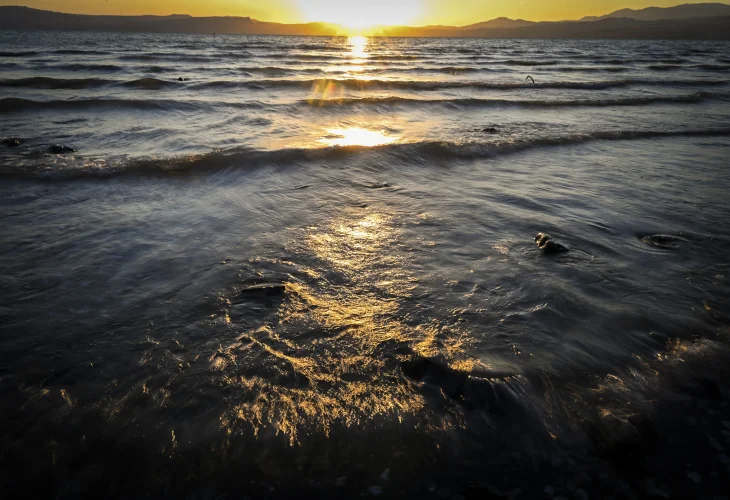 The Kinneret (Photo: Michael Giladi, Flash90)
Rain fell across Israel, but it still wasn't enough. The country's water resources continue to feel the effects of drought. A report released this morning (Tuesday) by the Israel Water Authority, summarizing the previous rainy season, reveals that the total volume of available water in the Kinneret (Sea of Galilee) over the past two seasons reached just 208 million cubic meters, the lowest figure recorded in 100 years of measurements.
According to the data, the Kinneret began the hydrological year at 213.08 meters below sea level, dropping to 213.45 meters below sea level by mid-December. A partial recovery followed, with the water level rising by 94 centimeters to reach its seasonal peak in early May, at 212.51 meters below sea level.
Flow measurements from northern water sources also reveal shortfalls compared with the long-term average. At the end of April, the Gesher HaPkak station on the Jordan River recorded a flow of 11.4 cubic meters per second, approximately 80% of the average for that period. The Dan Spring recorded 7.6 cubic meters per second, around 94% of the average. In the coastal and Yarkon basins, water quantities reached approximately 100% of the annual average, compared with about 85% in the Western Galilee.
In southern and eastern Israel, however, rainfall and flooding were unusually intense. On April 27, 2026, more than 50 millimeters of rain fell in parts of the Judean Desert and northeastern Negev, with most of the rainfall occurring within approximately an hour and a half. In Nahal Tze'elim, a peak flow of 570 cubic meters per second was recorded, while the stream's water level rose by approximately four meters in just half an hour.
Meanwhile, the Dead Sea's water level fell by 18 centimeters between the start of the season and the end of April, compared with a 63-centimeter drop during the same period last year.
Israel Water Authority Director Yechezkel Lifshitz emphasized the importance of continued monitoring and flexible management of water resources: "Even when the amount of rainfall approaches the average, water sources continue to carry the impact of the previous drought year."

