

Parashat Noach
From the Rebbetzin's Shabbat Table - Parashat Noach
A Light That Lives On
- Rebbetzin Tziporah Heller Gottlieb
- | Updated
Dear friends,
If you are at all like me, there are a lot of things that you forget. They range from where you put your glasses to who the woman sitting next to you on the bus, and who greeted you so warmly, actually is. Then there are things you never forget. They are ingrained so deeply in your identity that even if you tried, the memory would still surface. One of them is that you are a human being and what that really means.
The World Before the Flood: What Happens When We Forget What a Human Being Is
The corruption that brought the flood was not merely a matter of breaking rules. It reflected a profound distortion of how human beings saw one another. When people lose sight of the spiritual dimension of human life, they begin to treat others as objects to be used. Rav Dessler taught: the contrast between taking and giving relates to whether your identity is primarily your body or your soul. The body loves to take, while the soul needs to contribute and give. Your point of choice in this area is not simply whether you perform a particular good deed, but what kind of human being you are in the midst of becoming. A world built around taking eventually destroys the relationships and structures that make human life possible.
As human life spiraled downward, the generation of the flood were described with the word chamas, which is translated by Targum Onkelos as “grabbers”. Against this background, Noach stands out. He remains righteous in a world that has lost its human identity.
Noach: Preserving a Different Kind of Life
The Torah introduces Noach as “אִישׁ צַדִּיק תָּמִים הָיָה בְּדֹרֹתָיו” – “A righteous man, wholehearted in his generations” (Bereishit 6:9).
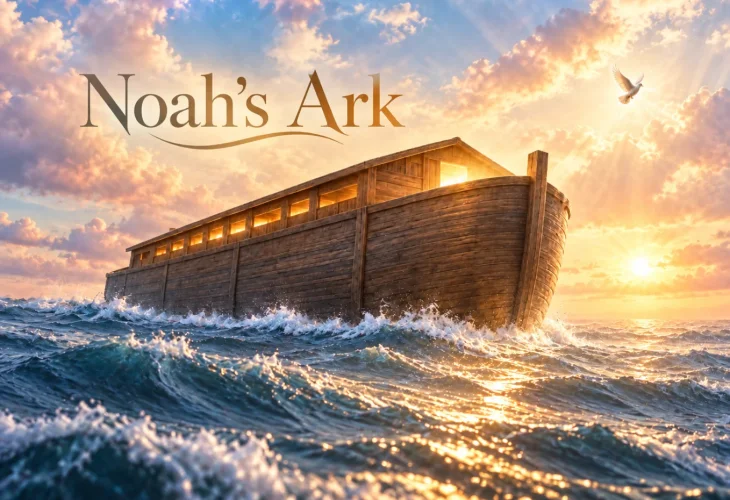
Noach's righteousness matters because he does not simply absorb the values of the society around him. He preserves a different way of seeing the world and living in it. The teivah becomes the place where that life is protected. But how can life be sustained in a world covered by darkness?
The Tzohar: A Light Within the Teivah
Hashem commands Noach: “צֹהַר תַּעֲשֶׂה לַתֵּבָה” – “Make a tzohar for the teivah” (Bereishis 6:16).
Rashi offers two interpretations for what a ‘tzohar’ is: a window, or a precious stone that provides light. The teivah was more than a shelter from destruction. It is a place in which life can continue, sustained by a light that the darkness outside cannot extinguish.
The Torah is a tzohar – a place where a particular vision of human life remains visible and alive, even when the surrounding world does not share it. It is the world’s blueprint and its light, the light created on the first day remains in the collective heart of Am Yisrael.
My wonderful daughter in law, Judith (now Heller, but originally Ehrenreich) came from a home in which the tzohar was alive and touched the vision of reality of everyone who lived there. Her father, Reb Kalonymus, was a baal teshuvah. As far as we know, Atlanta was the first place where he began his journey toward Torah observance; later, he lived in Detroit. The organized frameworks and support systems available to baalei teshuvah today were not what they are now. No Ohr Samayach and no Aish. He was building a Torah life in a different setting, without necessarily having the ready-made structures that later generations might take for granted. He had to make Torah not merely an ideal he believed in, but a way of living: the rhythm of a home, the standards by which decisions were made, the values absorbed by children, and the assumptions that shaped everyday life.
When he raised a frum family in Detroit, something important had happened. What may have begun as an individual search had become the shared world of a family. That is a different achievement from personal religious growth alone. He helped make it possible for the next generation to grow up inside a world that he had to build for himself.
A child raised in a Torah home may not always recognize how much had to happen for that home to exist. What is difficult and extraordinary for one generation can become ordinary for the next. That is one of the blessings of a successful spiritual legacy. The children inherit more than practices and beliefs. They inherit a framework for understanding people, responsibility, family, suffering, joy, and the purpose of life. They grow up genuinely human. They may not have to make the same journey their parent made. But they inherit the responsibility of deciding what to do with the light that has been given to them.
The teivah was essential, but it was not meant to become Noach's permanent world. When the Flood ends, Noach must leave the place in which life was protected and begin the work of rebuilding life on earth. The purpose of preserving life is not simply preservation as an end goal. Life must continue, develop, and bring its values into the world.
The same is true of a Torah home. It must be a place of protection and nourishment, but its light is not meant to remain confined within its walls.
The Connection to the Family
Judith's father built a Torah home. The next generations receive that home as a gift, but also as a responsibility. They are not required to repeat his journey in precisely the same way. They are called to carry forward what he made possible, each in the circumstances of their own lives.
No two people express the same legacy in exactly the same way.
One generation gives the next a foundation, not a script for every detail of life.
The contrast between taking and giving returns here. A legacy is not fully received merely by possessing it. It is received when we allow it to shape what we give to others.
Each generation has its own tzohar. Learning from those who built families, and those who built the Am are both part of becoming a person who can find their own light.
The greatest tribute we can offer someone who built a Torah home is not merely to remember how much he accomplished. It is to recognize the light he placed in our hands –and to make sure that it continues to illuminate the lives of those who come after us.
Love
Tziporah

