

World News
Air India Flight Makes Emergency Landing in Jaipur After Hijacking Alert
An Air India flight carrying 306 passengers was diverted to Jaipur after transmitting a suspected hijacking signal. Security searches found no threat, and investigators are examining whether the alert was triggered by human error.
- Yuval Aviv
- | Updated
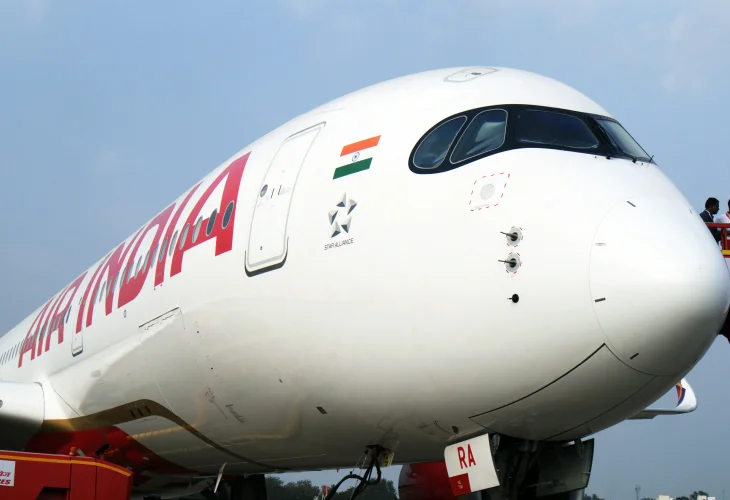 An Air India plane (credit: pexels)
An Air India passenger aircraft traveling from Frankfurt to New Delhi was forced to divert and make an emergency landing at Jaipur International Airport on Wednesday morning after transmitting a distress signal indicating a possible hijacking.
The Boeing 787-9 Dreamliner was carrying 306 passengers and two pilots, all of whom were safely evacuated following the landing.
Hijacking Alert Triggers Emergency Response
The incident began when air traffic controllers in Ahmedabad detected the transmission of squawk code 7500 as the aircraft passed through Mumbai's airspace. The internationally recognized aviation code is used to signal unlawful interference with an aircraft, including a possible hijacking.
Although the signal was transmitted only briefly, authorities immediately activated emergency procedures and directed the aircraft to land at Jaipur International Airport.
Police officers, bomb disposal specialists, and specialized counterterrorism units were dispatched to the airport, surrounding the aircraft shortly after it came to a stop. Meanwhile, an elite unit of India's National Security Guard was placed on standby in New Delhi, and airport security personnel prepared to respond to a potential security threat.
Passengers Evacuated as Security Teams Search Aircraft
Following the emergency landing, the aircraft was moved to a designated isolation area, where passengers and crew members were gradually evacuated to a secure section of the airport terminal.
Security personnel then conducted extensive inspections of the passenger cabin, cargo compartments, and personal luggage to determine whether the aircraft posed any immediate threat.
Although initial concerns included the possibility of an explosive device on board, airport officials clarified that the primary reason for the emergency response was the transmission of the hijacking code.
Investigators Suspect Accidental Activation
By late morning, security teams had completed their inspections without discovering any suspicious objects or evidence of an attempted hijacking.
Preliminary findings suggested that the emergency code may have been transmitted accidentally due to human error in the cockpit.
India's Directorate General of Civil Aviation (DGCA) subsequently launched a formal investigation into the circumstances surrounding the transmission and the emergency procedures that followed.
Following the completion of the security checks, authorities cleared the aircraft to return to service.
Second Hijacking Alert Reported Within 24 Hours
The incident occurred less than 24 hours after a Boeing 737 operated by Corendon Airlines also reportedly transmitted a hijacking alert while flying over Europe.
The two incidents have drawn attention to aviation security procedures and the immediate response required when an aircraft transmits a code indicating possible unlawful interference.
While investigators continue examining the circumstances of the Air India alert, the initial findings indicate that the incident was likely caused by an inadvertent transmission rather than an actual hijacking attempt.

