

Magazine
The Pastor’s Daughter Who Discovered Her Jewish Roots
Raised as a pastor’s daughter, Daniela Yisrael never imagined that a shofar’s call would awaken a Jewish connection buried in her family’s past.
- Shira Dabush
- | Updated
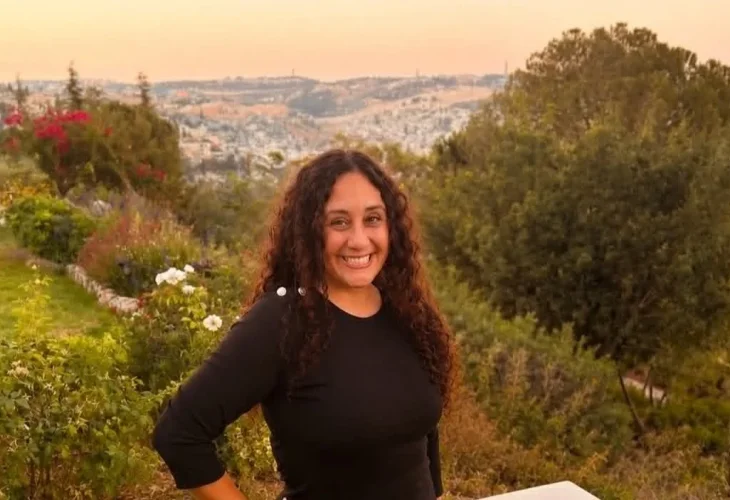
Daniela Yisrael was not searching for her Jewish roots. In fact, for most of her life, she did not even know she had any.
She was born into a Protestant Christian family and raised as the daughter of a pastor, which meant Christianity was not simply a religion she observed from the outside. It was the spiritual language of her home, her community, and her daily life. As a teenager, she organized youth groups, led worship, sang in the church choir, and devoted much of her time to the community she loved, even after she married.
Faith was not a side interest for her. It was part of her identity. She knew the rituals, the songs, the language, and what was expected of her. She knew which world she belonged to and which path she was supposed to follow. There was no reason for her to suspect that the picture she had been given of her life and faith was incomplete.
But the questions, she admits today, began long before the answers that would eventually turn her life upside down.
As a child, she once asked which of the Ten Commandments people were still obligated to keep. The silence that followed made her realize that she had apparently asked a question she was not supposed to ask.
Perhaps it was only the question of a child, but it stayed with her. Why would such a simple question about commandments written in the Bible make the adults around her uncomfortable? Why was there no clear answer?
The question remained unresolved, and over the years it was joined by many others, creating confusion within her and, at times, anger over what she increasingly felt was a lack of truth.
During one missionary activity as a teenager, for example, she watched leaders count how many "souls had been saved", while boxes of water and bags of food intended for people in need remained untouched on the bus.
Even then, something inside her rejected the logic of what she was seeing.
It became a formative moment. She began asking herself what faith really meant, and what value faith had if it did not lead first and foremost to inner integrity, compassion, and responsibility toward another human being.
That experience did not cause her to leave Christianity at the time. But it became one of a growing number of moments in which things simply stopped making sense.
The questions continued as she grew older.
"When I became an adult, I started researching the historical origins of Christian practices I had grown up with", she recalls. "The more I read and learned, the more I felt the gap between what I had been told and what I was discovering becoming wider".
Why investigate at all?
Not because she wanted to rebel, she explains, but because she desperately wanted to find answers that would allow her to believe wholeheartedly.
Something she could hold on to.
"I kept expecting to find a floor", she says, describing those difficult years in which she felt spiritually suspended, searching for a single truth she could stand on. "Give me one point where I can find a stable truth, something that answers at least some of my questions, even if it cannot answer all of them. But I could not find it".
That feeling, of searching for solid ground and repeatedly failing to reach it, followed her for years. Even after she married, she could no longer accept answers simply because those were the answers she had been taught as a child.
She needed something deeper. A source strong enough to withstand her questions without falling apart.
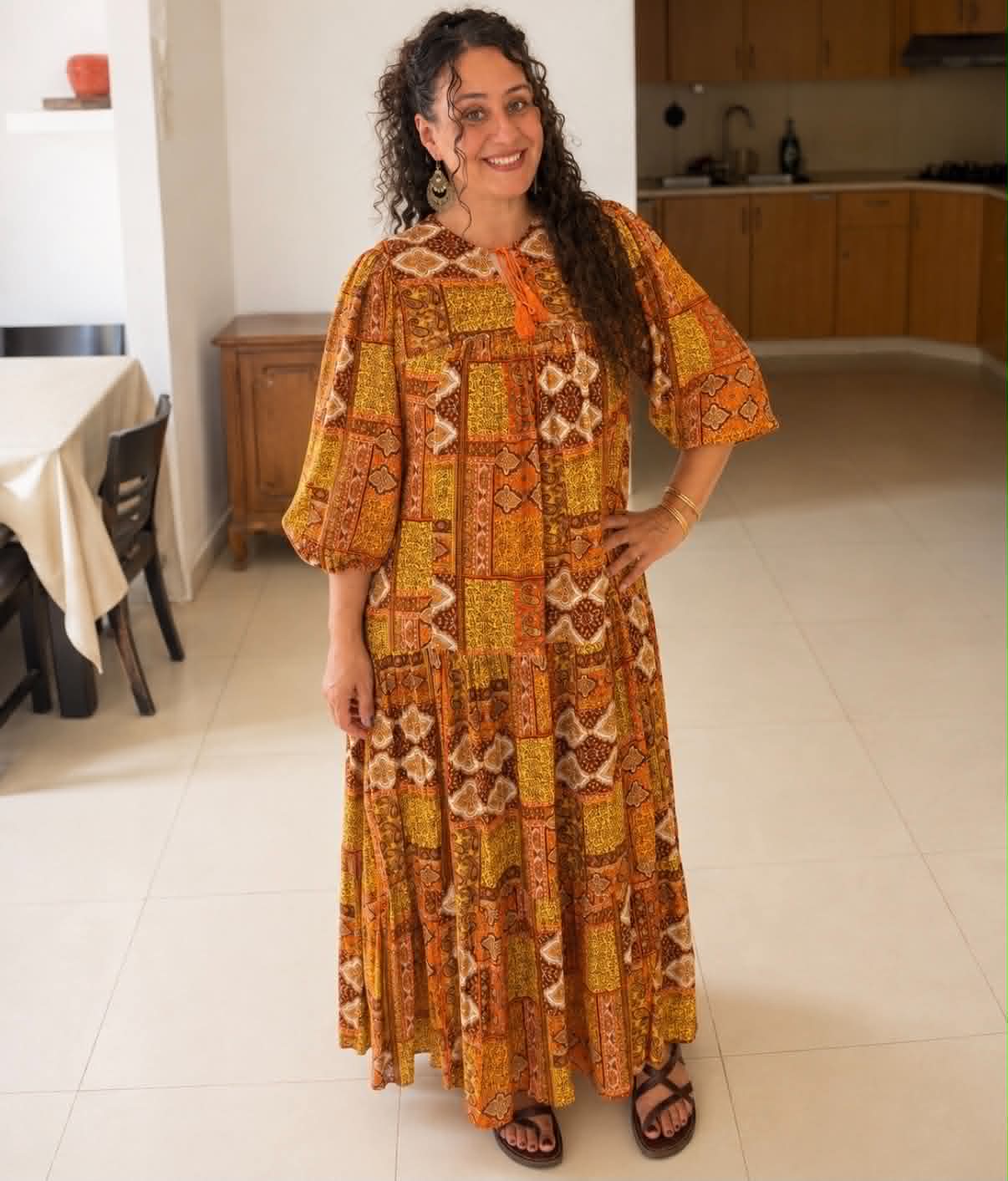
"Every wall I had built inside myself came down "
Instead of calming her, every answer seemed to generate another question, and every question led her deeper into the search.
"I visited Seventh-day Adventist churches and met with Messianic communities because I desperately wanted to resolve the tension and conflict that had formed inside me", she recalls.
But it did not happen.
She also met non-Jewish people who practiced Jewish rituals, but instead of bringing her closer to an answer, the experience made her even more uncomfortable.
"The theology remained completely Christian, and it felt like a costume", she tells me.
At that point, she still did not know exactly what she was looking for. She mainly knew what was no longer capable of bringing her peace.
Outwardly, life continued as usual. Inwardly, however, the spiritual world that had once been the safest place in her childhood was becoming a source of more and more questions.
Then came one evening that changed everything.
In an almost ironic twist, the moment that would eventually bring her closer to Judaism took place inside the very world she was about to leave, at a Christian gathering she attended shortly before Rosh Hashanah.
During the evening, a Jewish guest speaker was invited to the front of the room. In his hand was an object Daniela had never seen before. She did not know what it meant, knew nothing about its history, and had no idea what place it held in Jewish tradition.
It was a shofar.
And she vividly remembers what happened inside her when he blew it.
"The people around me seemed to have found a peace I could not locate in myself. The familiar rituals no longer moved me. The laying on of hands had done nothing for me. The worship music could not reach me, and the things that had once been a natural part of my spiritual world could no longer quiet what was happening inside me.
"Then the man lifted the shofar and blew it, and in an instant, every wall I had built inside myself came down. I began sobbing. Not just crying, sobbing, from somewhere deeper than emotion. It was as if something in my chest recognized a sound it had been waiting to hear for a very long time.
"I did not know what a shofar was. I did not know its history. I only knew that this ancient ram’s horn, blown by a Jewish man standing at the front of the room, had completely undone me in a way that nothing in twenty years of church had ever touched.
"Only later did I understand why. The shofar is blown on Rosh Hashanah, the Jewish New Year and the Day of Remembrance, and on Yom Kippur, the Day of Atonement. In Jewish tradition, its sound is deeply associated with the call to return. To wake up. To come back to God. It is an ancient sound, not composed, not performed, not arranged. It is a cry. And something in my soul heard that cry and answered it before my mind had any idea what was happening".
That evening, she walked out of the church and never returned.
Not because she already had all the answers. Quite the opposite. She left with even more questions, but for the first time, she also knew that she could no longer pretend everything was as it had always been.
By this point, Daniela was already a mother. Even after realizing that she could no longer remain where she had been spiritually, walking away from an entire identity was anything but simple.
It meant dismantling an entire worldview without yet knowing what she would build in its place.
She was no longer a teenager who could simply decide to change direction without anyone else depending on her. She had a family, children, memories, relationships, and an entire life built around the faith in which she had been raised.
Daniela describes that period as a time in which she had to do more than learn.
She had to "unlearn".
She gradually began dismantling ideas she had accepted as unquestionable for most of her life. Each time she thought she had found an answer, another belief she had previously taken for granted had to be examined again.
The Secret That Changed Everything
She still did not know where the journey would lead, but she knew she could no longer return to where she had come from.
Not long after that evening, Daniela visited her grandmother, Abuela Esther, who had become very ill. During the visit, her grandmother insisted that Daniela take home a large framed baby photograph.
"I didn’t argue", Daniela says.
She took the photograph and drove home.
It was the last time she saw her grandmother awake. Shortly afterward, her beloved grandmother passed away.
At the time, Daniela had no reason to suspect that the photograph she had been given contained anything unusual. To her, it was simply one last keepsake from her grandmother.
"About six months later, I decided to reuse the frame", she recalls. "But when I opened it and removed the baby photograph, I discovered many old family photographs hidden behind it".
They were black and white, their edges curled with age, with names and dates written on the backs in fading ink.
They were the faces of people who had lived long before her, names that had nearly disappeared from family memory.
And then something clicked.
"I started building a family tree, just out of curiosity. But as I dug deeper into genealogical records and historical archives, those innocent photographs led me to much darker documents".
Why darker?
Because among the names she discovered in Inquisition records were members of her own family.
One document opened a door to a historical period Daniela had never imagined she was personally connected to.
"They had apparently been investigated on suspicion of practicing Jewish customs, and punished", she says.
According to Daniela, her family was among the founders of a city in the Mexican state of Jalisco.
"On the surface, my family was completely Catholic", she tells me. "But my research revealed something much deeper: this was a Sephardic Jewish family that had been forced to convert in order to survive".
Suddenly, the questions that had followed her for years became personal in a way she could never have anticipated.
Then she found the record that changed the search entirely.
"That record stopped my heart", she says. "It described how one of my ancestors was burned alive while screaming, ‘Shema Yisrael, Adonai Eloheinu, Adonai Echad’. Hear, O Israel: the Lord our God, the Lord is One".
"He screamed those words while they lit the fire beneath him. He chose death rather than deny that God was One, and I needed to understand why. Why were those words worth more than a life? That question became the engine of everything that followed".
In that moment, the distance of hundreds of years seemed to collapse.
She was no longer reading from the outside about some anonymous Jew who had been persecuted during the Inquisition and killed for his faith.
This was her family.
A man who had lived in fear, who had hidden, who had prayed, and who, in the final moments of his life, chose to say the words most deeply identified with Jewish faith: Shema Yisrael.
Daniela began reexamining passages on which the theology of her childhood had been built and discovered that Jewish readings of some of those passages differed fundamentally from the interpretations she had been taught.
This time, she was no longer willing to rely solely on interpretations handed down to her by others.
She wanted to reach the text itself, to examine words, contexts, and meanings, and to understand what had originally been written before centuries of religious interpretation had accumulated around it.
For her, this was not an intellectual debate.
She was examining the foundations on which her entire faith had been built.
"The foundation I had built my faith on had cracks I could no longer ignore".
Slowly, she says, learning also became unlearning. She was forced to dismantle beliefs that had seemed self-evident for most of her life. Questions she had never imagined she would one day ask became questions she examined again and again.
The process did not happen overnight.
Even after she knew what she could no longer believe, one enormous question remained: What did she believe now?
Eventually, she could no longer ignore the conclusion she had reached: she wanted to leave Christianity and live as a Jew.
Dismantling everything she had ever known was not easy, and it took her a long time even to say aloud what she truly thought and felt.
"Because of the length of time my family had been Christian, I made the decision to formally convert", she says. "Afterward, I made aliyah to Israel, first to Tzfat and later to the Golan Heights".
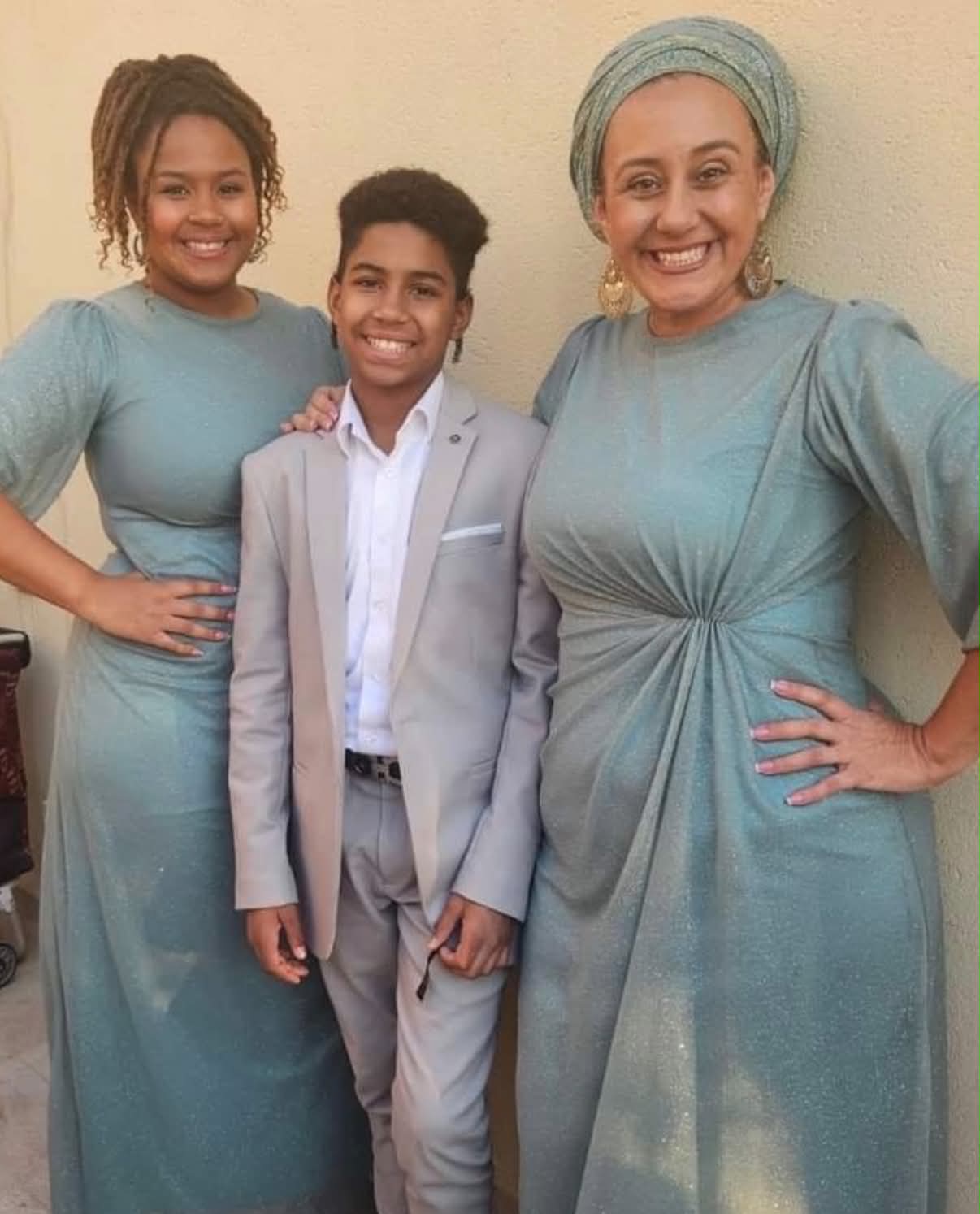
"I Get to Say Out Loud: ‘Shema Yisrael’"
Daniela recounts her extraordinary journey in her moving book, From the Flames of the Inquisition to Torah, in which she describes in detail the dramatic transformation of faith that followed her discoveries.
For Daniela, however, the book is not simply the story of changing religions or uncovering a remarkable genealogical secret.
It is the story of reconnecting two ends of a chain that appeared to have been severed centuries ago.
"The first time I lit Shabbat candles, while visiting Mexico, I cried", she says. "I realized I was lighting the candles not just for myself, but for every one of my ancestors who did not have that freedom.
"At that moment, I felt that I had revived what the Church and the Inquisition had so badly wanted to erase: my heritage, my direct connection to the Creator, and my true purpose on this earth.
"My grandmother’s name was Esther. I took Esther as my second name, and today I am Daniela Esther bat Sara, because by then I understood what she had carried.
"In Jewish theology there is a concept called Hester Panim, the hiding of the face of God. The Hebrew word for hiding is hester, and the name of the queen is Esther. To me, that is not coincidental. The Book of Esther is unique in that God’s name does not appear explicitly in its text, and yet His fingerprints are on every page, working through every apparent accident, every coincidence, every event that seems random".
Daniela says that Jewish tradition teaches that even when God appears absent from the story, He may in fact be present in ways that are hidden from view.
"Esther was a hidden Jewish woman, living inside an empire that did not know who she truly was. And in a way, so was my grandmother Esther.
"Every year during Lent, she gave up bread. She avoided certain foods. She covered the mirrors when someone died. She checked her eggs. And quietly, over and over, she would say, ‘There is only one God’.
"She never knew she was echoing the central declaration of the Shema. She was a hidden Jewish woman, concealed inside a Catholic family in Mexico, passing down the bones of a faith".
Daniela Esther believes that her grandmother preserved a language of family habits and rituals that may have originated in Jewish tradition, customs that survived in places where the Inquisition could not reach.
"She did not know what she was doing", Daniela says. "She only knew what her mother had taught her, and what her grandmother had taught her mother, passed down from generation to generation in an unbroken chain stretching back across five hundred years of survival.
"I am the first woman in this family in more than five hundred years who gets to say out loud: ‘Shema Yisrael, Adonai Eloheinu, Adonai Echad’.
"One of my ancestors screamed the Shema while they lit the fire beneath him. He did not scream it because he had won a theological argument. He screamed it because it was the truest thing he knew.
"His prayers led me home".

