

Magazine
Wrapped in a tallit in the United Arab Emirates
Discover how Orthodox Jewish photographer Miki Spitzer captured a remarkable image of a man wearing a tallit and tefillin in the Emirati desert, creating a powerful symbol of faith, Jewish identity, and the historic Abraham Accords
- David Fried
- | Updated
 (Photo: Miki Spitzer)
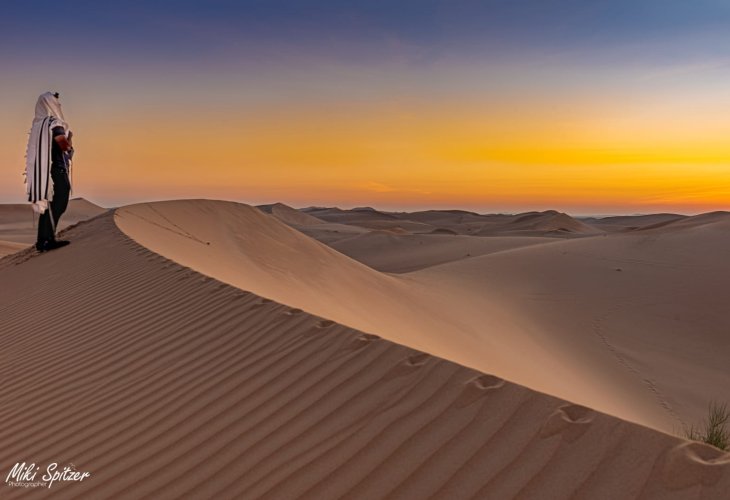
As an Al Jazeera news anchor reported on the historic peace agreement between Israel and the United Arab Emirates, a striking image appeared on the screen behind him: an Orthodox Jewish man, wrapped in a tallit, standing on a mountain in the Emirati desert.
The photograph was extraordinary. Taken in an Arab country that, at the time, had no formal diplomatic relations with Israel, it captured a moment that once seemed almost unimaginable. The image quickly spread across social media and appeared in news reports around the world, becoming an unexpected symbol of the historic agreement.
"I took that photograph," says Miki Spitzer, a landscape and nature photographer from Beitar Illit.
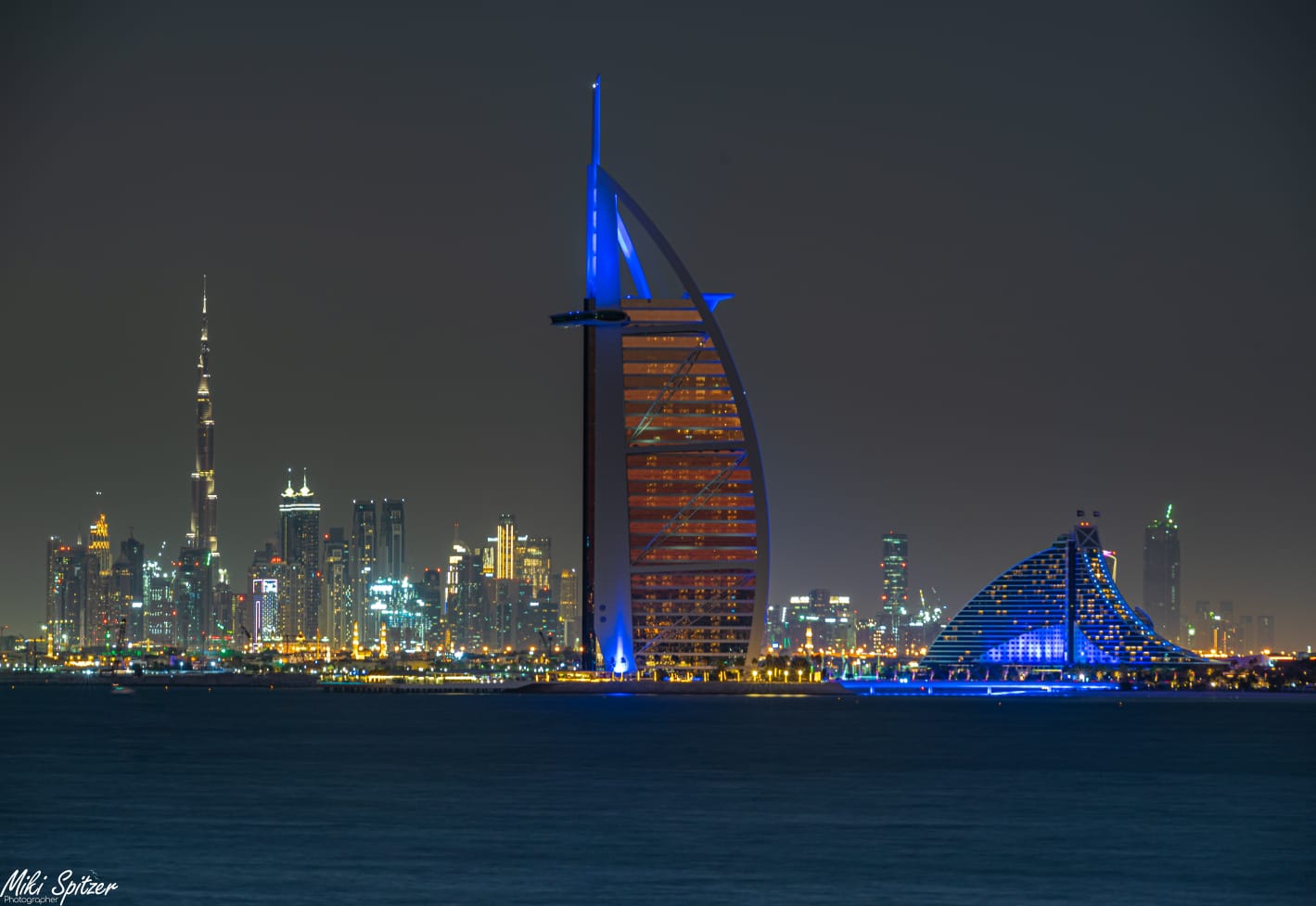 Photo: Miki Spitzer
A Jewish Prayer Shawl in the Emirati Desert
"I was visiting Abu Dhabi at the time," Spitzer recalls. "On the morning I took the photograph, I set out two hours before sunrise. I wanted to reach a particular location in time to capture the rising sun over the desert."
He hired a local driver and traveled with a friend into the vast desert landscape surrounding the cities of the United Arab Emirates. After two hours of driving along rugged mountain roads, they finally reached their destination just as the first rays of sunlight appeared on the eastern horizon.
"The journey was difficult, but the moment we arrived, we knew it had been worthwhile. Before us stretched an extraordinary desert landscape. In the distance, the blue and white sky seemed to merge with the warm brown tones of the endless sand, creating a breathtaking scene."
Standing near the edge of a towering cliff, Spitzer began preparing his camera. His friend, wearing a tallit and tefillin, climbed onto a nearby dune and stood against the vast desert backdrop.
"There he was, wrapped in the symbols that have accompanied the Jewish people for thousands of years, standing on the soil of an Arab country that, at the time, was still officially hostile to Israel. It was an incredibly moving experience."
The photograph would later take on a significance that neither man could have anticipated.
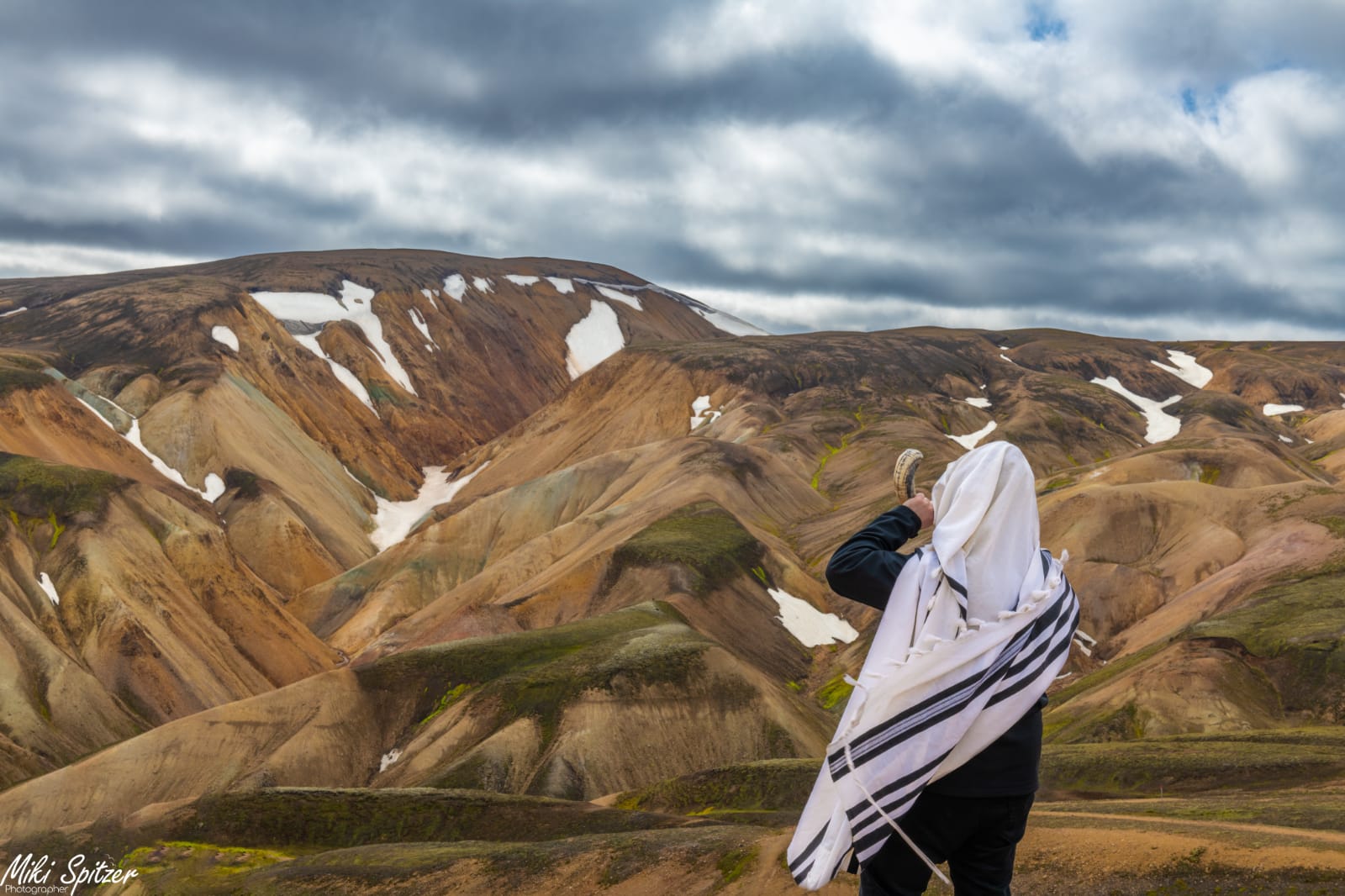 Photo: Miki Spitzer
What kind of reactions did you receive when the image was published?
"The responses were mixed," Spitzer explains. "I received negative comments from people throughout the Arab world who opposed the peace agreement and somehow decided to direct their anger at me. But there were also many deeply moving reactions from Jews and non-Jews alike. Even secular Jews wrote to tell me how emotional they felt seeing an Orthodox Jew wearing a tallit and tefillin in an Arab country."
How an Israeli Photographer Entered the UAE Before the Abraham Accords
Spitzer had been working professionally as a landscape and nature photographer for approximately two years when the photograph gained international attention. During that time, he had already traveled extensively, capturing hundreds of remarkable images in destinations ranging from Alaska to Europe.
"I've always loved photography," he says. "Eventually, I decided to turn my hobby into a profession and enrolled in a professional photography course. Because of my love for nature, I chose to specialize in landscape and nature photography."
For Spitzer, photography is more than a profession. He sees it as an opportunity to inspire others by revealing the beauty of Hashem's creation. "Through my photographs, I allow people to experience the wonders of the natural world and the extraordinary beauty of creation. That gives my work a spiritual dimension beyond the images themselves."
At the time you took the photograph, Israeli citizens could not freely enter the United Arab Emirates. How did you manage to visit?
"I had traveled to many countries, and at some point, I decided that I wanted to photograph Abu Dhabi. The UAE had become increasingly popular among photographers because of its monumental architecture and impressive artistic installations."
However, when Spitzer investigated the entry requirements, he discovered that an Israeli passport would not be sufficient. "Despite the gradual warming of relations between the countries, the UAE still wouldn't allow me to enter on an Israeli passport."
Rather than abandon his plans, he found another solution. His grandmother was originally from Hungary, which enabled him to obtain a Hungarian passport. "Once I had the Hungarian passport, I could enter the UAE without difficulty."
And so, Spitzer and his traveling companion set out for a country where their Israeli identity still carried considerable sensitivity.
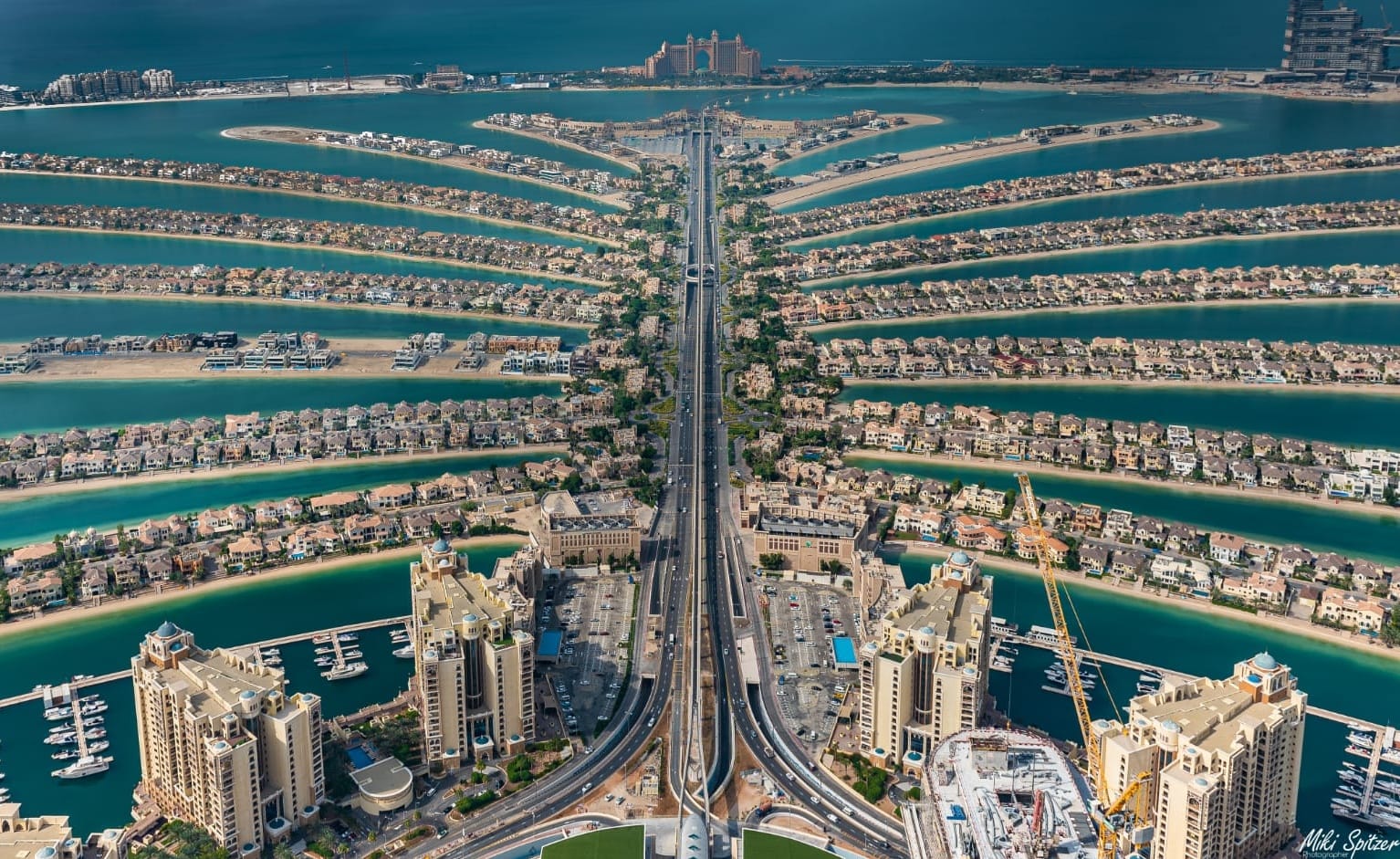 Photo: Miki Spitzer
Did you need to hide your Jewish identity while traveling through the UAE?
"Dubai isn't a radical Muslim city," Spitzer explains. "It's a modern, developed place that, in many ways, feels more European than people might expect. I found it to be very open, with tourists from around the world, including many Western visitors."
Nevertheless, he avoided displaying his religious identity openly. "At the time, I didn't walk around Dubai or Abu Dhabi with a visible kippah or tzitzit. Israel and the UAE hadn't yet established diplomatic relations, and I was concerned about identifying myself publicly as a Jew."
His concerns were not directed solely toward Emirati residents. Dubai attracted visitors from numerous countries, including some with strongly anti-Israel positions. "I felt it was wiser to be cautious," he explains.
According to Spitzer, the atmosphere changed considerably following the signing of the Abraham Accords at the White House. "The Abraham Accords changed everything. If I were traveling there after the agreement, I would feel much more comfortable walking around openly with a kippah."
The response to his photograph reinforced that impression. "After the agreement was signed and the image began circulating, I received many positive messages from Emirati citizens. Some even shared my photographs throughout the Arab world to demonstrate that genuine peace was developing between the two countries."
For Spitzer, these reactions illustrated just how dramatically attitudes appeared to have changed since his original visit.
Discovering the Modern Cities of the Desert
The UAE's transformation from a desert landscape into a center of modern architecture and luxury tourism left a strong impression on Spitzer.
"The first thing you notice is that this is fundamentally a desert country," he says. "It's nothing like France or Hungary, or cities such as Paris and Prague. Yet thanks to the wealth generated by its oil resources, the country's leaders have created a remarkably advanced and modern environment."
During his visit, Spitzer explored areas filled with towering skyscrapers, monumental buildings, and striking architectural designs. "Almost every building seemed incredibly modern and technologically advanced. Even the cars on the roads were luxurious."
He laughs at the misconceptions some Israelis have about the region. "Some people imagine that everyone in the desert still travels by camel. In reality, you see expensive luxury vehicles everywhere, far more frequently than in most other countries."
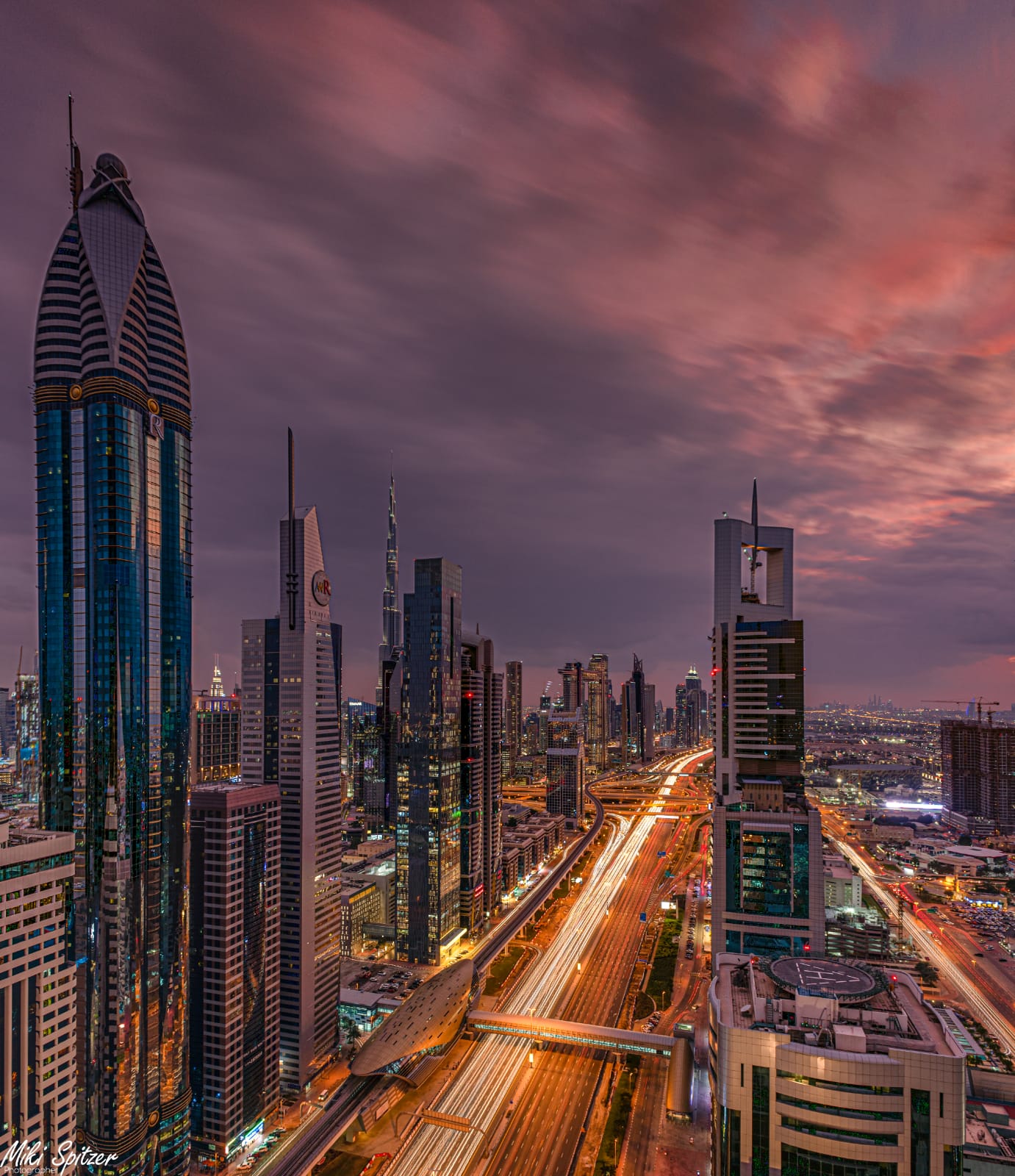 Photo: Miki Spitzer
Did you meet members of the local Jewish community?
"Yes, I did," Spitzer replies. "There was already an established Jewish community, including a synagogue and a Chabad House."
Before the Abraham Accords, however, the community maintained a relatively discreet presence. "The synagogue was located inside a private villa. If you didn't already know it was there, you would never have guessed that the building was used as a synagogue."
Although local Jews had maintained positive relations with the authorities even before normalization, they generally preferred to operate quietly. "They had good relations with the government, but they kept a low profile. I imagine they had their reasons."
Spitzer explains that many Jewish residents were European businesspeople attracted by the UAE's favorable tax environment. "Most of the Jews I met were originally from France and Belgium and had moved there for business."
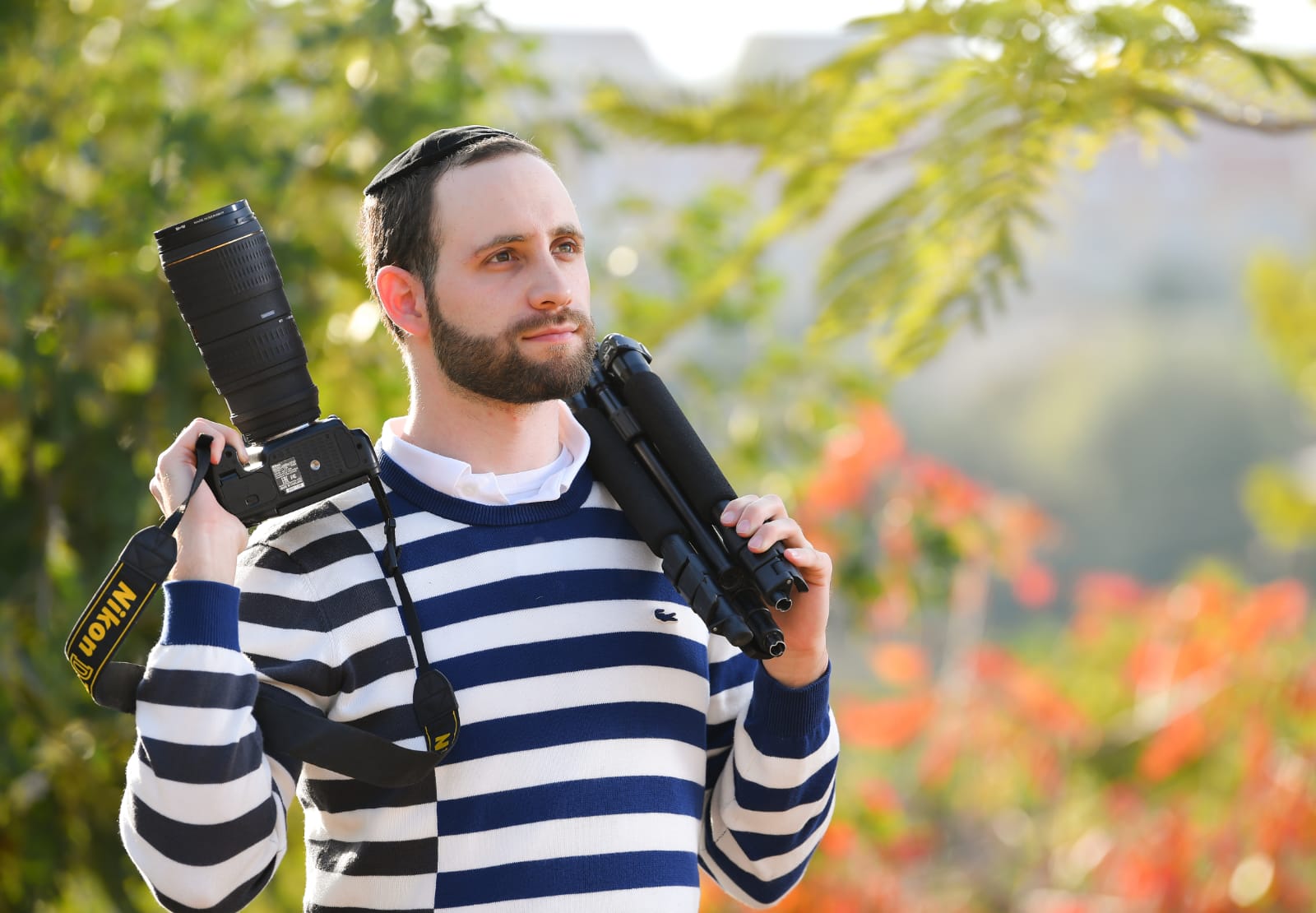 The photographer Miki Spitzer
What would you recommend to those considering a trip to the UAE?
"The most important thing to understand is that summer is not a good time to visit," Spitzer advises. "Temperatures can exceed 40 degrees Celsius, and people spend very little time outdoors. They move between their homes, workplaces, and other air-conditioned locations, usually by car." Winter, he says, offers a far more comfortable experience. "The weather is relatively pleasant, and visitors can enjoy a wide range of attractions."
Among the attractions he describes are enormous shopping malls, impressive aquariums, penguin exhibits, artificial islands, and one of the world's largest indoor ski facilities. However, he warns that some attractions can be expensive. "Entrance fees can be very high. On the other hand, accommodation can be surprisingly affordable."
His overall recommendation is to plan a relatively short visit. "There are some fascinating attractions, including the artificial islands and impressive architecture, but in my opinion, three days are enough to see most of the main highlights."
The Hidden Work Behind a Perfect Photograph
Although his photographs capture seemingly effortless moments of natural beauty, Spitzer emphasizes that landscape photography requires extensive planning and patience.
"People often assume that nature photography is simple. They think you choose a beautiful location, arrive with your camera, and take a picture. But the reality is much more complicated."
Before every photography session, he researches the location, accessibility, weather forecasts, lighting conditions, and the best possible vantage points. "Sometimes I have to wait for sunrise or sunset to capture the right colors and atmosphere. Even then, things don't always go according to plan. Clouds may obscure the sun despite a favorable forecast, or the lighting may simply not be right."
On average, he estimates that a single photograph requires approximately three hours of work. Some images demand considerably more.
During a trip to Iceland, Spitzer traveled three hours in each direction to photograph a remote landscape. "When we arrived, the scenery was absolutely extraordinary. It looked like something from the very beginning of creation."
He launched a drone above a meeting point between several rivers crossed by a bridge. Just as the camera was positioned, a yellow vehicle drove across the bridge. "The yellow car added something special to the composition. The photograph ended up looking almost like a satellite image."
His visit to Iceland also included a memorable Shabbat at the local Chabad House, where he joined Jewish travelers from Israel and elsewhere, along with the American ambassador to Iceland, who was Jewish. "We spent Shabbat together in this remote place, far from familiar surroundings. Yet the Jewish spirit, the Shabbat songs, and the traditions that accompany Jews wherever they go were all there. It was deeply moving."
Not every demanding photographic journey ends successfully. On another occasion, Spitzer traveled a considerable distance to photograph the stars from a special observation point in Israel, only to discover that clouds had completely obscured the sky.
Yet such disappointments are part of the profession. "In Iceland, the challenge was even greater because during the period I visited, we had only about three hours of daylight. Every opportunity had to be planned carefully."
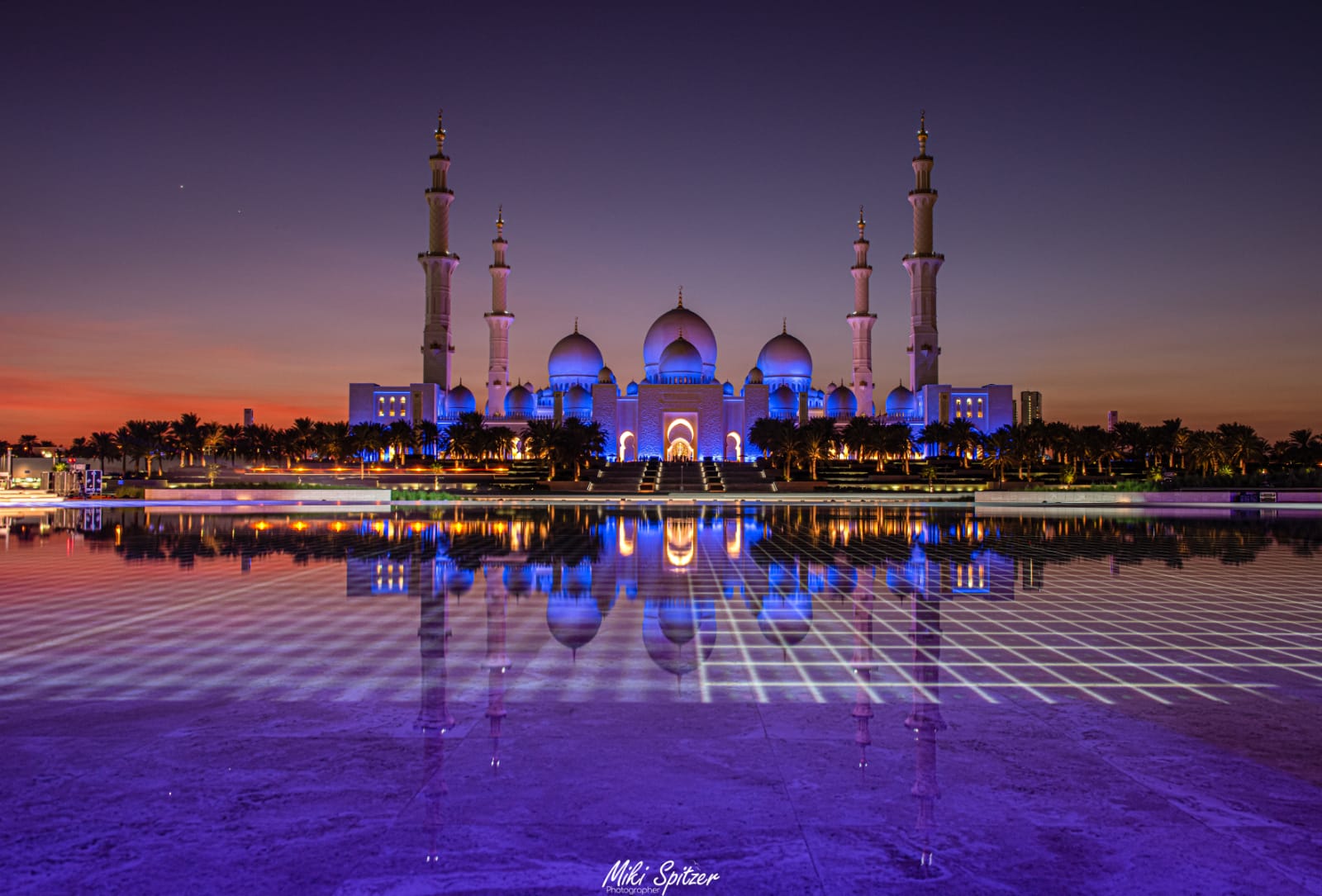 Photo: Miki Spitzer
Is there a particular type of photograph you especially enjoy taking?
"I particularly love photographs featuring a tallit," Spitzer says. "I've taken eight or nine images like that."
His interest is not merely artistic. "I believe a photograph can create a Kiddush Hashem, a sanctification of God's name, just as the photograph I took in the UAE did."
For him, combining Jewish symbols with magnificent natural landscapes creates an opportunity to communicate something meaningful without words.
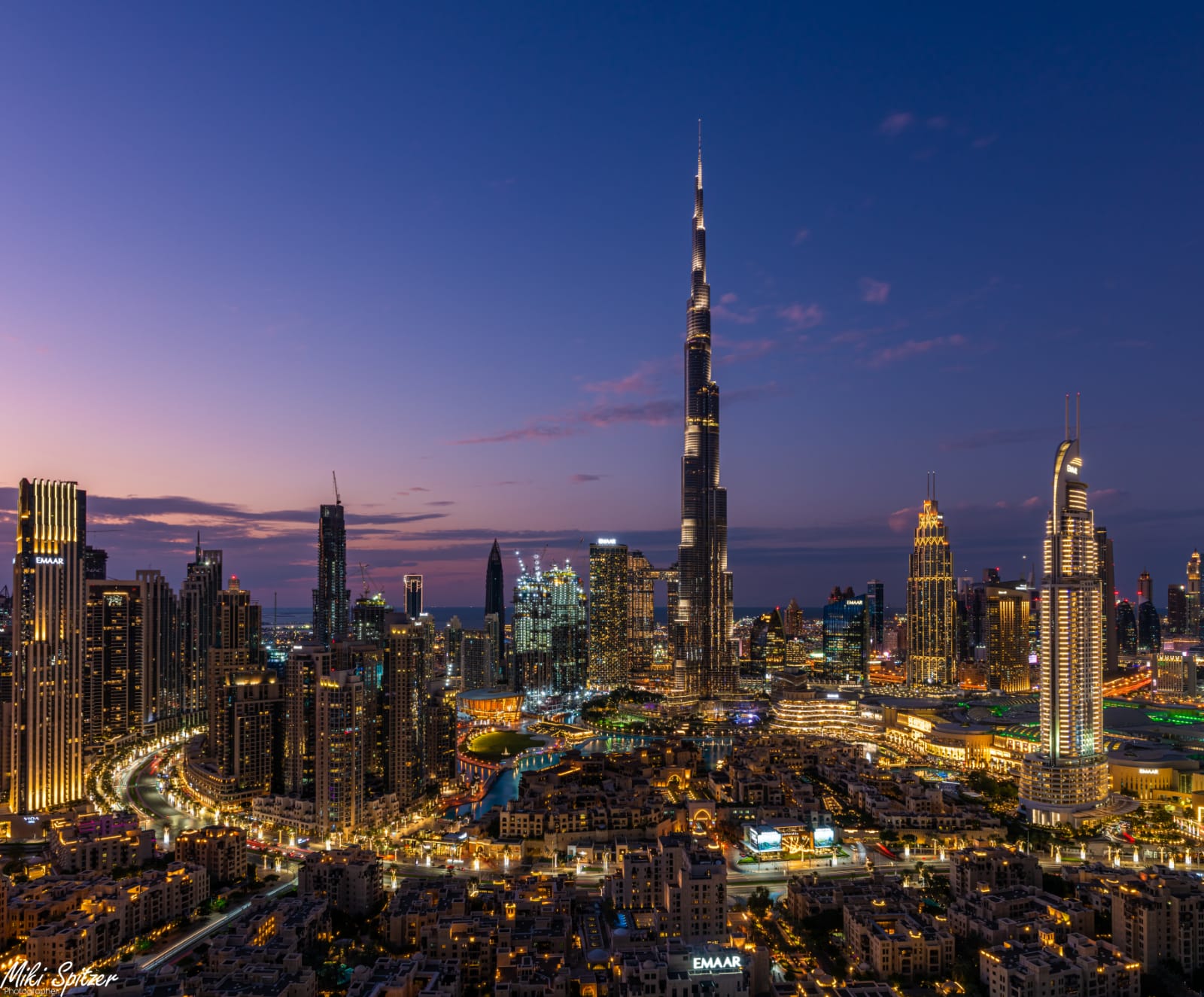 Photo: Miki Spitzer
An Awkward Encounter With a Hungarian Pilot
Spitzer recalls another memorable incident from his trip to the UAE, this time involving the Hungarian passport that had made his visit possible.
"Because I was keeping my Israeli identity private, I introduced myself as a Hungarian citizen," he explains.
One day, he booked a helicopter flight over Palm Jumeirah, Dubai's famous artificial island, hoping to photograph its distinctive shape from above. "When I arrived at the flight counter, I showed my passport. The employee became very excited and told me that my helicopter pilot was also Hungarian."
Before Spitzer could react, the employee called the pilot over. "The pilot came running toward me, embraced me enthusiastically, and immediately began speaking Hungarian."
There was just one problem. Spitzer didn't understand a word. "I had to explain, rather awkwardly, that I didn't speak Hungarian because I hadn't actually been living in Hungary."
The explanation apparently failed to satisfy the pilot. "During the flight, he turned to me and asked, 'Tell me the truth. Where are you really from?'"
Spitzer finally admitted that he was Israeli. "The pilot immediately understood why I had presented myself as Hungarian. He smiled and didn't say anything else. Thankfully, the whole incident ended well."
Despite his initial caution, Spitzer says that many Emiratis he encountered expressed genuine admiration for Israel. "One person told me that we live in the Holy Land. Another spoke admiringly about the Israeli Air Force, which he considered one of the best in the world." These encounters challenged some of his expectations and left him with a deeper appreciation for the complexity of relations between people from different backgrounds.
What began as a photography expedition ultimately became something far more significant. Through a single image of a Jewish man wrapped in a tallit against the vast Emirati desert, Spitzer captured a moment that would later symbolize a historic shift in relations between Israel and the United Arab Emirates.
For a photographer who sees his work as a spiritual mission, that photograph remains a powerful reminder that sometimes, one image can convey a message of faith, identity, and hope more powerfully than a thousand words.

