

Magazine
Meet Noam Jacobson: The Comedian Bringing Torah to TikTok
How did a musician and comedian become an unlikely Torah sensation? Noam Jacobson shares his struggles with anxiety, his faith, and the story behind his success.
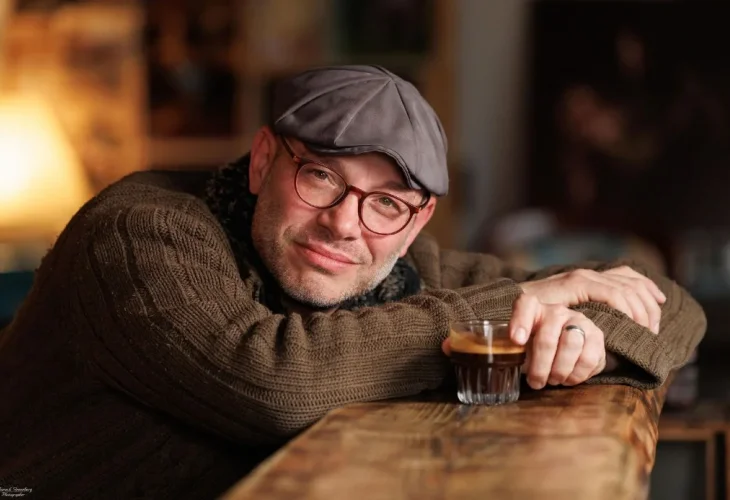 Noam Jacobson (Photo: Baruch Greenberg)
When Noam Jacobson posts a new video, his hundreds of thousands of followers know they're in for something different. Instead of a traditional lesson on the weekly Torah portion, they get an entertaining mix of storytelling, humor, and thoughtful insights that resonates with Jews from all walks of life.
But growing up in Petah Tikva, Israel, as an active member of the Bnei Akiva youth movement, Jacobson never imagined he'd become one of the country's most popular voices making Torah accessible on social media.
Now 51, Jacobson lives in Efrat with his wife, Yael, a social worker, and their four children. His journey to becoming a musician, actor, comedian, and unlikely Torah educator has been anything but conventional.
“I grew up in what seemed like a typical religious Zionist home,” he recalls. “My father, Geoffrey, or Yaakov in Hebrew, of blessed memory, passed away a few weeks ago. He was born in South Africa and moved to Israel right after the Six Day War because he believed so strongly in Zionism and wanted to help build the country. My mother grew up in Haifa in a very traditional German Jewish family associated with Poalei Agudat Yisrael. They met at Bar-Ilan University, and the rest is history.”
His family's story also includes a medical crisis that changed the course of his life. About 18 years ago, his mother was diagnosed with an aggressive form of stomach cancer and underwent extensive surgery.
“My mother is living proof of how powerful the human spirit can be,” he says. “The doctors had to remove parts of her internal organs, and she went through an incredibly difficult fight for her life. At the time, I was married, but we didn't have children yet. Suddenly, it hit me that my mother might never get to meet her grandchildren. That realization really shook me and motivated me to start a family.”
Jacobson and his wife named their first son Maayan Chaim, meaning “wellspring of life,” to reflect the new chapter beginning in their lives. “Thank Hashem, my mother is a fighter. She survived against all odds.”
From Yeshiva Student to Musician and Comedian
Jacobson attended Bar-Ilan Technological High School, where one of his classmates was Major Roi Klein, Hy”d, who was killed during the Second Lebanon War after jumping on a grenade to save his fellow soldiers.
“Roi was my classmate,” Jacobson says. “When I perform my show The Light at the End, which deals with the difficult years we've been through and how we cope with pain, I often talk about him. I want people to understand that Roi wasn't some larger-than-life figure who was completely different from the rest of us. He was a mischievous kid, a regular person. And that's what makes his story so powerful. Courage and greatness aren't reserved for a select few. They're qualities that ordinary people can discover within themselves.”
After high school, Jacobson studied at Yeshivat Har Etzion, where he developed a deep interest in studying the Bible. He later moved to Yeshivat Otniel, which was known for its innovative approach to combining Torah study with spirituality, creativity, and the arts.
“At Otniel, I met Rabbi Benny Kalmanzon and Rabbi Menachem Froman, of blessed memory. It was a place that opened my eyes to new possibilities. We explored creative approaches to midrash, movement, meditation, and things you simply didn't find in other yeshivas at the time. That's where I realized that Torah and art don't have to compete with each other. They can actually bring out the best in one another.”
After serving in the Golani Brigade and traveling through the Far East, Jacobson studied music at the Rimon School of Music and Bar-Ilan University. He eventually started a wedding band with several friends called Inyan Acher, meaning “Something Different.” Their goal was to bring a fresh approach to music at religious Jewish weddings.
“Twenty-five years ago, music at religious wedding ceremonies was mostly wind instruments and the same familiar arrangements,” he explains. “We wanted to shake things up. We brought in Jewish rock, original arrangements, and a more natural, joyful style of singing. We weren't trying to imitate anyone. We wanted to create something different.”
As it turned out, the wedding industry also brought him something much more personal. “I actually met my wife at one of the weddings where I was performing. We've been together ever since.”
His next career move came through an unexpected phone call.
“One day, my friend Shlomo Blass, who's a very talented creator, called me and said, ‘I think you'd be great for something. Come audition at Moshav Nechalim.’ I showed up, they gave me a script, and I just went for it. The next day, they called and told me I'd been accepted to Latma.”
Latma was an Israeli political satire project that offered a right-wing Zionist perspective and challenged mainstream media coverage. For Jacobson, it became an unexpected training ground for acting.
“I never went to acting school, but Latma taught me so much. Every week, I got to play different characters, do impressions, and try things I'd never done before. I discovered sides of myself I didn't even know existed. Since then, I've continued acting in television shows, on the Meir channel, and in theater productions.”
The Personal Struggle Behind the Humor
Despite his success as a performer, Jacobson has also faced difficult periods that audiences rarely see. Several years ago, he experienced severe anxiety that lasted for about six months.
“Anxiety isn't always something that comes and goes in a few minutes,” he explains. “For six months, I lived with this constant fear that just wouldn't go away. I couldn't fall asleep unless I was completely physically exhausted. I lost about 11 pounds because I couldn't eat. And the hardest part is that life doesn't stop. You're still a father, a husband, and an actor who has to show up for work.”
He remembers struggling to keep it together while filming.
“You're standing on set, your legs are shaking, your heart is racing, and someone yells, ‘Action!’ Once, I had to stop filming for 20 minutes. I went outside and just cried. The people on set were upset because they thought I was being difficult or acting like a diva. I couldn't explain what was happening to me. It was incredibly embarrassing.”
So what helped him get through that period?
“Over time, I found something that really helps me. When I'm struggling, when I feel like nobody needs me and I don't have anything to offer, I go play music for patients in hospitals. But I don't go there thinking I'm doing someone a favor. I approach it with humility. I knock on a patient's door and ask, ‘Would you be willing to let me do something for you?’”
For Jacobson, those visits became a powerful source of comfort and perspective.
“When I give someone the opportunity to need me, something inside me starts to heal. Playing music for patients helped me put things in perspective and find joy in life again.”
How a Torah Video Went Viral on TikTok
In recent years, Jacobson has found a way to bring together his passion for Torah, music, comedy, and storytelling. His short videos about the weekly Torah portion have attracted a huge following, reaching both religious and secular audiences.
And it all started by accident.
“I realized that if I wanted to promote my music, I needed to be active on social media,” he says. “I tried a few different things, and one day, just before Parashat Bereshit, I posted a short midrash about the Torah portion. After Shabbat, I checked TikTok and saw that it had 20,000 views. I couldn't believe it. I thought, ‘Who are all these people going on TikTok to watch videos about the weekly Torah portion?’”
He posted another video, then another, and his audience kept growing.
His videos draw on Torah insights from scholars including Rabbi Yoni Grossman, Rabbi Tamir Granot, Rabbi Yoel Bin-Nun, and Rabbi Yaakov Medan. Their popularity has inspired Jacobson to work on a book collecting these teachings, titled Parashiyat HaShavua, a playful variation on the Hebrew phrase for the weekly Torah portion. The book project follows a successful Headstart crowdfunding campaign that helped support the release of his new music.
“It's incredibly moving to know that I've become someone who introduces so many people to the Bible,” he says. “I don't look like a rabbi, or even like a typical yeshiva student, but somehow people connect with what I'm doing.”
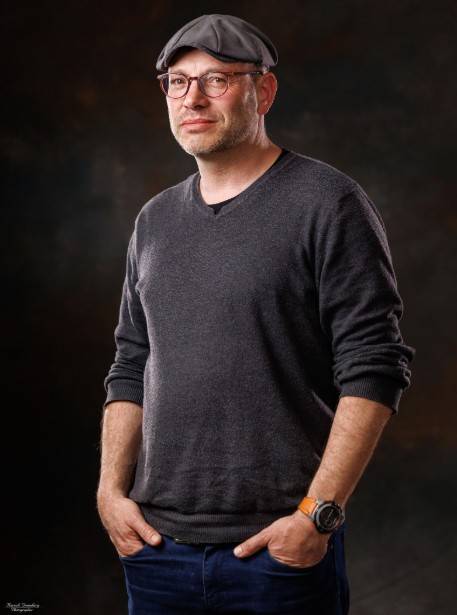
One question he frequently gets is why he wears a hat instead of a kippah.
“About 20 years ago, I went through a period when I was trying to figure out who I was. I felt like wearing a kippah made me a representative of an entire community. People suddenly thought they had the right to comment on everything I did, how I spoke, how I walked, how I behaved. I didn't want to carry all those expectations anymore. My relationship with Hashem is personal. It's between me and Him. I'm absolutely part of the religious Zionist community, but wearing a hat gave me the freedom and peace of mind I needed.”
Although his approach may be unconventional, Jacobson takes his role in sharing Torah seriously.
“I feel incredibly fortunate to be able to share Torah and bring people joy. People tell me that the Torah ideas they discuss with their children at the Shabbat table come from my videos. I have tens of thousands of people in my WhatsApp groups. That's a huge responsibility, but it's also a wonderful way to feel connected to the Jewish people.”
Alongside his videos and upcoming book, Jacobson continues to write, record, and perform music. He has released songs with Israeli artists Ariel Zilber and Subliminal and is touring with his show The Light at the End.
His collaboration with Subliminal and Elnatan Shalom, Im Ata Iti (“If You're With Me”), has received significant attention online and on Israeli radio. The song was inspired by the events of October 7 and the importance of unity among the Jewish people.
“Baruch Hashem, the song has done really well, and it came from a very personal place,” Jacobson explains. “I still can't shake the images of the burning streets and the terrible atmosphere of October 7. In the first days of the war, we knew how to put our differences aside, stand together, and remember something simple: when we're united, nobody can defeat us.”
For Jacobson, the song carries a message he believes is especially important today.
“We wrote it because we don't want to wait for another tragedy before coming together. These days, when people want to suggest that someone is outside the mainstream, they call that person ‘controversial.’ But why has disagreement become such a bad thing? Our entire Jewish tradition is built on debate and different opinions.”
He believes that unity doesn't require everyone to think alike. Instead, it means learning to disagree while maintaining respect and a sense of shared purpose.
“We need to learn how to disagree with one another while holding on to our deep love for the Jewish people and the State of Israel. I pray that this song reaches people's hearts and makes a difference. Am Yisrael Chai.”

