

Magazine
From Secular Journalist to Orthodox Jew: Efrat Barzel's Inspiring Journey of Faith
Journalist and emotional counselor Efrat Barzel shares how Rabbanit Batsheva Kanievsky transformed her life, the challenges of embracing Torah observance, and the power of faith, compassion, and family unity
- Eti Dor-Nahum
- | Updated

"I miss Rabbanit Batsheva Kanievsky, of blessed memory," says Efrat Barzel, a journalist, lecturer, and emotional counselor. "I visit her grave, speak about her constantly, write about her, and remain in contact with her family. She taught me to recognize the good in others rather than focus on their shortcomings. That is the secret of positive psychology: when you see the good in another person, you allow that goodness to grow, both within them and within yourself."
Barzel is a mother of eight and a grandmother who lives in Bnei Brak. Her journey from secular Israeli society to Orthodox Jewish life has shaped not only her personal identity but also her professional work. A lecturer on personal growth and a counselor specializing in emotional well-being, she published a book titled Kol Kach (So Much), which explores faith, relationships, personal transformation, and the emotional complexities of becoming religiously observant.
"The book is the product of many years of my own journey toward Torah observance," she explains. "It also draws heavily on my work in emotional counseling and on the sociological observations I began making when I was a journalist in the secular media."
Throughout her life, Barzel has been fascinated by human behavior. Even as a child, she would observe how people lived, interacted, and responded to their circumstances. Over time, this curiosity developed into a deeper understanding of the emotional stages people experience when undergoing significant personal change.
"When someone discovers the world of Torah and begins growing closer to their Creator, they go through a profound internal transformation," she says. "Although everyone's experience is unique, certain emotional stages are remarkably similar. My book attempts to map out those stages so that readers can recognize themselves along the way."
Barzel and her husband were fortunate to receive guidance from a respected and sensitive Haredi rabbi during their spiritual journey. "He understood human nature and knew how to guide us toward serving Hashem with genuine happiness. Without self-awareness and proper guidance, a person making such significant changes can easily encounter emotional and social difficulties."
Her book brings together personal essays, some originally published in her regular column in the Haredi newspaper Yated Ne'eman and others written especially for the collection.
Childhood Memories That Sparked a Spiritual Search
Barzel grew up in a prominent secular Israeli family. The eldest of two children, she was raised by parents who were both respected media professionals. Her father, Gabi Yinon, was a broadcaster for Kol Yisrael and a jazz expert, while her mother, journalist Vered Yinon, spent many years reporting on consumer affairs and tourism.
When Barzel was six, her father was appointed an aliyah emissary in England. During their stay, the family regularly spent Shabbat with her great-aunt Madi and her husband, a Belz Hasid who wore a traditional shtreimel.
"They had four children, which seemed like an enormous family to me at the time," Barzel recalls with a smile. "Every Shabbat, we would visit them, and I loved everything about the experience: the Shabbat songs, the Torah discussions, and the delicious food. It was authentic Judaism at its finest."
One particular memory remains especially vivid. "I remember the enormous chandelier hanging above the Shabbat table, filling the room with light. Deep inside, I felt as though that light was illuminating something within me as well. Even when we went to London's parks afterward, the experience stayed with me. The light, the Torah, and the soulful melodies never left my heart."
Nevertheless, Barzel continued living a secular lifestyle. She attended a secular high school and later served in the Israeli military. Throughout those years, she grappled with fundamental questions about existence and purpose. "I constantly wondered why we are here and what the purpose of the Jewish people is. I couldn't find answers that truly satisfied me."
After completing her military service, she married a sports journalist who was then working for Yedioth Ahronoth. The couple settled in Tel Aviv and enjoyed an active social and cultural life.
"We attended premieres, performances, parties, and all kinds of cultural events. We were completely immersed in the Tel Aviv lifestyle," she recalls. "But at night, before going to sleep, I would read the Tanach. I knew that I had an unresolved connection with God, and I sensed that one day I would need to explore it more deeply."
Choosing Judaism While Living a Successful Secular Life
In her early twenties, Barzel attended a seminar on Judaism. Having pursued higher education, eventually earning both bachelor's and master's degrees, she approached the subject with intellectual curiosity that gradually developed into a serious personal commitment.
"I realized that Judaism wasn't simply folklore or a cultural tradition that I could enjoy whenever it suited me. It came with real obligations and a way of life rooted in halachah."
That understanding marked the beginning of her journey toward religious observance. Initially, her husband did not share her enthusiasm, but he soon began his own process of spiritual growth.
Barzel emphasizes that their decision was not motivated by hardship or personal crisis. "We weren't going through a difficult period. Quite the opposite. We were living what seemed like an ideal life, surrounded by the right friends, enjoying the right opportunities, and participating in the right social circles. I began becoming religious because I believed I had discovered something genuinely true."
Making that decision in the mid-1990s, however, came with considerable social pressure. "At the time, it was embarrassing to talk openly about God or becoming religious," she recalls. "It wasn't fashionable, and there was a certain stigma attached to it. I remember sitting in a café with friends and feeling uncomfortable admitting that I needed to leave before Shabbat began."
To avoid drawing attention to her changing lifestyle, she developed a strategy. "I would call everyone before Shabbat and then immediately after Shabbat ended, just to make everything appear normal. I didn't want anyone to suspect that I was becoming religious."
Rabbanit Batsheva Kanievsky: The Woman Who Changed Her Life
One of the most influential figures in Barzel's spiritual journey was Rabbanit Batsheva Kanievsky, of blessed memory. "She was the first Haredi woman I met while I was still wearing jeans," Barzel recalls. "She welcomed me with so much love."
Despite Barzel's extensive academic education, she found that Rabbanit Kanievsky offered a different kind of wisdom. "She taught me countless things through endless conversations and extraordinary patience. She took me under her wing and taught me about the inner strength of the Jewish woman, how to pray the Amidah, the meaning of a personal relationship with Hashem, and the influence a woman can have within her home."
Over time, the two women developed a deeply affectionate relationship. "She attended all our family celebrations. I spent countless hours in her home, and there was tremendous love between us."
What impressed Barzel most was the rabbanit's ability to make every visitor feel personally valued. "She gave so much of herself to everyone. Each person who walked through her door felt as though she had been waiting for them all day. She made people feel wanted and loved, almost as though they were experiencing how Hashem Himself welcomes them."
Rabbanit Kanievsky also helped Barzel navigate the challenges of becoming religious while her husband was still secular. "She taught me to see what was good in another person rather than focus on what was missing. She taught me to appreciate what was already there."
That lesson became central to Barzel's approach to emotional counseling. "When you recognize the positive qualities in another person, you create room for those qualities to grow. It changes both the person you're looking at and the way you relate to them."
Barzel remains deeply grateful for the relationship. "I miss her terribly. I visit her grave, stay in touch with her family, and speak about her constantly. She guided me into the world of Torah with such warmth, wisdom, and sensitivity. She opened an entirely new world of prayer and understanding for me."
As Barzel grew more committed to religious life, she left her position at Yedioth Ahronoth. Her husband also began embracing Torah observance, and for the next fifteen years, she devoted herself primarily to raising their children and deepening her Torah knowledge.
"I studied halachah and Jewish ethical teachings. My work during those years was to strengthen my relationship with Judaism and raise my family."
Building Bridges Between Religious and Secular Families
Several years later, Barzel returned to journalism, writing for Yated Ne'eman. After one of her articles attracted attention, the editor of Ketifah, the newspaper's women's supplement, invited her to contribute a regular weekly column.
Her writing focused on the emotional realities of becoming religiously observant, including subjects that people often hesitate to discuss openly.
"I wrote about what happens beneath the surface during the process of teshuvah. What does someone who becomes religious feel on Memorial Day, Independence Day, or Holocaust Remembrance Day? What do their secular parents experience when their child adopts a completely different lifestyle? How do these changes affect family celebrations and everyday relationships?"
Barzel's own family provided valuable insight into those questions. Her father, she explains, accepted her spiritual journey with understanding. "He's a thoughtful, intelligent man with a wonderful sense of humor. Although he isn't religiously observant, he grew up in a home with a strong connection to Jewish tradition."
Today, father and daughter sometimes appear together before audiences from different backgrounds, demonstrating how people with different beliefs can maintain mutual respect. "He understands the sensitivities of the audiences we address and knows how to communicate respectfully with people from different communities."
Her mother's response to the transformation was initially more complicated. "My mother is an exceptionally principled person, a journalist at heart who genuinely wants to improve the world. She notices people who are overlooked and is willing to fight for them. But she couldn't understand why I needed to become religious."
Over time, however, their relationship developed into one of deep mutual understanding. "Today, we have a wonderful relationship. That's the result of learning how to accept complexity. When you choose a path that differs from someone else's deeply held beliefs, it can create enormous tension. But you don't have to sacrifice love or family unity because of those differences."
For Barzel, maintaining close relationships with her parents was never negotiable. "I refused to give up my family connections because I was becoming religious. The challenge is learning how to build bridges."
Did you ever try to persuade your parents to become religious?
"No," Barzel replies. "Perhaps that was because I received such good guidance. I constantly consulted Rabbanit Kanievsky, who taught me to look at people differently."
She recalls once bringing her father to meet the rabbanit. "When she heard his beautiful radio voice, she blessed him and said, 'May you merit announcing the arrival of Mashiach on the radio with that voice.'"
The experience reinforced an important lesson about religious enthusiasm. "When people first become religious, they are often overflowing with excitement. They want everyone around them to see what they have discovered. That enthusiasm comes from a good place, but we must understand that other people may not be ready to see things the same way."
Rather than pressuring others to change, she believes it is essential to direct one's spiritual enthusiasm toward personal growth, understanding, and respectful relationships.
Faith, Psychology, and the Need to Feel Loved
Today, Barzel's work in emotional counseling brings together her interest in psychology with her understanding of Jewish teachings.
"Modern psychology analyzes the human mind, but I find it fascinating that many of the ideas explored in contemporary psychological theories also appear in our traditional Jewish sources," she says.
She believes that psychological understanding and spiritual awareness can complement one another, particularly when addressing questions of identity, relationships, and emotional well-being. "In the past, some approaches to modern psychology seemed to leave little room for God in a person's life. Today, there is growing recognition of the importance of faith and spirituality."
For Barzel, a personal relationship with Hashem is the foundation of religious life. "Whether you're praying in a synagogue, sitting beneath a tree, or standing beside the sea, the connection with Hashem is what matters. That's where teshuvah begins."
Prayer plays an important role in her family's life, but she avoids turning it into a source of pressure for her children. "I don't force my children to pray or constantly question whether they've prayed. I believe that when a person develops a genuine relationship with Hashem, Torah and mitzvot naturally become part of that relationship."
She describes faith as deeply personal. "A relationship with Hashem is something private, intimate, and internal. When that connection exists, there is a seed of faith within a person."
Barzel also sees a relationship between spirituality and the universal human desire for acceptance. "Everyone wants to feel loved. People look for approval, social media likes, and recognition for what they've written or accomplished. But underneath all of that is a much deeper longing: the desire to feel wanted, valued, successful, and worthy."
She believes that faith can offer a profound sense of belonging. "When you have a relationship with Hashem, you can experience the feeling that you are loved, wanted, and embraced."
When Children Choose a Different Path
In her counseling practice, Barzel works with Haredi parents whose children have moved away from religious observance, as well as with young people struggling to find their place within their communities.
She sees striking similarities between the emotional struggles of secular parents whose children become religious and religious parents whose children choose a secular lifestyle. "When a child takes a different path from the one they were raised to follow, parents often experience tremendous sadness, confusion, and helplessness," she explains.
Whether the child becomes more religious or less observant, the underlying emotional experience can be remarkably similar. "It's painful to watch someone you love make choices that you believe are mistaken."
For religious parents, the struggle may be intensified by the spiritual significance they attach to Torah observance. "When your entire worldview is built around holiness and serving Hashem, seeing your child move away from that path can be especially difficult."
Nevertheless, Barzel believes that the relationship between parent and child must remain central. "Parents need to remember that their child is good and that the child may still have faith and a personal connection with Hashem. Sometimes external expectations and pressures create unnecessary distance, preventing families from maintaining genuine closeness."
Her message is one of patience, acceptance, and unconditional love.
The Unique Strength of Jewish Women
Barzel also has strong views on contemporary feminism and the role of women in Jewish life.
"The Torah gives women an important and deeply meaningful place," she says. "A woman has a sacred role, and throughout my twenty years in the Haredi community, I have never personally felt discriminated against or humiliated because I am a woman."
She acknowledges that feminist concerns can be understandable from a secular or critical perspective, but she does not identify with an approach that frames the relationship between men and women primarily as a struggle. "I consider it a privilege to be a woman, a mother, and someone blessed with the emotional strengths and understanding traditionally associated with women."
Barzel supports women's right to work, earn a living, and vote, but believes that social change need not be accompanied by hostility. "Women deserve respect and opportunities, but I don't believe everything has to become a battle. Men and women are different, and I see that difference as something beautiful. Every woman has her own unique qualities and doesn't need to become someone she isn't."
A Field of One Hundred Flowers
Barzel's book, Kol Kach, explores a broad range of themes, including marriage, parenting, faith, relationships, emotional growth, and the complexities of moving between different cultural and religious worlds.
At its heart is the idea that holiness can be created through the way people treat one another. "Our childhood memories emerge from the emotional atmosphere of our homes," she explains. "That is where we receive the experiences and feelings that we later pass on to our children."
When a home is filled with tension or emotional toxicity, those memories can become painful. But understanding and compassion can transform the atmosphere. "With a little more awareness and kindness, we can begin seeing one another differently and build a genuinely loving Jewish home."
One of the book's most distinctive features is a collection of one hundred hand-drawn flowers contributed by women who played meaningful roles in Barzel's life.
The idea emerged during the book's design process. "Our graphic designer pointed out that we needed a small symbol to separate the different essays. I began thinking about what we could use, and while praying for inspiration, I had a wonderful idea."
She contacted friends and women who had influenced her life, asking each to draw a simple flower, much like the flowers girls doodle in their notebooks. The response was enthusiastic. Among the contributors were Sivan Rahav-Meir, Carmela Menashe, Mika Karni, Eden Harel, Aya Kremerman, Rabbanit Koldetsky, Rabbanit Chevroni, and many others.
"Together, we created a field of one hundred flowers," Barzel explains. "At the end of the book, there's a flower index identifying each woman and the flower she drew."
The collection reflects the diversity of relationships and experiences that have shaped her personal journey.
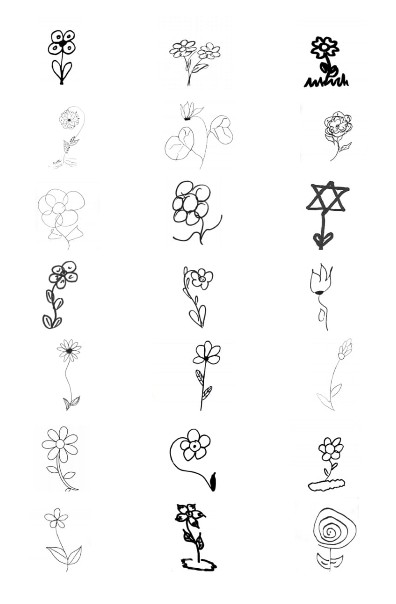 A field of 100 flowers. Credit: Maya Havlin
Why did you choose the title Kol Kach, meaning "So Much"?
"We grow up in a society that places tremendous importance on competition and achievement," Barzel explains. "We're constantly expected to excel."
Yet she believes that a person's worth should not depend solely on accomplishments. "One of the places where a person can feel most deeply loved is in a relationship with Hashem."
For women in particular, she sees a powerful desire to do good, nurture others, and fulfill responsibilities with care. "As women, we try so hard to do the right thing. We want to give, help, and succeed. You're trying so much, doing so much, and caring so much. That's why the title felt so right to me."
Can We Really Build Bridges Between Different Worlds?
Having spent much of her life navigating the differences between secular and religious communities, Barzel is convinced that genuine understanding is possible.
"It's absolutely possible," she says. "In fact, it's what I've been doing for most of my life."
Her book includes reflections on the concept of the Third Temple, which she connects to the emotional and spiritual foundations of family life. "When a couple comes to my clinic struggling with conflict, I see three homes in front of me: the home each person came from, the home they've built together, and the home their children will one day create."
To Barzel, every effort to strengthen a marriage or repair a relationship has implications that extend far beyond the people immediately involved.
She believes that individuals throughout Jewish history have worked tirelessly to create unity among the Jewish people, often by helping others navigate differences that seem impossible to reconcile.
Her own childhood gave her an early understanding of what it means to live between different worlds. "My parents divorced, and as a little girl, I often walked between the homes of my two grandmothers, who lived near each other," she recalls.
"At the time, I didn't realize that I would spend much of my life moving between different worlds, trying to make peace between my mother and father, between communities, and between people who see life differently."
Today, that childhood experience has become central to her life's work. Her message is simple but profound: "Please, don't fight. We can live together with love, understanding, and acceptance."

