

Personal Stories
The Language of the Soul: A Woman's Unforgettable Final Lesson
Chana Rotenberg spoke eight languages and lived a life filled with wisdom and joy. In her final days, one simple choice revealed what mattered most.
- Efrat Barzel
- | Updated
Sukkot has ended, and so has Simchat Torah. Even Isru Chag, the day following the holiday, has come and gone. But Chana Rotenberg, of blessed memory, passed away before any of them, on the Tuesday after Yom Kippur.
From the moment she closed her eyes for the last time at Shaare Zedek Medical Center in Jerusalem, I knew I wanted to write about her.
What a remarkable woman she was. Kind, wise, warm, and always smiling, with a face that could light up a room. She spoke eight languages, perhaps nine, depending on whom you ask. But I would say she spoke ten, because Chana also understood a language that cannot be taught: the language of finding joy in life.
Chana Rotenberg, z”l. How could anyone who knew her forget her?
And now, finally, I sit down to write. I know exactly what I want to say about the woman who was my most devoted reader, the one who always called to share her thoughts about something I had written, whether it was a column or an interview.
Chana will never call me again.
I begin typing in Hebrew, the only language I know, unfortunately, and suddenly the words seem to stop me.
You're writing about Chana tonight? Of all nights?
Why not? I ask myself. What's so unusual about tonight? Just let me write.
But something makes me look up from the screen, and suddenly I understand.
Tonight, of all nights, I'm babysitting two of my precious grandchildren. They're asleep in the next room, which is unusual enough. Normally, there's no chance they'd let Grandma sit quietly and write.
But these children are also Chana's great-grandchildren. Their mother, Shira, is Chana's eldest granddaughter, the one who first made her a grandmother.
And somehow, here I am, writing about Chana while her great-grandchildren sleep just a few feet away.
The Chandelier That Brought Us Together
Many people had no idea that Chana had been unwell in recent months. When news of her passing spread, I heard the same stunned question again and again: “How did I not know?”
Those words were especially poignant because they were also the title of Chana's book, How Did I Not Know?
In it, she described how she only discovered the full story of her parents' experiences during the Holocaust after she herself was married. Her father and mother, Rebbetzin Necha Horowitz, may she live a long and healthy life, had tried to protect their children from the horrors they had endured.
I knew Chana long before her granddaughter married my son.
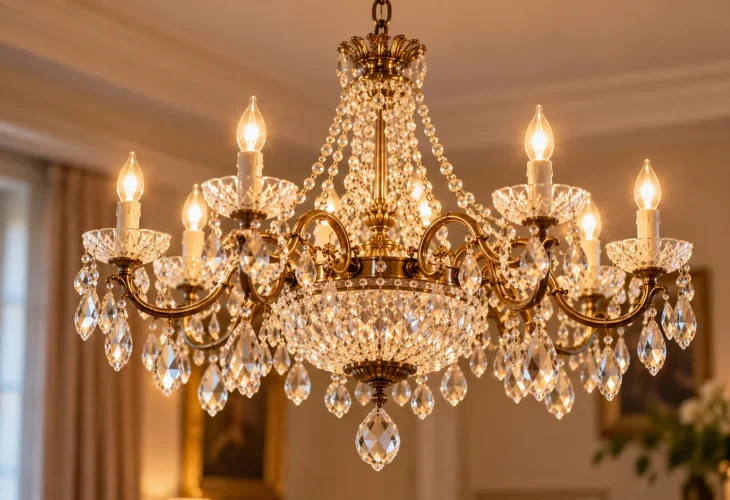
Years ago, I was invited to speak at the Bnot Elisheva seminary. During my lecture, I told a story about a beautiful chandelier that had once hung above the Shabbat table in the London home of my grandmother's sister.
To me, that chandelier represented so much more than a family heirloom. It symbolized the light of Torah, the warmth of family, and the love that fills a Jewish home. Nearly a century old, it now hangs above our own Shabbat table in Bnei Brak.
Chana was in the audience that day. Afterward, she approached me and asked whether she could come see the crystal chandelier for herself.
And she did.
She came with her mother, whom we affectionately called the Queen of England because of her extraordinary dignity and grace. The three of us sat together, drank tea, and talked.
That was the beginning of a connection that would become even more meaningful in the years to come.
The Email That Led to One Last Visit
Not long ago, I received an unexpected email.
“Hello, Efrat. My name is Tirtza Shiloni, and I'm attending the parenting workshop you're currently giving in Bayit Vegan. You don't have to remember me. I just wanted to suggest that you visit your daughter-in-law's grandmother, Chana Rotenberg.”
I froze.
Visit Chana? Why? What had happened? Was something wrong?
Tirtza had lived upstairs from the Rotenberg family for more than forty years. She knew Chana well, and somehow she understood that I needed to see her.
Tirtza, I don't know how to thank you.
I took her advice and called Chana. Trying to sound as casual as possible, I said, “Chana, how are you? I have a lecture at 2 Torah VaAvodah Street at nine. How about I stop by at eight?”
And so I went.
I found a package of wonderful imported candies in my bag and brought them along as a little gift. That's the Polish side of our family showing itself.
We sat and talked, just as we always had. Chana was still Chana, full of stories, warmth, and personality. But as I looked at her, I began to understand what Tirtza had sensed.
Chana had always been an educator in every sense of the word. Teaching, learning, and sharing knowledge were woven into her very being. Yet now, her body was growing weaker. She had become so thin.
Only later did I understand what I had been feeling during that visit. I felt it again two weeks afterward, when I went to see her in the hospital.
I shared the thought with my daughter-in-law, Shira, and I believe anyone who spent time with Chana during her final weeks will understand.
We could see her sitting or lying before us, but our minds kept searching for the Chana we knew. The lively, brilliant woman who spoke so many languages, filled every room with her presence, and seemed to have endless energy for life.
We recognized her face, but we struggled to reconcile the frail woman before us with the vibrant Chana we remembered.
We were looking at Chana, yet somehow still searching for her.
Her Final Answer: “Jewish”
The last time I saw Chana, something happened that I will never forget.
Tirtza came to the hospital ward with her friend Ahuva. Both women had spent years playing music for hospital patients, bringing moments of comfort and happiness to people facing difficult circumstances.
Tirtza is a gifted flutist, and her music has a way of reaching straight into your heart.
Standing beside Chana's bed, she asked a simple question.
“Would you like us to play classical music or Jewish music?”
I waited for Chana's answer.
Perhaps it was because she had spent her life teaching others. Perhaps I sensed that even now, in her final days, there was still something she could teach me.
“Classical or Jewish?” Tirtza repeated.
With the little strength she had left, Chana answered with a single word.
“Jewish.”
And so Tirtza and Ahuva began to play.
We all cried. Chana cried, too.
It was a farewell.
In that moment, I felt I had received one final lesson from a woman who had spent her life sharing wisdom, kindness, and joy.
At the end of life, just as at its beginning, the soul knows what matters most.
Chana had spoken so many languages throughout her life, but in those final moments, she chose the music of her people.
I thought of the words of Ecclesiastes: “The end of the matter, when all has been heard: Fear God and keep His commandments, for this is the whole of man” (Ecclesiastes 12:13).
A lifetime of knowledge, languages, stories, and experiences, and one final, beautiful expression of the identity at the heart of it all.
A Jew.

