

Fertility
The Pregnancy Test You Can Taste: A Breakthrough for Blind Women?
A Carnegie Mellon University student is developing an innovative pregnancy test that uses a lollipop's changing texture to reveal results, offering women with visual impairments greater independence and privacy
- Shira Dabush
- | Updated
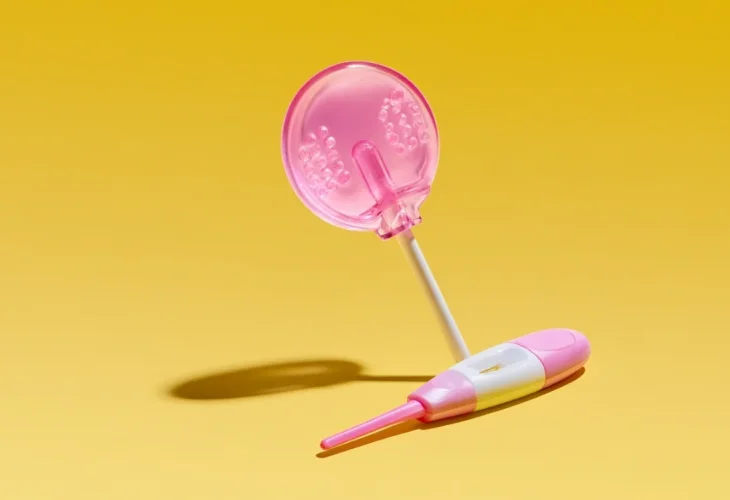
For millions of women around the world, taking a home pregnancy test is a simple process that takes just a few minutes. They dip a test strip into a urine sample, wait briefly, and check the result. But what happens when a woman cannot see the two lines that indicate a positive pregnancy test?
This question inspired a young American student to develop an unusual invention: an edible lollipop that could allow blind women to find out whether they are pregnant without having to rely on someone else to read the results. The invention, called Tact, is still in development, but the idea behind it could make a significant difference for women with visual impairments.
Sneha Rao, a 27-year-old master's student in design at Carnegie Mellon University, became interested in the issue after hearing stories of blind women who had to ask others to read their pregnancy test results. Determined to find a solution, she began researching possible alternatives. Her idea was to develop a pregnancy test incorporating a lollipop that would communicate the result through touch rather than sight.
How Can a Lollipop Detect Pregnancy?
Conventional pregnancy tests detect human chorionic gonadotropin (hCG), a hormone produced by the body after pregnancy begins. Most existing home pregnancy tests use urine samples and display the results visually.
Rao's innovative lollipop is designed to detect the hormone in saliva and communicate the result through a physical change in texture. Instead of relying on colors or lines, the lollipop would develop tiny raised bumps on its surface when the hormone is detected. A woman could feel these bumps with her tongue within minutes, allowing her to interpret the result without visual assistance.
According to the proposed design, bumps on both sides of the lollipop would indicate a positive result, while bumps on only one side would indicate a negative result. If no change in texture occurred, the test would be considered invalid.
Rao deliberately chose texture rather than flavor as the method of communication. She wanted to avoid creating an artificial emotional association between sweetness and a positive result or bitterness and a negative one.
Could This Invention Replace Traditional Pregnancy Tests?
Initially, Rao considered developing an electronic device that would read the results of existing pregnancy tests aloud. However, she became concerned about the privacy implications of such technology. Using a camera, smartphone application, or online service could potentially leave a digital record of a highly personal medical test.
Instead, she began exploring a simpler solution that would not require a camera, screen, or smartphone. After experimenting with different materials and shapes, she developed the concept of an edible, gelatin-based product. Gelatin allows for the creation of different textures, can absorb liquids, and can dissolve, making it a potentially suitable material for the proposed test.
However, the invention remains an experimental prototype. The biochemical detection system has not yet been fully integrated into the lollipop, and the test has not been demonstrated to be safe or accurate for clinical use.
More experienced researchers have welcomed the creativity behind the concept while emphasizing that significant scientific questions remain unanswered. Among the most important challenges is demonstrating that the test can reliably detect the low concentrations of hCG found in saliva.
Further research would also be needed to evaluate the accuracy of the results at different stages of pregnancy, establish the safety of the materials, and determine whether users can consistently distinguish between the different textures.
Despite these challenges and the potentially lengthy development process, Rao remains committed to advancing her invention. She hopes to eventually move toward clinical trials and collaborate with a medical testing manufacturer to turn the concept into a practical, accessible product.
If successful, the innovation could offer women with visual impairments something that conventional pregnancy tests often cannot: the ability to receive sensitive, deeply personal medical information independently and privately.

