

Interesting
Portable Car Air Compressors: Why Every Driver Should Have One
How a portable tire inflator can help maintain proper tire pressure, improve road safety, and save you trips to the gas station, plus when it can and cannot help with a flat tire
- Shira Dabush
- | Updated
Every driver knows that stressful moment: You're in the middle of a journey, often when you're already in a hurry, when suddenly a warning light appears on the dashboard indicating low tire pressure. Your heart skips a beat, and the questions immediately begin. Do you have a flat tire? Is it safe to keep driving? Where is the nearest gas station?
Sometimes, the warning simply indicates a slight drop in tire pressure. In other cases, however, it may signal a problem that requires immediate attention. Many drivers respond by searching for a gas station where they can inflate their tires, only to discover that the nearest one is far away, closed, or has an air pump that isn't working.
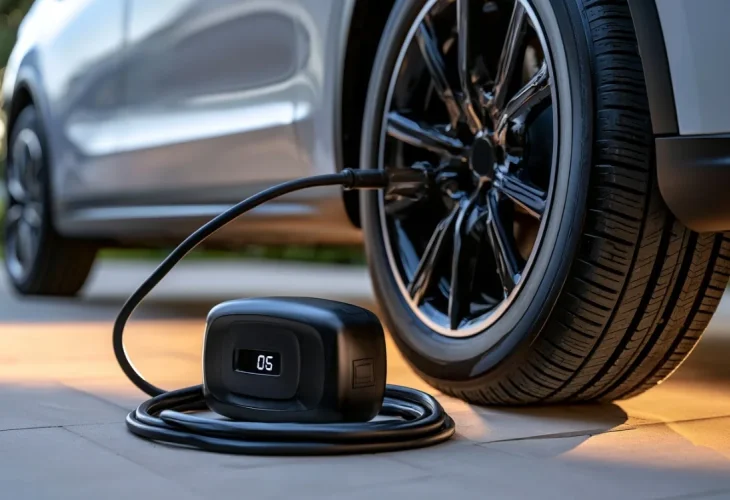
That's why more drivers are turning to portable car air compressors, compact devices that allow them to inflate their tires independently without relying on gas station air pumps.
An air compressor works by compressing air and delivering it under pressure through a hose into the tire. Portable compressors designed for cars generally operate through a 12-volt vehicle outlet, another electrical connection, or a rechargeable battery. Some models feature a digital display showing the tire's air pressure, while more advanced versions allow drivers to preset the desired pressure and automatically shut off once that level is reached. This makes it possible to inflate tires accurately without guessing how much air to add.
Why Is Maintaining Proper Tire Pressure So Important?
Tire pressure affects much more than driving comfort. It also plays an important role in road safety, traction, fuel efficiency, and tire wear. When tire pressure is too low, the tire may overheat, wear unevenly, and negatively affect the vehicle's handling. Excessively high pressure can also reduce road grip and cause irregular wear.
According to the American Automobile Association (AAA), drivers should check their tire pressure at least once a month, even when no dashboard warning light is illuminated.
Using most portable air compressors is relatively straightforward. First, check the recommended tire pressure for your vehicle, which is usually listed in the owner's manual or on a sticker inside the driver's door frame. Next, connect the compressor to the appropriate power source, attach the hose to the tire valve, and operate the device according to the manufacturer's instructions.
With digital models, drivers can usually select the desired pressure, and the compressor will automatically stop once it reaches that level. For accurate readings, tire pressure should be checked when the tires are cold, either before a significant drive or after the vehicle has been parked for several hours.
It's also important to remember that not all portable compressors are suitable for every vehicle. Some are designed specifically for passenger car tires, while more powerful models can also handle the larger tires found on SUVs and off-road vehicles.
Can a Portable Air Compressor Save You From a Flat Tire?
It's important to distinguish between two situations. If a tire has lost a small amount of air through normal pressure loss, a portable compressor can restore it to the recommended level quickly and conveniently.
However, if the tire has been punctured, torn, or damaged along its sidewall, simply adding air will not repair the problem. Driving on a damaged tire can be dangerous, even if the compressor manages to inflate it temporarily. If a tire is completely flat, shows visible damage, or loses pressure rapidly, the safest course of action is to stop in a secure location and seek professional assistance.
A portable air compressor is therefore not a replacement for a spare tire, an approved tire repair kit, or roadside assistance. Nevertheless, as a tool for routine tire maintenance, it can be extremely useful. Keeping one in your vehicle can save unnecessary trips to gas stations, make regular pressure checks more convenient, and help prevent frustrating situations on the road.
For drivers looking for a simple way to maintain their tires and enjoy greater peace of mind, a portable air compressor can be a practical addition to their vehicle's emergency equipment.

