

World News
Political Earthquake in Serbia as Vučić Loses Election
Serbian leader Aleksandar Vučić has reportedly conceded defeat in a major election upset, with a student-led opposition movement claiming victory.
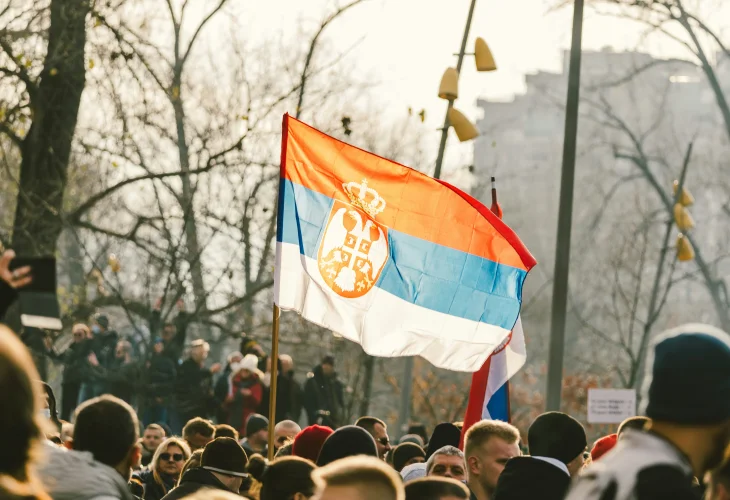
A major political upset unfolded in Serbia yesterday (Sunday), as former President Aleksandar Vučić conceded defeat in the country's parliamentary elections, bringing an end to more than a decade of political dominance. Vučić, who maintained close relations with Israel, recently resigned from the presidency to run for prime minister.
Addressing his supporters following the vote, Vučić acknowledged that the student-led opposition had secured a decisive victory.
"Based on the sample, it is clear that we lost this election. The Student List won, and it will receive between 135 and 140 seats, and we will have about 105. I know that this evening is hard for many people, and I know how many others are happy. I wish them success," he said.
However, he also accused his opponents of acting on behalf of outside interests.
"Unlike them, who for 14 years were unable to offer congratulations, I congratulate them, even though they are only contractors carrying out the job. Contractors carrying out dirty work that someone else planned in order to bring down a sovereign state."
Preliminary results released Monday by Serbia's Republic Electoral Commission showed the Student List winning approximately 52.7% of the vote, compared with 39.2% for Vučić's United Serbia coalition.
Vučić, 56, is considered a close ally of former Hungarian Prime Minister Viktor Orbán. He also maintained a policy of neutrality toward Russia. His political career began in the 1990s as a nationalist ally of Slobodan Milošević, serving as information minister in his government.
Following Milošević's removal from power, Vučić openly supported Bosnian Serb leaders Radovan Karadžić and Ratko Mladić, who were later convicted of genocide and other war crimes. In 2008, he moved away from his earlier ultranationalist positions and helped establish the Serbian Progressive Party, which adopted a conservative, pro-European platform and came to power in 2012. Vučić served as prime minister from 2014 and became president in 2017.
The protest movement that ultimately challenged his leadership began in November 2024, following the collapse of a concrete canopy at a railway station in Novi Sad that killed 16 people. Many Serbians blamed government corruption and negligence, and demands for a transparent investigation developed into the country's largest protest movement since Milošević was overthrown in 2000.
After nearly two years of student-led demonstrations, Vučić agreed in September to one of the protesters' central demands and called early parliamentary elections.
Vučić had also strengthened Serbia's defense cooperation with Israel. He recently inaugurated a drone manufacturing facility operated jointly by Israel's Elbit Systems and a Serbian state-owned company, declaring: "We are working with the Israelis on building a digital army."
The election result marks a significant political shift in Serbia, with the student-led movement securing a parliamentary majority after years of protests against Vučić's leadership.

