

Jewish Law
Why Arriving Early to Synagogue Brings Special Blessings: Two Daily Halachot
Discover the spiritual rewards of being among the first ten worshippers, the importance of respecting and maintaining the synagogue, and the deeper meaning of a minyan in Jewish prayer
- Hidabroot
- | Updated
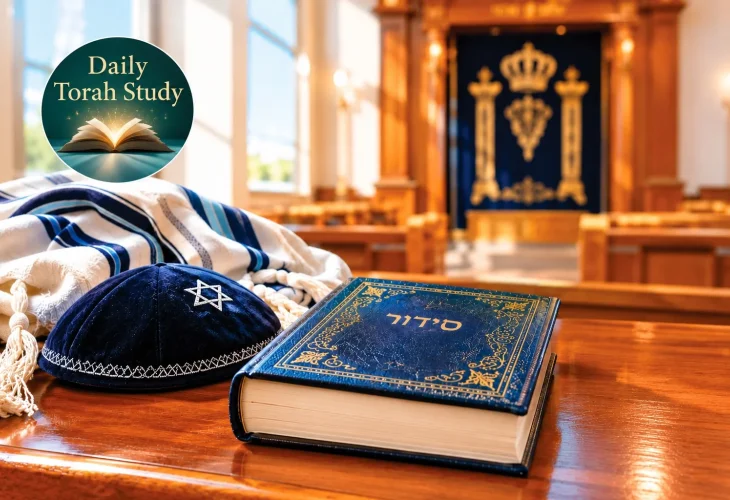
Two daily halachot from BeHalacha U'VeAggadah, based on the rulings of Rabbi Ovadia Yosef, of blessed memory.
Why Is It Worth Arriving Early at the Synagogue?
Rabbi Yehoshua ben Levi taught: "A person should always arrive early at the synagogue so that he may be counted among the first ten worshippers. Even if a hundred people arrive after him, he receives a reward equivalent to that of all of them" (Berachot 47b).
The first ten worshippers possess a special distinction because they are the ones who bring the Divine Presence into the synagogue, as explained by the Maharsha. This teaching is codified in the Shulchan Aruch (Orach Chaim 90:14): "A person should arrive early at the synagogue so that he may be counted among the first ten."
Rabbi Yehoshua ben Levi also taught that arriving early at the synagogue and remaining there longer can bring the blessing of a long life (Berachot 8a).
The holy Zohar (Terumah 131a) adds: "Come and see how fortunate is the first person to enter the synagogue. His portion is blessed, for he stands on the level of a righteous person, having merited to connect with the Divine Presence that rests in the synagogue."
Even if ten worshippers have already arrived, coming early still carries great merit. Someone who finds it difficult to arrive early for the morning prayers should try to be among the first ten worshippers at least for Mincha and Maariv.
How Should We Maintain the Cleanliness of the Synagogue?
Maintaining a clean and welcoming environment is an important part of honoring the synagogue. This includes regularly cleaning the premises, keeping the floors tidy, and taking care not to leave behind any mess.
For example, someone who uses a tissue should dispose of it properly rather than leaving it on a table, particularly since others may find it unpleasant. Similarly, if a person notices a piece of paper on the floor, it is a mitzvah to pick it up and throw it in the trash, even if someone else dropped it.
Just as we take responsibility for keeping our own homes clean and comfortable, we should treat the synagogue with care, consideration, and respect.
Today's Jewish Concept: Minyan
A minyan is a group of ten Jewish males who have reached the age of bar mitzvah. A minyan is required for the recitation of Kaddish, Kedushah, Barchu, and certain other parts of the prayer service. When someone in the synagogue says, "We're waiting for the tenth," it means that one more worshipper is needed to complete the minyan and enable communal prayer.
The Rambam emphasizes the special power of communal prayer: "The prayer of the congregation is always heard. Even if there are sinners among them, the Holy One, blessed be He, does not reject the prayers of the many" (Mishneh Torah, Laws of Prayer 8:1).
Why are ten people specifically required? The Talmud explains that certain sacred prayers must be recited in the presence of an eidah, meaning a congregation. The Torah uses this term to describe the ten spies who brought back a negative report about the Land of Israel, excluding Yehoshua and Calev. From this, our Sages derive that a minyan must consist of at least ten individuals (Megillah 23b).

