

Magazine
From Jewish by Birth to Israeli by Choice
Akiva Gersh grew up in a deeply secular Jewish family in the United States and once struggled to identify with his Jewish heritage. Today, more than two decades after making aliyah, he teaches about Judaism and Israeli life and explores what it really means to become Israeli.
- Shira Dabush
- | Updated
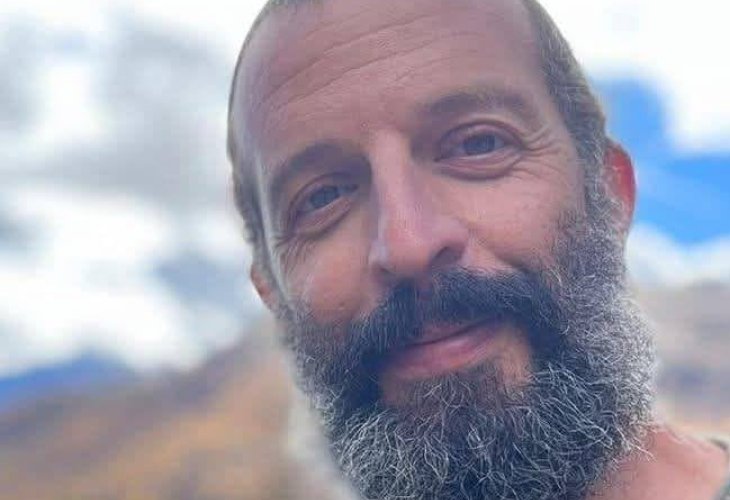
If someone had asked a young Akiva Gersh, now 50 and living in Pardes Hanna, whether he was Jewish, his answer might have surprised them. Although he was born into a Jewish family, by his college years he barely felt that being Jewish had any meaning in his life. In fact, he preferred not to identify himself as Jewish at all.
“When people asked me whether I was Jewish, I wanted to tell them no”, he recalls. “But because so many members of my family had been murdered in the Holocaust, I felt uncomfortable with the idea of completely denying my Jewish identity”.
Instead, he would give an answer that often raised eyebrows: “Yes, I’m Jewish by birth, but not by faith”.
Gersh, an author and educator who teaches about Judaism and Israeli life, grew up in a town near New York City in a Jewish but deeply secular family. At the time, anything connected to Israel or Judaism felt worlds away, and he was comfortable with that.
Then, during his third year of college, something began to change. Gersh felt that something was missing. “I began to feel that I wanted something more meaningful and spiritual in my life”, he recalls. “It’s a very long story, but ultimately, I found what I was looking for in my Jewish roots and heritage”.
Rediscovering Judaism almost immediately awakened another desire: to visit Israel. “I wanted to experience the Jewish homeland and deepen my connection to Judaism, but it took a few more years before I actually got there. I was 22 when I came to Israel for the first time, but once I arrived, I felt a very deep connection. Within a week, I felt at home and knew that one day I would live here permanently”.
That first visit was in 1998. He made aliyah six years later, in 2004.
What expectations did you have before making aliyah, and how did reality turn out to be different?
“The truth is that I didn’t have many expectations”, he says. “I knew I wanted to live in Israel. Every time I visited before making aliyah, I felt so connected and so at home, and that was what I wanted in my life”.
Gersh was 28, newly married and had no children yet. “The future was completely open. I wanted to learn Hebrew, find work and have children who would know Israel as their only home”.
What was the greatest challenge in building your life in Israel, and how did you handle it?
“Baruch Hashem, there weren’t many major challenges”, he says. “There were difficulties with the language. I didn’t speak any Hebrew before making aliyah”.
To overcome that, he enrolled in ulpan twice, studying for a total of about ten months. Despite the difficulties that can come with learning a new language, Gersh fell in love with Hebrew immediately. “I loved the process of learning Hebrew”, he says. “I loved listening to the way Israelis construct sentences and choose words. It was exciting for me”.
Professionally, opportunities also opened up relatively quickly. Gersh works in Jewish education, a field in which he already had experience. “Baruch Hashem, I began finding work in Jewish education almost immediately. My wife and I also brought work with us from the United States. We were directors of a summer program for Jewish teenagers in America. We planned it during the year in Israel and then traveled to the United States each summer to run it”.
They continued doing this during their first five years after making aliyah.
“Three years after I made aliyah, I was offered a full time position in Jewish education and Israel studies. I stayed in that job for thirteen years, until the pandemic”.
When did you feel that Israel was no longer simply the place you had moved to, but truly your home?
“As my Hebrew improved and I understood more of the nuances of Israeli culture, I began to feel that Israel was truly my home. Over time, I felt increasingly Israeli, until I reached a point where I connected more with Israeli culture than with American culture”.
What uniquely Israeli experiences still surprise, amuse or move you?
“The ability of Israelis to shout at each other and then, a second later, be good friends again”, he says with a smile. “Alongside that, there are things that move me much more, such as the way different kinds of Israelis, secular and religious, connect with their Jewish heritage and traditions, or teenagers who insert the word ‘achi’, ‘my brother’, into every sentence”.
How has living in Israel changed you personally, spiritually and emotionally?
“I feel that living in Israel has shaped me and made me into someone I would not have become had I stayed in the United States”.
The change, he explains, goes beyond a sense of national belonging. “I feel that I’ve become more of a person who takes action. Someone who wants to take initiative, help others and feel responsible for my people”.
His spiritual connection has also deepened. “I’ve developed a very strong connection to the Land of Israel and its history”.
Over the years, that personal experience became something he wanted to write about. It eventually took shape in his book, Becoming Israeli, which explores not only the decision to make aliyah but also the long process that follows, once the initial excitement fades and a new immigrant must begin building a life within a new society.
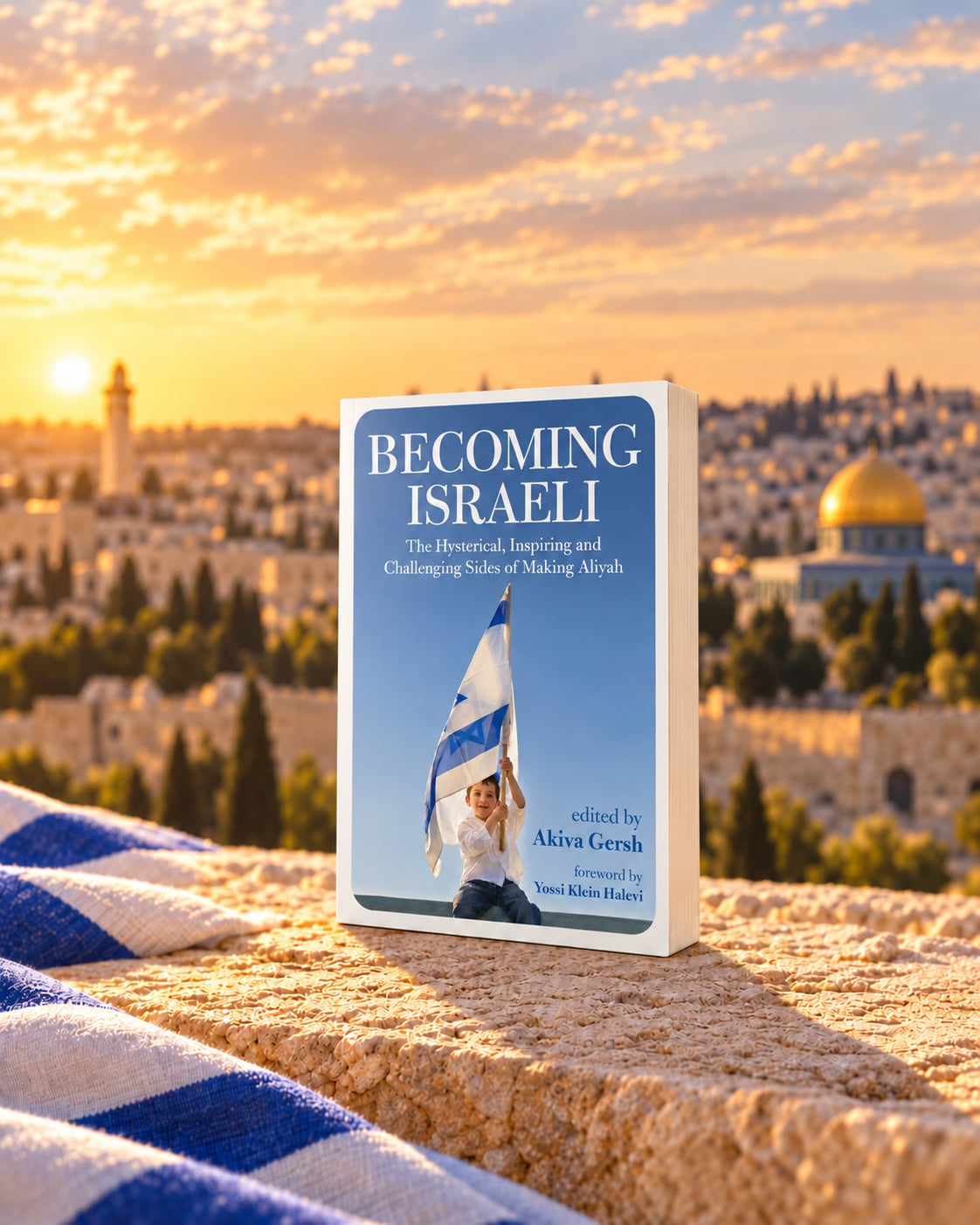 Akiva Gersh's book, Becoming Israeli
Your book, Becoming Israeli, explores what happens after the excitement of making aliyah. What do you think people misunderstand about becoming Israeli?
“They think the process ends the moment they make aliyah”, he says. “But that’s only the beginning”.
Moving to Israel, he explains, involves much more than changing an address or a passport. “We need to be patient with ourselves and open to learning new things and becoming, to some extent, a different person from the one we were before”.
Perhaps that is one of the greatest differences between making aliyah and becoming Israeli. The first can happen in a single day. The second may take years.
After more than two decades in Israel, in what ways do you still feel like an immigrant, and in what ways do you feel completely Israeli?
The language, it turns out, still occasionally reminds him where he came from. “I speak Hebrew perfectly well, but I still haven’t mastered it completely”, he says. “There are days when I feel that I can barely express myself in Hebrew. Sometimes even simple things that I know very well how to say come out wrong”.
In other areas, however, his sense of belonging is almost complete.
“I feel very Israeli in my outlook, in my connection to Israel, both the land and the people, in the music I listen to, the food I eat and how comfortable I feel living here”.
If you could bring any Jew from the Diaspora to Israel for just one day, where would you take them, and what would you want them to feel?
Gersh finds it difficult to choose just one place. “I would take them to Jerusalem, Tel Aviv, the desert and the Golan, so they could understand the incredible diversity within this small country”.
For him, however, the visit should involve more than checking destinations off a map. “I would want them to feel the power of Israel’s physical and spiritual beauty”.
When you compare the Israel you first encountered in 1998 with Israel today, what is the biggest change you see?
He describes today’s Israel as far more developed, stronger and, in his view, more spiritually connected. And what about the changes within himself?
“Me? That could be another whole book”, he says with a smile. “I’ve changed in so many ways”.
What advice would you give a Jew abroad who is considering making aliyah?
As an educator and an experienced immigrant, Gersh has several practical suggestions. “Try to learn some Hebrew before making aliyah”, he says. He also advises families with children not to postpone the decision for too long. “If you have children, it’s better to come sooner rather than later. The older they are, the more difficult the transition may be”.
His central piece of advice, however, concerns the fear of uncertainty. “Don’t worry if you haven’t figured everything out and arranged everything yet. Just come. Hashem will help you once you’re here”.
Looking back, is there anything you wish someone had told you before you made aliyah?
This time, his answer is less spiritual and much more practical. “Buy a home as early as possible, even if you don’t plan to live in it forever”, he says. “And don’t waste money on rent”.

